
Fear Is a False Prophet
For the person who has let fear have a room in their home
You never know…this might be the time that you actually get hurt.
You know people die. You know things go wrong. So your brain runs the numbers. Checks the ingredients. Prepares for the worst case, then the one after that.
And somehow none of it helps.
The constant checking doesn't bring peace and the information doesn't quiet the noise. If anything, the more you manage, the louder it gets. This feeling in your stomach feels less like a house guest and more like a bad roommate.
Fear and anxiety are feelings that everyone has experienced. Sometimes obvious, sometimes subtle. But I've seen how debilitating they can be among many genuine believers.
I want to write with that person in mind. I haven't walked in anyone's shoes but my own and I'm not assuming I know anyone's struggle with fear completely. But I've sat close to people I love who carry this, and I want to share what's on my heart as if we were just sitting across from each other.
I do think there's more to say about fear than "just trust God" or "just stop worrying."
Because if that worked, you'd already be there.
So let's talk about what fear actually is, where it comes from, and whether anything can be done with it.
Fear Is Not Your Enemy
Fear was made good. I know this sounds strange and there’s nuance.
But fear is the alarm system God wired into creatures living in a real world with real danger. It's what makes you grab your kid's hand near traffic. It's what fires when something you love feels threatened.
Without it, we'd be oblivious.
Even Jesus felt it. In Gethsemane, the night before the cross, he sweat drops of blood. His soul, the Gospels say, was overwhelmed with sorrow to the point of death. That is not a metaphor. He felt the full weight of what was coming. And he didn't suppress it. He brought it to his Father.
So the question is never: Why do I feel this?
The question is: What is this attached to? And is it running my life?
A counselor and author named Ed Welch spent years working with people caught in anxiety and fear, and eventually wrote a whole book on the subject called Running Scared. He has provided some helpful paradigms on the subject that I want to share, starting here:
"Fear and worry are not mere emotions. They are expressions of what we hold dear."
Your fear tells you what you love. Food and health anxiety say life matters. Fear of death says the people around you matter. At the root, these are not embarrassing things. They are good things. The problem is when the love underneath the fear goes looking for safety in the wrong place.
Emotions were made to be indicators. They tell you something matters. But they were never meant to be the ones making decisions. If Fear says something I love feels threatened, then that's useful. If Fear says you are never safe and never will be, then that's a liar speaking.
The goal isn't to be fearless. It's to be fear-ordered. Where trust in God becomes the biggest thing in the room. And every other fear finds its right size underneath that.
You Are in a War
Before we go any further I want to say something that most of us have either never been told or have chosen to ignore.

You are in a war.
“If once the curtain were pulled back, and the spiritual world behind it came to view, it would expose to our spiritual vision a struggle so intense, so convulsive, sweeping everything within its range, that the fiercest battle fought on earth would seem, by comparison, a mere game. Not here, but up there – that is where the real conflict is engaged. Our earthly struggle drones in its backlash.” - Abraham Kuyper
Not a metaphor. Not a theme for a sermon series. An actual cosmic conflict with an actual enemy whose actual aim is your heart. And what better weapon than fear? For if you can fill a person with enough of it then you don't need to destroy them. You just subdue them. Keep them small. Keep them checking. Keep them inside. A frightened person is a distracted person. And a distracted person is no threat to anyone.
The reality is that most Christians walk into this war completely unaware, without any armor or weapons, and then wonder why they keep getting hit.
But it's not just the enemy. The world itself has become a fear-producing machine. News is engineered to keep you watching. Social media is built to keep you scrolling. And the most reliable way to do both is to keep you afraid. Big Pharma, Big Food, Big Tech, Big Government. All of them have understood that a frightened population is an easily influenced one.
We are statistically safer than almost any humans who have ever lived. And we are more anxious than ever. Because we were not built to carry the whole world's threat signal in real time. The nervous system cannot calibrate properly when it never gets to rest.
So before we talk about why fear is hard to shake, it helps to know what you're actually up against. This is not just a personal struggle. It is a personal struggle happening inside a cosmic one. And that changes how we approach it.
Why Fear Is Hard to Shake
You've probably tried the obvious things already.
You've told yourself your fear is irrational. You've researched the stats on WebMD. You've prayed and confessed and resolved and tried harder. And then found yourself right back there again, heart climbing, running the numbers.
Here's why. And it's not what you think.
Your body keeps a separate set of files from your soul.
Fear doesn't just live in the mind. Trauma and fear can absolutely be rooted in real traumatic experience and can record its own versions of memories. Fear can live in your nervous system, where your body holds what your brain has tried to get past.
This is why you can know something is safe and still feel the alarm.
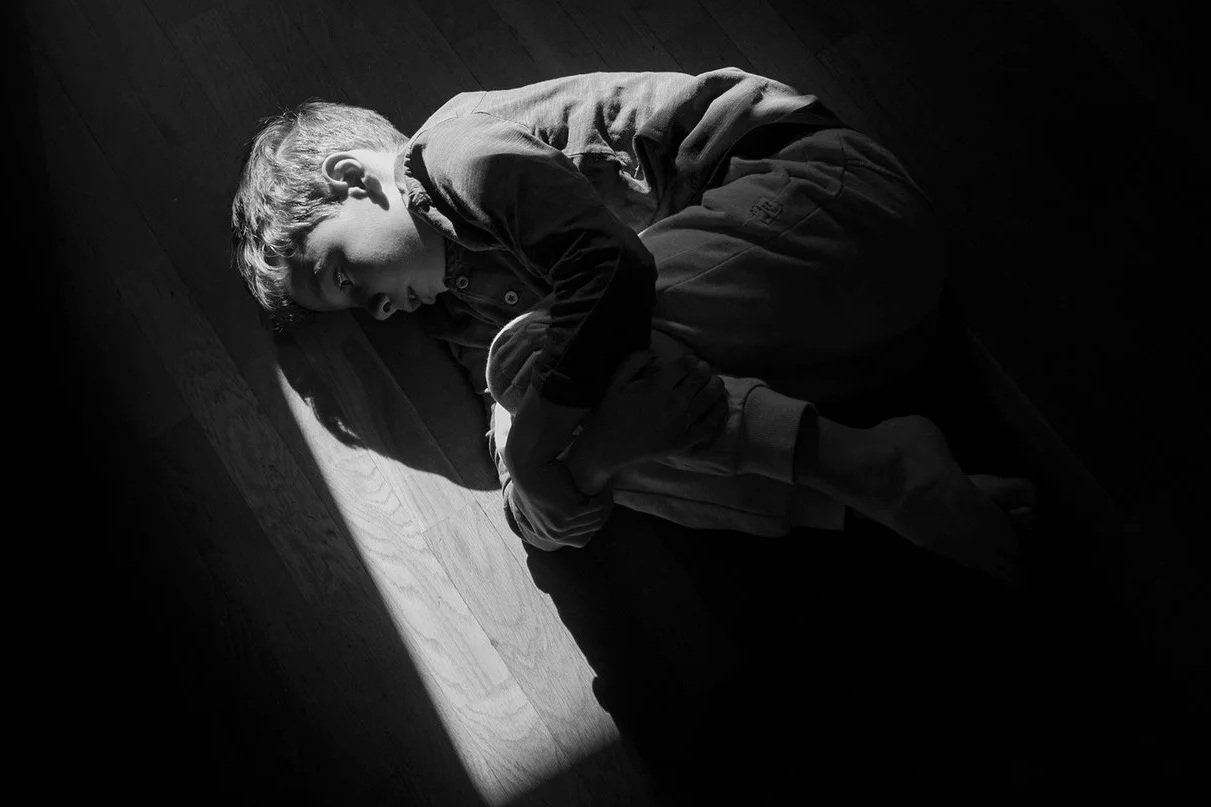
I've watched this happen close to me.
My wife had a miscarriage. And later, when she had to return to the same hospital, she kept praying and praying. She told herself it was going to be okay. This was different. This was going to be a new story. We weren't condemned to go through the same hardships. I believe she meant every word of the prayers she prayed.
And then we actually sat in the doctor's office.
Before a single thought could catch up, her body was already responding. The tightness in the chest. The elevated heart rate. The rising dread. Not because she didn't believe. Not because the prayers were hollow. But because her nervous system had been to that place before. And the body doesn't distinguish between that memory and the present moment when the environment feels the same.
You can pray every prayer you know. You can tell yourself the truth. And your hands can still shake in the waiting room.
That is not a faith problem. That is the body simply responding using the survival skills it's learned over time. When we approach fear as only a thinking or believing problem, it will leave people feeling like there's something wrong with them if the tightness comes back anyway.
Fear is a false prophet.
Welch puts it plainly. Worriers are false prophets.
Anxiety is like a palm reader who pretends to know the future. It rehearses the catastrophes like they've already happened, as if it already knows how it ends. You're barely through breakfast and you're writing your eulogy.
But the thing to say here seems so obvious yet easy to forget in the moment: fear doesn't know the future. It can only guess. And consistently fear will guess the worst version of tomorrow without the grace that tomorrow already has.
You don't have grace for tomorrow yet. You only have grace for today.
"At this moment I don't have grace to drown because I am not drowning. Of course I will worry if I try to envision a drowning scenario. I will project the grace I have received for today onto tomorrow, not comprehending that I will receive grace as needed tomorrow." — Ed Welch, Running Scared
God gives manna one day at a time. Enough for today. Every time. Which means if you're here, reading this, you have everything you need for right now.
Where Does Fear Live?
This is a question we'll explore more of the mechanics of, but I think it's worth stating simply first.
Fear is not just a feeling and it's not just a thought and it's not just a spiritual problem. It lives in the whole person. The engine of fear likely dwells in the soul: in the mind, the will, the emotions. But it shows up in the body and it has a spiritual dimension too.
And that's why single-track approaches keep falling short. A purely cognitive approach centered around behavior and emotional regulation doesn't fully address the nervous system. Willpower and medication don't address what's happening in the spirit. Spiritual warfare alone doesn't calm a body that's in fight or flight mode. Our approach to fear must be as discerning and holistic as the problem we're addressing.
Whose Fault Is Fear?
This might sound like a weird question but it's one I keep thinking about. Because knowing the source of a problem influences how we address it. And failure to know the true source can have consequences. Wrong diagnosis leads to wrong medicine. And nothing is more demoralizing than trying to fix the right problem with the wrong solution.
Fear doesn't usually come from one place. Most people living with chronic fear are experiencing several things at once. And it matters to understand which is which.
The broken world has done real things to your body.
We weren't made for this world. Trauma, loss, frightening experiences…they leave marks. The nervous system gets wired for threat. Sometimes there is biology at play, neurological patterns, sensory sensitivities, that are not moral failures. They are physical realities in a world that is not yet fully healed.
God meets you here. He doesn't bypass your body but enters it instead. If you haven't heard this yet then hear it now: God cares about your body.
He is always the source of healing but sometimes his means of healing can come through what appear to be ordinary means. Sometimes this is through counseling. Sometimes through time and having a patient community. Sometimes medication can be helpful if done in faith. These aren't shortcuts. They can absolutely be a part of the grace of God in our healing. There is no shame in asking for help. We all need it.

The flesh has a deep need for control.
The biblical word flesh doesn't just mean sinful behavior. It means the self-life. The part of us that since Adam has tried to secure life through our own management.
Adam's first move after the fall was to assess the damage, cover himself, and construct a story. That instinct is in all of us, and it goes all the way back to the garden. The temptation was essentially a fear offer: you could lose something. God is withholding. You don't have enough. And the response was to reach for control by grabbing the thing that would make them like God: the ability to assess threats and manage outcomes on their own. They feared their perceived lack and used control as their solution. And we're experiencing the effect of that decision today.
But we are still doing the same thing ourselves.
And underneath the control there is almost always a love that has gone looking for safety in the wrong place. We fear losing what we love most. The bigger that love and the less we trust God with it, the more fear has to work with.
Fear is one of the flesh's most practiced moves. If I can manage all the variables, I can be safe. We all have areas where we feel like we can maintain control. Death is the most common thing that fear fixates on, constantly constructing ways to avoid it. We feel like fixating is being responsible. At least we're doing something, right?
The lie underneath sounds like: if I don't hold this together, everything will fall apart.
That feels responsible.
But you have to ask yourself: who is actually holding your life together?
“Owners are the ones who do all the worrying. Stewards simply listen to the owner’s desires and work to implement them. Owners are responsible for the outcome. Stewards strive to be faithful”
We were made to be stewards. Chronic fear is what happens when we decide to be owners.
Sometimes this control comes in subtle ways.
One of the ways is avoidance.
Every time we avoid the feared thing — skip the restaurant, check the label one more time, decline the invitation — we send a message to the brain: that was dangerous. Good thing we got out. And the brain logs it as confirmation. Avoidance can feel like relief. But it's actually like paying rent because it keeps fear in the house. The checking never ends because it was never designed to bring peace. It's designed to produce more checking.
Avoidance is a version of control that is only going to lead to more of the thing it's trying to avoid.
There is an enemy who is not neutral about your heart.
"The story of your life is the story of the long and brutal assault on your heart by the one who knows what you could be and fears it." — John Eldredge, Waking the Dead
The enemy doesn't create fears from scratch. He finds the wound. The already broken place. The legitimate alarm. And he builds a fortress there. Then he whispers agreements into that fortress.
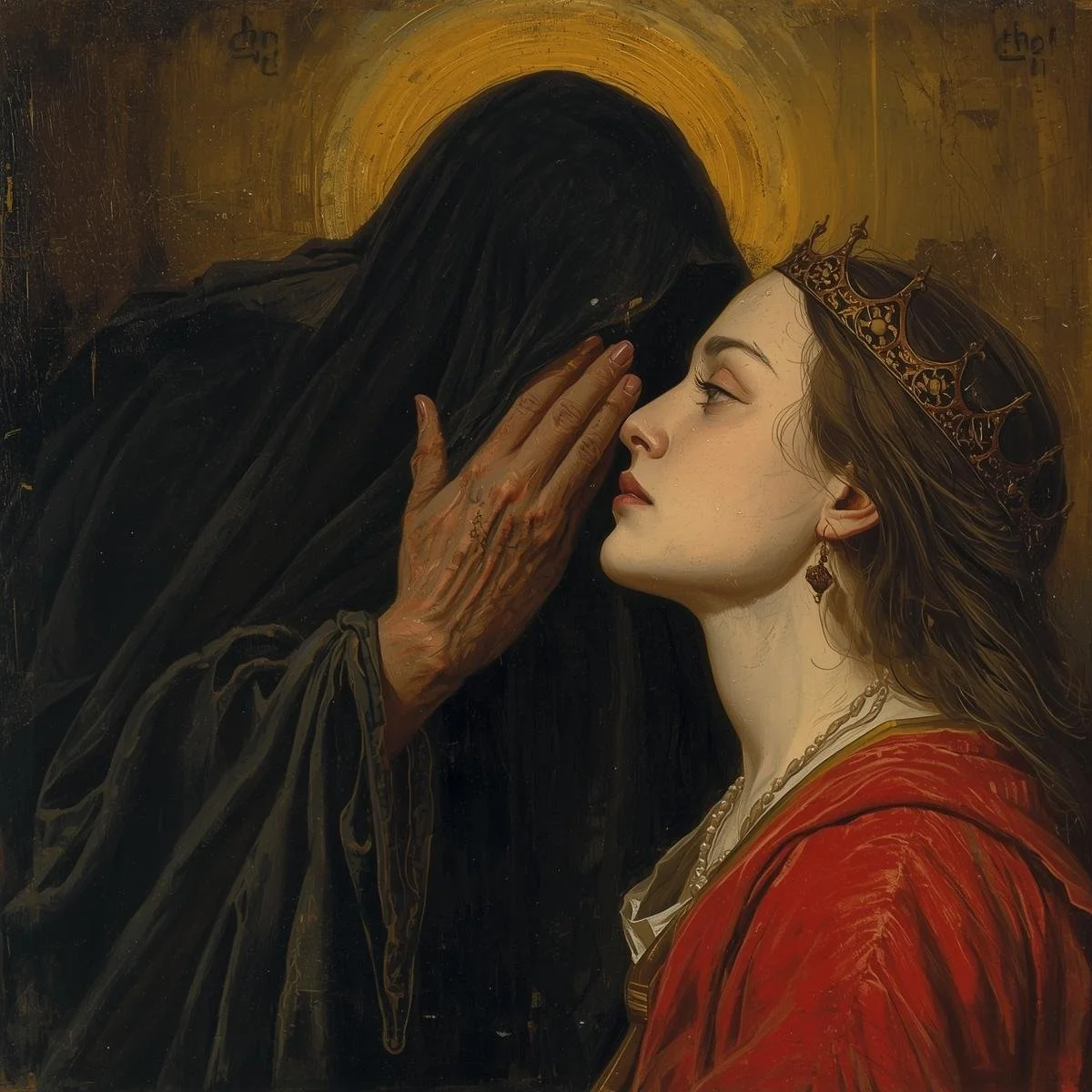
“This is just who you are.
You'll always be like this.
No one can really help you.
Even God has limits here.”
These don't feel like lies. They feel like your own voice. But they are agreements. And agreements have power.
We make peace with fear as an identity.
Over time, chronic fear stops feeling like an intruder. It starts feeling like just the truth about you.
I'm an anxious person. I've always been like this. It's just how I'm wired.
These sentences feel like self-awareness but they are agreements. Fear has become a full-time squatter. It hasn't just unpacked, it's in charge now, whether you admit it or not.
What to Do With What You Feel
The goal is not to be emotionally flat. Undisturbed by everything and totally serene.
Jesus wept. He got angry. He was afraid. The Psalms are full of honest, overwhelming, sometimes desperate emotion. And Scripture doesn't correct any of it. God receives it as it is.
The Psalms model something specific. The psalmist names what he feels. Honestly. Then he preaches truth back to his own soul.
Why are you cast down, O my soul? Hope in God. (Psalm 42:5, 11)
That's not suppression. It's not letting the fear run the show either. It's bringing what's real into the light, looking at what it's attached to, and then speaking a truer word over it.
The unhealthy versions are two extremes. Suppression buries the fear and it works underground. Just letting it run means it writes your story. Neither is what the Psalms show us.
The healthy place is bringing it to God as a starting point.
Jesus, I feel afraid in this moment. What is this attached to? What am I trusting for my safety right now?
As maturing believers, we do have accountability here to take dominion over our souls.
Not shame. Not "just stop it."
Don’t be Bob Newhart!
But as we grow in understanding who God is and who we are in him, we are not just passive victims of our emotions. We learn to speak to our own souls. To say this is not the whole truth. To take dominion, gently and with patience, over the fear that has been making decisions.
That is not white-knuckling. It is learning to live from a different center and order.
Guarding Your Heart
Guard your heart above all else, for it is the wellspring of life. (Proverbs 4:23)
Most of us read that as a warning about what we consume, and while that's true there's something deeper being said.
Guarding the heart means guarding what is allowed to speak into it.
A lot of voices want access. Fear speaks. The enemy speaks. Trauma speaks. Old wounds speak. Culture speaks. When those voices are left unguarded, the loudest voice always wins. Not necessarily the truest one.
We can only really start living when we really start to rest in God's verdict over our lives. When we start to actually believe what he says about us: that we are chosen, loved, and set apart. Then we will start to truly live.
Because the verdicts we carry about ourselves, I am never truly safe, I have to manage this myself, Death is the worst possible outcome, these haven't been examined through truth. They've just been believed.
Guarding the heart is the daily practice of asking whose verdict you are living under, and then returning to God's.
What Is Fear Costing You?
Before we talk about the medicine it's worth asking one honest question.
What is fear actually producing in your life?
Paul says in 2 Timothy 1:7 that God has not given us a spirit of fear but of power, love, and a sound mind. So if fear is running the show, look at the fruit. Is it producing love? Power? A sound mind? Or is it producing avoidance, control, isolation, smallness? Is it making you more present or less? More generous or more guarded? More alive or more managed?
No one would say they want fear. But in some ways we have made peace with the cost of it without ever stopping to add it up.
This is not shame. It's just an honest look. Because sometimes seeing what something is actually costing us is what finally creates the motivation to let it go.
The Medicine Has to Match
This is where I wanted to get specific, because the medicine has to match the diagnosis.
If it's rooted in the body and trauma:
The medicine is patient, embodied healing. Counseling. Community. Time. Sometimes medication. God's grace flows through all of it. If your body is primed and hardwired for threats it needs new experiences of safety not just information about safety. And most of the time this is slow and holy work. There is no shame in this work, but it is intentional work nonetheless.
Elijah is worth pausing on here. He has just called down fire from heaven in one of the most supernaturally charged moments in all of Scripture. And then Jezebel sends one threatening message and he runs into the wilderness, collapses under a broom tree, and asks God to let him die. He is afraid. He is exhausted. He is done.
And God's first response is not a rebuke. It's not a theological correction. It's not even a prayer meeting.
It's bread and a nap.
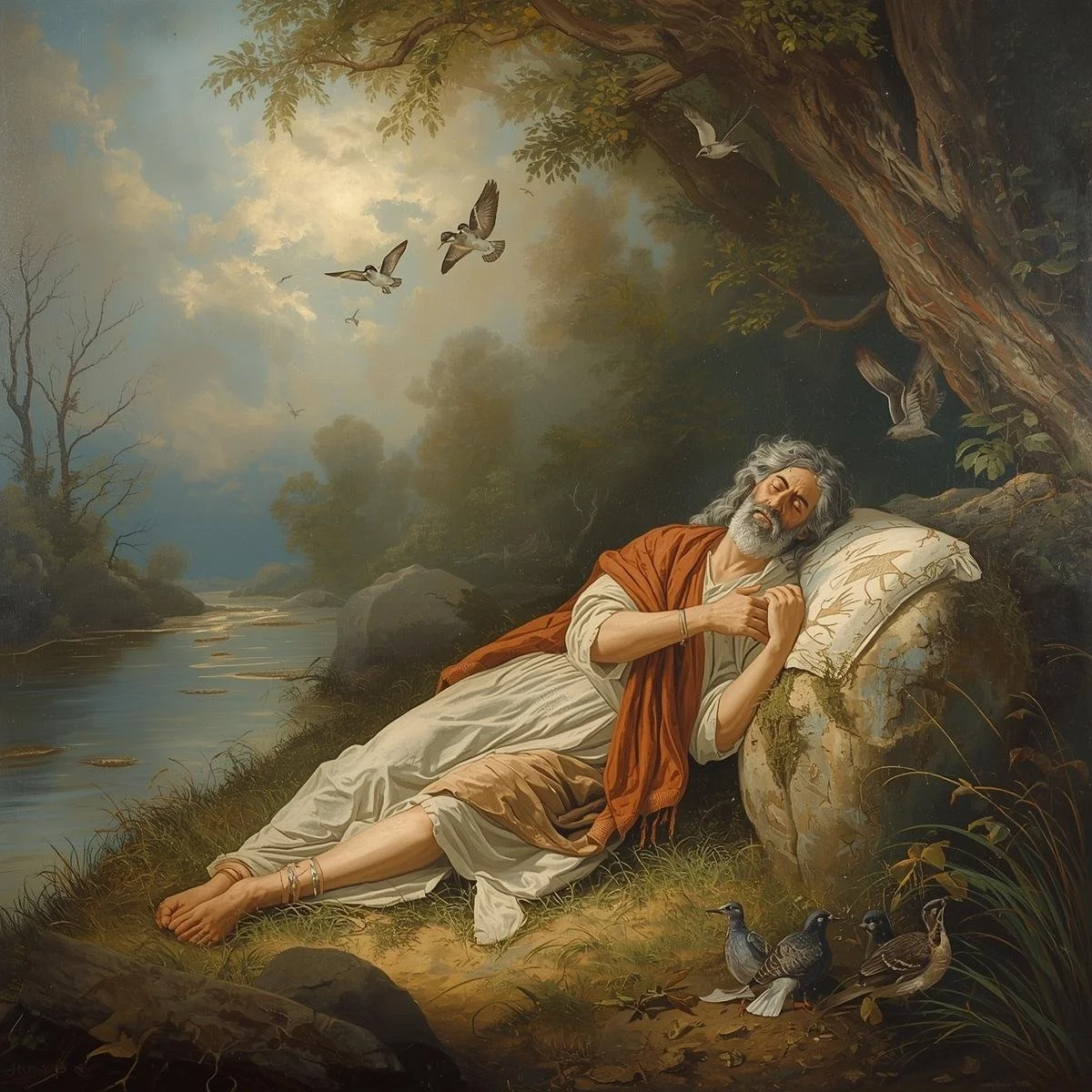
An angel touches him and says the journey is too much for you. God treats the body first. He feeds it. He lets it rest. And only after that, twice, does he speak to the deeper thing.
That is remarkable. And it's a theology most of us have never been given permission to live from.
Your body is not a problem to be managed or a machine to be optimized. It is the temple of the Holy Spirit. It is the thing God himself took on in the incarnation. It is what will one day be raised. There is a kind of stewardship of the body that is actually an act of worship by tending it, resting it, feeding it, being patient with it in its finiteness, being kind to it when it is slow to heal. Not idolizing it. Not making it the center. But imaging God by caring for what he made and what he inhabits.
If your body has been through something, it may need time that your mind and spirit are already past. That is not weakness. That is not lack of faith. That is the honest reality of living in a body in a broken world. And God, the one who gave Elijah bread before he gave him a mission, meets you there.
If it's the flesh's need for control:
The medicine is surrender. Surrender is not always dramatic or a one-time moment. It’s a daily and even moment-by-moment return to the truth that you are not the owner of your life.
Jesus named this gently with Martha. She loved him, wanted things to go well, and that love turned into anxious controlling. He didn't shame her. He just said you are worried and upset about many things. And pointed her to the one thing that couldn't be managed or taken away.
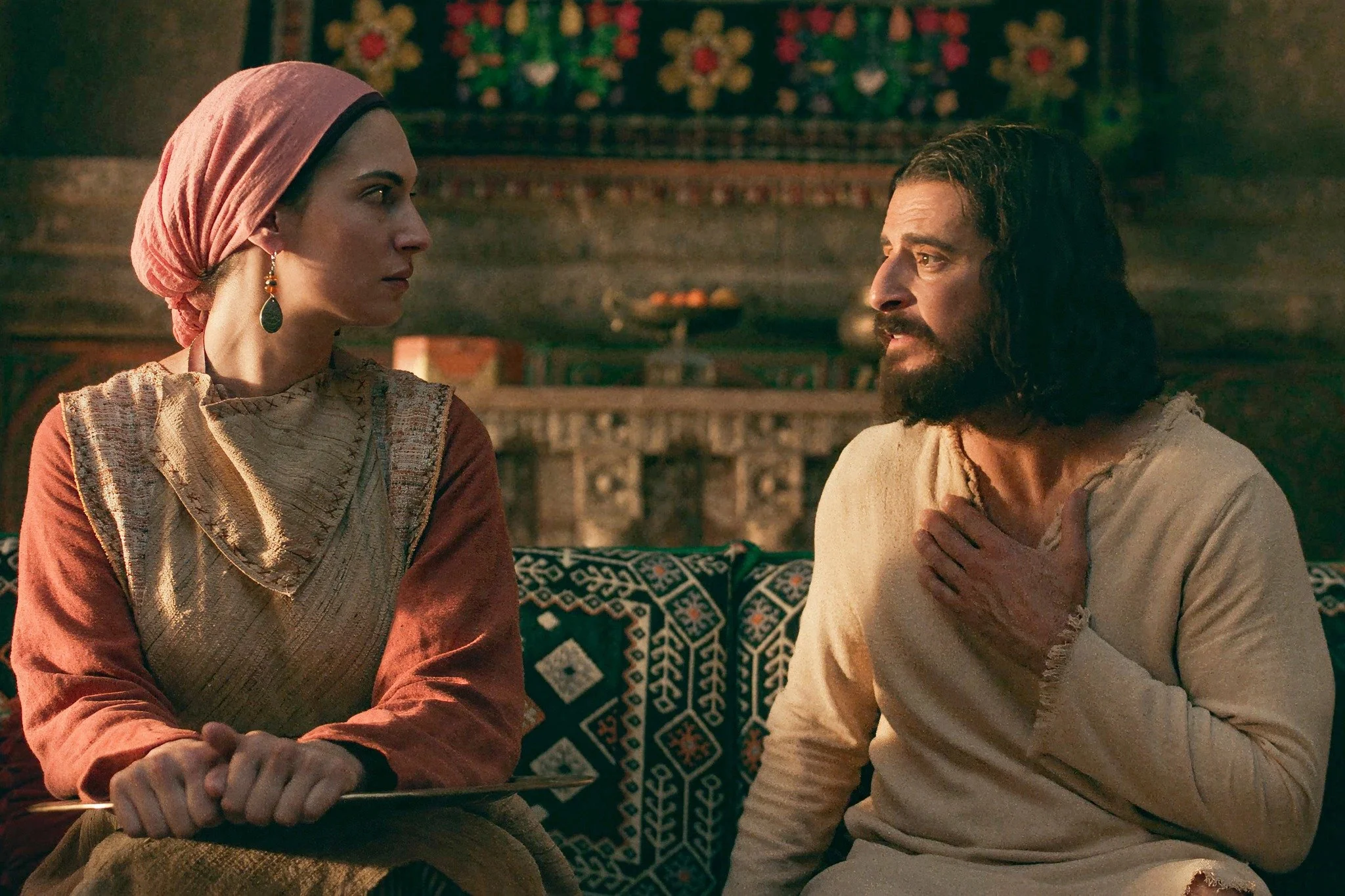
Some of the fear you carry is fear you've taken on yourself. Not because the world put it there, but because somewhere along the way you decided you were in charge: of outcomes, of people, of your own life. You have taken things off of God's plate and put them on to yours.
The honest truth is that we can't guarantee our next breath. The control was always an illusion. We've just got very good at maintaining it.
Because all of these things belong to God. They always did.
So I'll say it again: some of the heavy weight you're carrying was never yours to pick up.
There's a real freedom available on the other side of that. Not just in the big surrender moments, the ones that feel dramatic and costly. But in the small daily ones too. The moment you notice the grip tightening and you just open your hand.
There's a practice called benevolent detachment that I think is helpful here.
Jesus, I give everyone and everything to you.
Not once. Constantly. Every person you're trying to protect. Every outcome you're trying to control. Every fear about tomorrow. You name it and you hand it back to the One who was actually holding it the whole time.
This is where the gospel stops being theology and starts being something you actually live from. The self that has been gripping, checking, managing, trying to hold everything together — that self was crucified with Christ. Paul says it plainly in Galatians 2:20:
"I no longer live, but Christ lives in me."
It doesn't need to be fixed or improved. It needs to yield.
When fear rises, the move isn't I need to be braver. It's I am dead to this fear, and Jesus is my courage right now.
If it's the enemy's agreements:
The medicine is renunciation. This does not mean being loud and forceful, but a clear sight of truth by naming lies and refusing them.
Paul says in Ephesians 4:26 not to let the sun go down on your anger because anger gives the enemy a foothold.
You can insert almost anything there.
Don't let the sun go down on your fear. Don't let the sun go down on that agreement you made in the parking lot, or the doctor's office, or the middle of the night.
Because a foothold is exactly what it becomes. The enemy doesn't need a door kicked open. He just needs a crack. And an agreement you've stopped questioning is a crack he will live in.
I'll always be like this. This is just who I am. Even God can't reach this part of me.
Those aren't honest self-assessments. They are squatters and they can be evicted.
The way out isn't louder prayers or more willpower. It's quieter than that. It's just naming the lie and refusing it.
I am not an anxious person. I am a holy temple that Jesus resides in. Fear does not get to write my story.
What this is not, in any of these cases, is "just stop it." It is not shame. It is not a standard you have to reach before God will meet you. It is a gradual becoming, rooted in who God says you are, growing in freedom one day at a time.
Death Isn't the Last Word
The deepest fear underneath everything else, for most people, is death. Loss of control. The thing that cannot be stopped or managed or prepared for.
And here is where the gospel does something no coping strategy ever could.
It doesn't tell us death won't happen. It tells us death is not the last word.
Jesus didn't sidestep it. He walked straight into it. He felt the full weight of it in Gethsemane before it came. And on the other side of the thing he feared most, he rose. Not metaphorically. Bodily. In the same kind of matter you and I inhabit.
If the worst thing, death itself, has been swallowed up by life, then nothing fear threatens us with has ultimate power. Not illness. Not loss. Not the thing that wakes you up at 3am. These are real and heavy, but they are not the last word.
Peter tells believers in 1 Peter 2 who had real reasons to be afraid to not give way to fear. How do they do it? He points to Jesus in verse 23, who, in the face of real hatred and real death, entrusted himself to God.
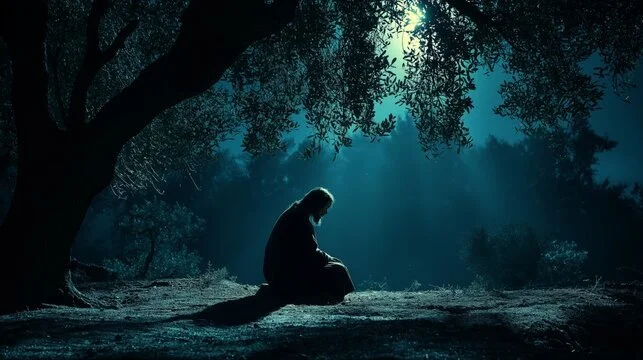
Jesus did not try to find peace or to suppress fear. He entrusted himself completely to the Father.
That is the invitation. Not to be fearless. Not to pretend. Just to entrust yourself.
Contrary to what we normally think: the opposite of fear is not peace. John says it plainly: perfect love casts out fear. Not courage. Not tranquility. Love. Specifically the settled, received, identity-shaping love of God. When that becomes the biggest thing in the room, fear finds its proper size underneath it.
We have been searching for peace when what we actually need is to be more deeply loved. Or more precisely, to actually believe we already are.
You Are Not Supposed to Eliminate the Chaos
Manny Arango wrote a book called Crushing Chaos that I've also found to be very helpful.
He goes back to Genesis 1 and points out something hiding in plain sight.
When God shows up at the beginning, he is not showing up to a blank canvas. He is showing up to chaos.
The deep. The darkness. The formless void.
And what does he do? He doesn't eliminate it. He brings order to it.
Firmaments. Light. Land.
The sea still exists. The night still exists. But now they have edges. They have a place. They have a boundary.

It isn't until Revelation, at the very end of time, that we read that there will be no more night and no more sea. The chaos is not fully resolved until then. Not here in this life.
This means that in our current world, it is not part of God's design for us to be chaos-free in the meantime. It is his design for us to live in order in the middle of it.
Fear is not going away in this life. Chaos is not going away. We are in a cosmic war and the sooner we accept that the better. The question is not how to eliminate the fear. The question is whether fear is staying within its boundary. Whether it is in its lane.
And it stays there, not by us searching harder for peace, but by submitting to the One who set the boundary in the first place. He doesn't ask us to crush the chaos. Jesus already did that. He asks us to agree with the order he has established. To stay inside it His order and to keep returning to it.
Order comes before peace. Submit to Jesus, and peace follows. We have been trying to find the peace without order and that’s why it keeps slipping away.
Patrick's Prayer
In the early 5th century, a young man named Patrick was kidnapped from Roman Britain and taken to Ireland as a slave. He spent six years in isolation, tending sheep on a cold hillside. Eventually he escaped and went back to Britain. But God called him to go back to the very place he had been impresoned as a missionary.
And Ireland in the 5th century was not a safe destination.
It was a land of dozens of petty kings whose courts were advised by a powerful druid class: part philosopher, part priest, part sorcerer. These were not politicians but spiritual authorities with real demonic power using curses, incantations, and divination. They had a stronghold in Ireland, and they were not going to let this silly Christian dismantle their ways. He and his followers faced abuse, enslavement, and assassination attempts from the Druids.
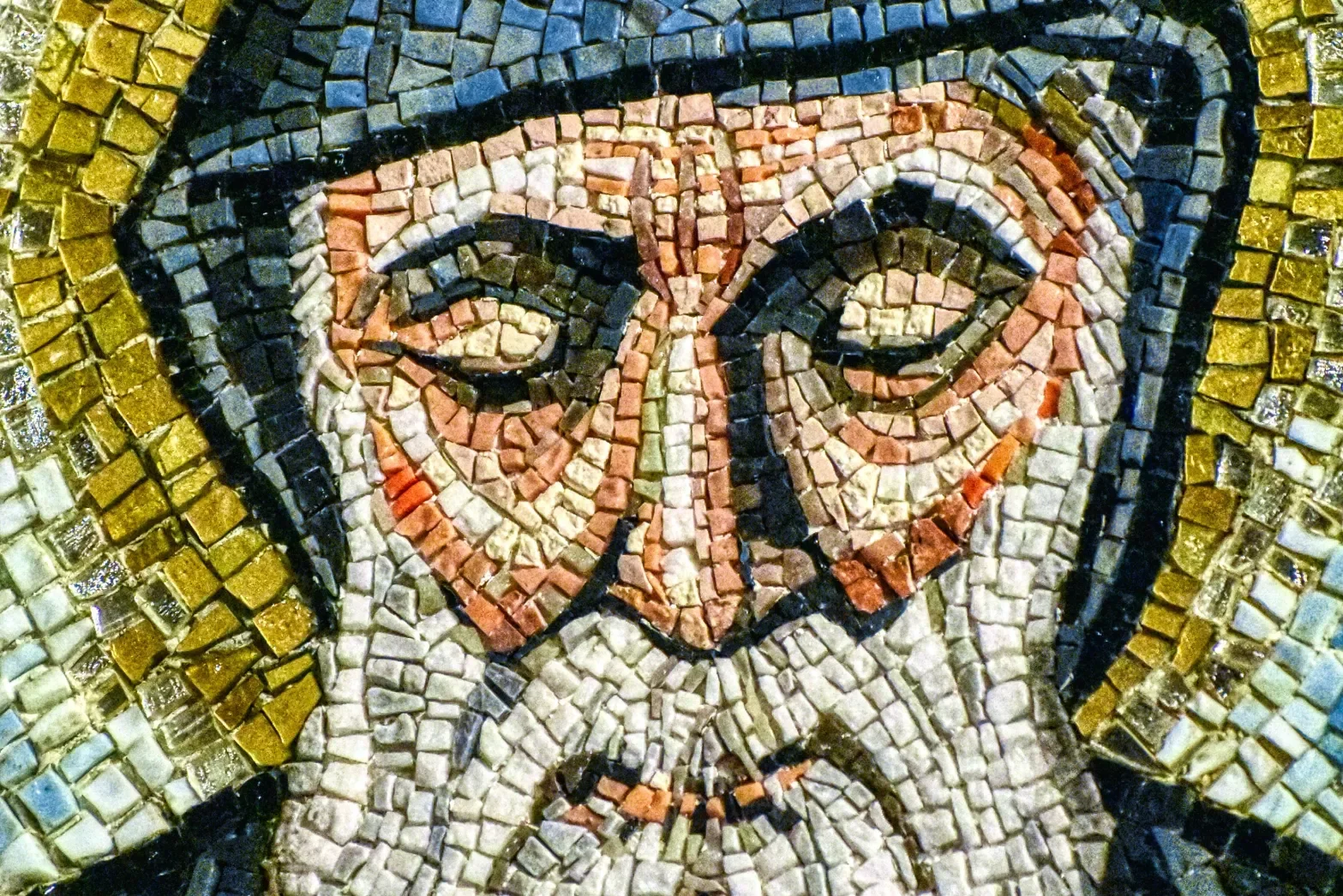
One of the most famous stories tells of Patrick lighting an Easter fire the same night of the High King’s pagan fire at Tara. It was considered a sacred flame that no other fire could precede, under penalty of death. Patrick lit his anyway in defiance of the king and of the druids. And the fire, the stories say, could not be put out.
Patrick went into genuinely hostile spiritual territory, armed with nothing the world would recognize as power, and he kept going back every morning with the fiery passion to embody Jesus to the darkness.
Which is exactly what the Breastplate prayer is. Read a section of it below knowing what he was walking into. He wasn't writing poetry for a Sunday morning. He was arming himself for a real war. The full prayer explicitly names what it was protection against: incantations of false prophets, black laws of paganism, spells of druids.
This was a man entering a spiritual war zone every single day, and his answer was not better strategy or safer routes.
It was Christ before him. Christ behind him. Christ on every side.
The prayer that carries his name is a morning declaration. Not a request for the danger to disappear. Not a performance of courage. It's a deliberate act of placing yourself inside the presence of a Person rather than a plan.
I arise today, through God's strength to pilot me, God's might to uphold me, God's wisdom to guide me, God's eye to look before me, God's ear to hear me, God's word to speak for me, God's hand to guard me, God's shield to protect me, God's host to save me From snares of devils, From temptation of vices, From everyone who shall wish me ill, afar and near.
Christ with me, Christ before me, Christ behind me, Christ in me, Christ beneath me, Christ above me, Christ on my right, Christ on my left, Christ when I lie down, Christ when I sit down, Christ when I arise.
Read the full prayer here: https://wildatheart.org/prayer/st-patricks-breastplate/
Notice what he doesn't pray. He doesn't ask for the danger to disappear. He doesn't ask to stop feeling afraid. He declares that Christ is covering every direction. Before him, behind him, above, below, left, right, inside.
This is not the power of positive thinking. It's the power of truth seen through spiritual eyes.
That's what guarding the heart looks like in practice. We don't guard our hearts by building walls or accumulating more information. We guard our hearts through a Person.
Some Honest Next Steps
Name what you feel. Don't suppress it and don't perform peace. Ask what it's attached to. What do I love that feels threatened right now? Bring it into the light.
Ask where it's coming from. Is this the body's alarm from something it survived? Is this the flesh trying to be its own safety? Is this the enemy's lie that has settled in and started making decisions? Probably some of all of it. The source shapes what you do next.
Refuse the identity statement. You are not an anxious person. You are a person in whom the living God dwells, who is still becoming. Fear is not your name.
Practice entrusting instead of managing. Each time the urge to check, prepare, or control fires, notice it. And instead of following it, give it back. Lord, this belongs to you. I'm a steward, not an owner.
Let tomorrow's fears stay in tomorrow. You don't have grace for a disaster that hasn't happened. You have grace for today. The manna is given one day at a time. It has always been enough.
Rise each morning inside Christ, not inside your strategy. Before the day gets loud, place yourself inside the surrounding presence of God. Not asking him to protect you from a distance. Declaring that he is before you, behind you, in you.
Fear is real. The world is genuinely dangerous. Loss is real. Death is real.
A God who told us to simply stop feeling afraid, without entering any of it himself, would not be worth trusting.
But that is not what he did.
He entered. He felt it. He walked through it. And he rose. And he didn't just rise, he kicked death in the teeth. He will fully finish the job of eliminating the chaos. Until then, and even knowing that, we entrust ourselves completely to him.
He's made our job pretty simple. He's doing the heavy lifting.
Take your fear and give it to him. Give your body to him. Give your emotions to him. Give your thoughts and your choices. Give him your whole self completely. Paul calls this a living sacrifice and says that this, all of this, is your spiritual worship.
Not performing. Not managing. Not white-knuckling your way through another day.
Just entrusting.
Even Jesus entrusted himself to the Father.
We can too.
Learning to Become Who We Already Are In Him,
John Will
If this resonated with you, I’d love to hear about it and even have a conversation!
For more on the concept of using order to combat chaos - check out Manny’s interview with John here
