
A Father Has Been Running Toward Me My Whole Life
On what your soul keeps getting wrong about the hard road of life
There’s a pretty core memory I return to in vulnerable moments.
It was in my Kindergarten gym class. The teacher was strict and no-nonsense, and she had one rule before we lined up: put a bubble in your mouth. Stay quiet. Stand still. Wait like a soldier.
I was five years old and I had absolutely no intention of being disobedient.
I just forgot.
Because somewhere in the thirty seconds between her instruction and the lineup, something in me got loose and I started singing a worship song we played in the car at the top of my lungs. Like I was the only person in the room.
I was not the only person in the room.
I don’t remember exactly what she said. What I remember is the feeling it left behind.
You’re bad. You’re too much. Sit down.
I sat out of recess. Right next to the teacher. Just me and her and the sound of everyone else playing recess without me.
My parents eventually pulled me out for first grade (not solely because of this experience) and I had a genuinely wonderful homeschool experience. So in the grand scheme of things, this is a small story.
But small stories make marks.
Because that verdict doesn’t stay in the gym. It follows you. It shows up in the striving, in the fear-based drivenness that pushes you to prove yourself before anyone can decide you’re not worth it. It shows up in the deep quiet assumption that if anything good is going to happen, you’re the one who has to go arrange for it. Nobody is coming through for you. You’ve learned that. So you work harder, try harder, perform better, build the pizza oven alone and stand there wondering why finishing it didn’t fill the thing you were actually trying to fill.
Some of our wounds aren’t just wounds; they’ve become our theology. Our wounds have become the way we move through the world.
And the thing I’ve had to sit with is this: the way that verdict made me feel about myself is almost identical to the way I’ve always assumed God sees me. Not consciously. Not theologically. But underneath, where the real assumptions live.
I’ve also come to believe that wound doesn’t look the same in every man. But it produces more versions of the same broken theology than most of us want to admit.
The Orphan Spirit Has More Than One Face
The verdict the wound delivers doesn’t produce the same thing in everyone.
Some men go quiet. They check out, disengage, arrange small pleasures to ease the pain. They’re not angry exactly, just resigned. They stopped expecting much a long time ago and they’ve made a kind of peace with that, except it isn’t really peace. It’s just numbness with better manners.
Some men go the other direction entirely. They strive. They push. They take on life with a fear-based drivenness that looks like ambition from the outside but feels like survival from the inside. The deep quiet assumption underneath all of it is the same either way: nobody is coming through for you. You are on your own. Whatever gets done, you’re the one who has to go arrange for it.
But those aren’t the only two versions.
The Version That Looks Like Faithfulness
This one is harder to spot because it looks so much like the right thing.
The man who serves in every ministry, knows his Bible cold, shows up every Sunday, performs every role well. He’s not checked out. He’s overinvested. And from the outside he looks like exactly the kind of man the church needs more of.
But if you sat with him long enough you’d find the same thing underneath. A deep uncertainty about whether he is actually known and loved apart from what he produces. He’s not resting in sonship. He’s auditioning for it. He has the language of grace but he’s still living by the logic of performance. Every sermon he agrees with, every quiet time he completes, every way he shows up is quietly building a case that he is enough. That God is pleased. That he hasn’t been found out yet.
No amount of right theology fixes that because this isn’t a knowledge problem. It’s a receiving problem. Sometimes the striving and the wound are the same story wearing different clothes.
Always on to the Next Thing
Then there’s the version that’s almost invisible because it looks so much like drive.
The man in his late twenties or thirties who is always thinking about the next move. Career, finances, skills, status. Always leveling up, always optimizing, always onto the next thing the moment the current thing is achieved. He looks like he has vision. He looks like he’s going somewhere.
But if you sit with him long enough you start to notice he’s never quite satisfied. He hits the goal and almost immediately starts scanning for the next one. He can’t really rest in what he’s built. The promotion comes and he’s already thinking about the one after it. The milestone arrives and he takes maybe a day to feel it before the restlessness sets back in.
And the reason, if he’s honest, is that he’s not really building toward something. He’s building away from something. He’s building a case. Trying to finally produce enough to hear the thing he’s been waiting to hear since he was young.
I’m proud of you. I knew you could do it. Well done.
Achievement never delivers that. It just sets up the next target. So he keeps moving because stillness means feeling what’s actually there. And what’s actually there is quieter and harder and more personal than any career goal has ever touched.
There’s also something specific to this generation worth naming. Men in their middle ages, broadly speaking, grew up being told they could be anything, which sounds like a blessing but quietly delivers a different message: your worth is entirely yours to establish. Nobody hands you a place in the world. You have to earn it, optimize your way to it, build it from nothing. The whole language of leveling up and making your next move runs on the assumption that you are fundamentally on your own and the only variable you can control is your own output.
That’s not ambition. That’s the orphan spirit with a LinkedIn profile.
All three versions share the same root. The same kindergarten verdict running in the background. Nobody is coming through for you. You are on your own. Sit down.
The checked out man believed it and stopped trying. The performing man believed it and went religious. The achieving man believed it and went relentless.
And none of them have found what they’re actually looking for yet.
Because what all three are actually aching for isn’t a career win or a ministry role or a quiet resignation. It’s something those things were never designed to give.
I went looking in Scripture to find out if any of the great men of faith had figured out what that something was. What I found there surprised me.
We’ve Been Looking in the Wrong Places
The Bible doesn’t spare us here.
Abraham, the father of faith, lies about his wife not once but twice.(Genesis 12, Genesis 20).
Jacob manipulates nearly every relationship he touches.
David, the man after God’s own heart, destroys a family because he cannot master his own desire.
Eli knows his sons are corrupt and does nothing.
Samuel anoints kings for Israel but cannot lead his own sons to walk in righteousness.
These are the great men of the faith.
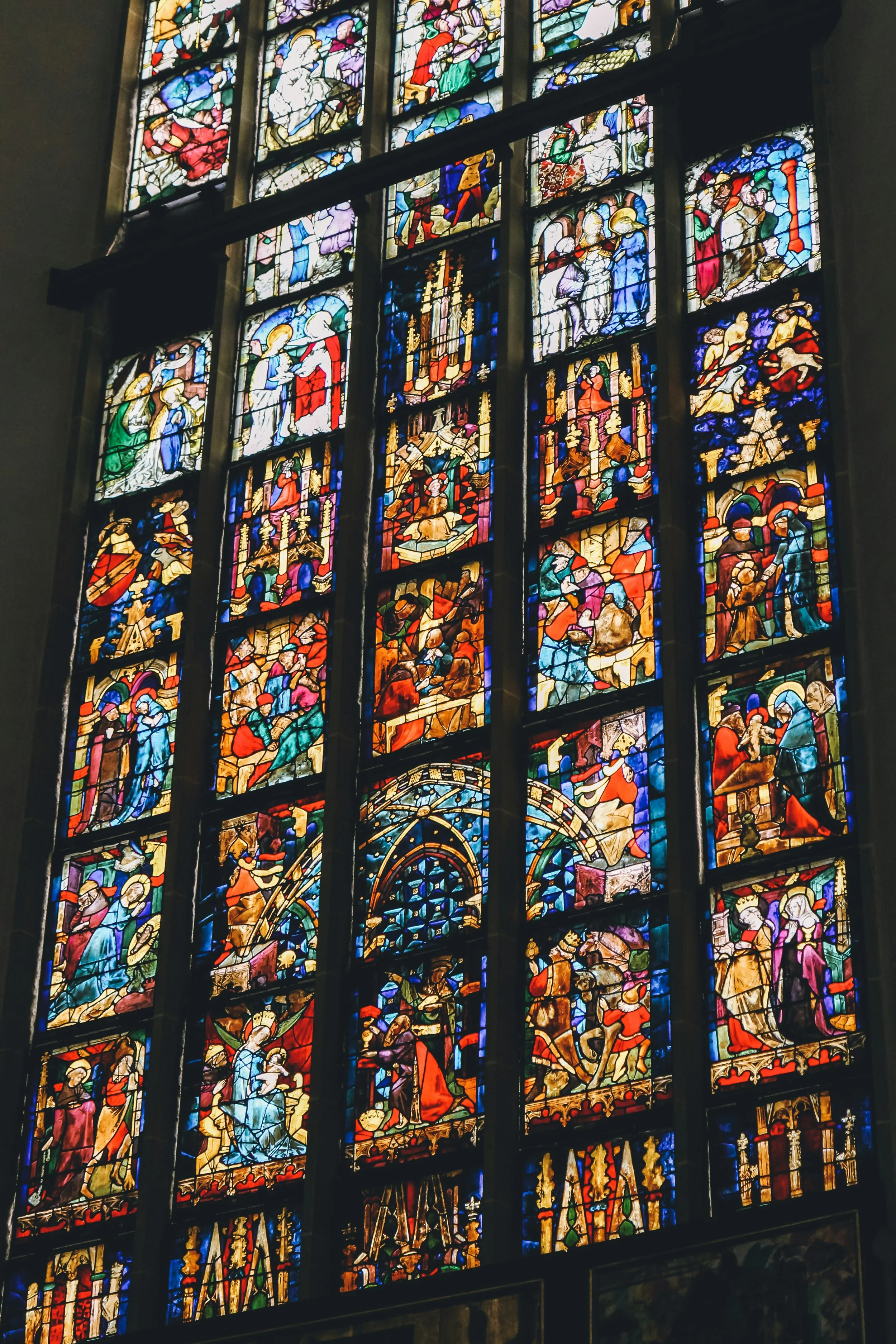
The Bible is not trying to create legends. It’s telling the truth. And the truth is that even the greatest men leave something unfinished in their sons.
But here’s what stopped me: some of the better fathers in Scripture aren’t biological fathers at all.
Boaz goes out of his way to protect and provide for Ruth, a young woman who has no claim on him. (Ruth 2)
Mordecai raises Esther as his own daughter, and that quiet faithfulness shapes the course of history. (Esther 2:7)
Joseph raises a child who is not biologically his and does it with steady, obedient courage.
The men who chose to father, not just the ones who were obligated to, are the ones who seem to come closest.

St. Joseph Cradling the Infant Christ by Guido Reni
And still none of them are the thing.
Because when I’m honest about what I’m actually aching for, the thing that no earthly father has ever fully given me, it isn’t a person. It’s unconditional love that never runs out. Emotional availability that has no ceiling. Wisdom that doesn’t miss anything. Presence that never leaves.
Those aren’t things a man can give. Those are things only God can give.
I think I’ve spent most of my life asking men to be God and experiencing the fallout of that. The ache I feel when people in my life can’t show up the way I need them to isn’t just loneliness. It’s misdirected longing. I’m wanting God and reaching for a person, and the gap between those two things is where all the grief lives.
There is no earthly father archetype to idealize. Scripture isn’t hiding that. It always leaves us unsatisfied to some degree.
The ache is pointing somewhere specific.
But even when you start to see that, something in you argues against it. And that something has a very loud voice.
What Your Soul Is Telling You
Our souls are loud.
The experiences that shaped us early get locked somewhere deep and they speak with authority. They tell us what is true. What is safe. Who we are and whether anyone is really coming.
For me it goes back to that little boy in the gym. Sitting next to the teacher while everyone else played outside. Wanting to go home. Believing no one was coming.
That feeling is real. I’m not dismissing it.
But I’ve started to ask a different question.
What if my soul isn’t telling me the truest things about me?
James says to count it all joy when you fall into various trials, because the testing of your faith produces endurance, and endurance produces something complete (James 1:2-4). He’s not being glib. He’s describing a process.
The soul looks at a trial and says:
This is terrible. I’m alone. God has abandoned me. This is proof that nobody is coming.
The spirit looks at the same trial and says:
My faith is being trained. God is doing something in me that I can’t fully see yet. I don’t have the whole picture. But I will trust Him.
The soul only sees the here and now. It builds its case from the accumulated evidence of hard things and draws the orphan conclusion.
The spirit sees a fuller picture. The one only God can give.
I feel this tension in myself constantly. My soul carries real hurt that hasn’t been fully healed. Real longing that hasn’t been fully met. And some days it speaks up loudly.
John Will, you have no business giving anyone hope. Look at what you’re still carrying. Look at what hasn’t been fixed yet. What do you actually have to offer?
That voice sounds reasonable. It sounds honest. It sounds like it’s just being realistic.
But it’s only looking at the here and now. It has no access to the full story.
Because if my spirit is already seated with Christ in the heavenly realms (Ephesians 2:6), if Jesus says He is not ashamed to call me His brother (Hebrews 2:11), if I have received the Spirit of adoption by which I cry out Abba, Father (Romans 8:15), then my spirit already knows something my soul is still learning.
The soul says: “I have experienced loneliness and rejection, therefore I am an orphan.”
The spirit says: “I am a beloved child of God, and the best is yet to come.”
Those are not the same story. But they can look identical from the inside when you’re living out of the wrong one.
Paul understood this tension. He writes in 2 Corinthians 4:16-18 that even though the outer self is wasting away, the inner self is being renewed day by day. The light and momentary troubles are producing for us an eternal weight of glory beyond all comparison. But the key is what he says next: we look not to the things that are seen but to the things that are unseen.
That’s the shift. Not pretending the seen things aren’t real. Not performing joy over genuine grief. But choosing to reckon the unseen things as more true than what the soul can see from where it’s standing.
I still feel the longing. I still carry the wound. But I don’t have to let my soul write the ending.
There’s a story I listened to on audiobook last week that I used to listen to as a child that spoke exactly to my experience.
There Was Only One Lion

In ‘The Horse and His Boy’, a boy named Shasta grows up under an abusive fisherman in a dirty coastal town, believing this man is his father, believing this is all his life will ever be. He escapes and goes on a long and terrifying journey toward something he can barely name, toward Narnia and the North, though he doesn’t fully understand what that means yet.
Along the way he is chased by lions. Driven by fear toward people and places he didn’t plan to go. By the time he reaches his destination he is exhausted, hungry, and convinced he is the most unlucky and most pitiful boy in the entire world.
Then in the dark, a voice finds him.
“Who are you?” he said, barely above a whisper.
“One who has waited long for you to speak,” said the Thing. Its voice was not loud, but very large and deep.
“Are you a giant?” asked Shasta.
“You might call me a giant,” said the Large Voice. “But I am not like the creatures you call giants.”
“I can’t see you at all,” said Shasta. Then he said, almost in a scream, “You’re not — not something dead, are you? Oh please, please do go away. What harm have I ever done you? Oh, I am the unluckiest person in the whole world.”
Once more he felt the warm breath of the Thing on his hand and face. “There,” it said, “that is not the breath of a ghost. Tell me your sorrows.”
So he told how he had never known his real father or mother and had been brought up sternly by the fisherman. And then he told the story of his escape and how they were chased by lions, and of all their dangers, and of the long desert journey.
“I do not call you unfortunate,” said the Large Voice.
“Don’t you think it was bad luck to meet so many lions?” said Shasta.
“There was only one lion,” said the Voice.
“What on earth do you mean? I’ve just told you there were at least two the first night, and —”
“There was only one, but he was swift of foot.”
“How do you know?”
“I was the lion.”
And as Shasta gaped with open mouth and said nothing, the Voice continued. “I was the lion who forced you to join with Aravis. I was the cat who comforted you among the houses of the dead. I was the lion who drove the jackals from you as you slept. I was the lion who gave the horses the new strength of fear for the last mile so that you should reach King Lune in time. And I was the lion you do not remember who pushed the boat in which you lay, a child near death, so that it came to shore where a man sat, wakeful at midnight, to receive you.”
“Who are you?” asked Shasta.
“Myself,” said the Voice.
Every time I read that exchange, something in me breaks open.
Because Shasta wasn’t abandoned. He was being led. Every lion, every fear, every desperate sprint in the dark was the same Lion. The one who had been present the entire time. Shaping the journey. Pushing the boat. Driving him toward something he couldn’t yet see.
His soul told him he was the most pitiful boy in the world.
His story would come to tell him he was a prince being led home.
And Shasta doesn’t even find out his real name until he reaches King Lune of Archenland. His name isn’t Shasta at all. It’s Cor. He was kidnapped as an infant and carried to a foreign country, raised under the wrong father, living inside the wrong story his entire childhood.
But his true name was always Cor. Son of the king. Heir to the throne.
He just didn’t know it yet.
I don’t think Lewis stumbled onto that by accident. He was a man who understood that the best stories are shadows of something older and truer. And there is a story older than Narnia that Aslan was always pointing toward. Jesus told it once. It’s about a father who runs.
The Father Who Ran
There’s a detail in the parable of the prodigal son that most people walk right past.
In ancient Hebrew culture, a son who lost his inheritance among Gentiles faced something called the Kezazah ceremony. When he returned to his village, the townspeople would break a clay pot at his feet, a public declaration that he was cut off, disowned, no longer one of them. The shame would be total and communal before he ever reached his father’s door.
The father in Jesus’s story runs.
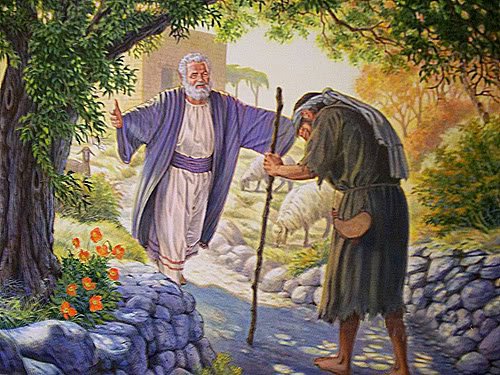
In that culture, an older man running through the street was undignified. But the father runs anyway. He gathers up his robe and he runs down the road toward his son who is still a long way off. He gets there first. Before the village can perform the ceremony. Before the shame can land. Before the apology is even finished.
He absorbs it himself.
He throws his arms around the boy and restores him before the verdict can be rendered.
Jesus wasn’t telling a nice story about forgiveness.
He was telling us who God is. He was showing us what Aslan was always a shadow of.
The Father who sees you from a long way off and runs. The Father who absorbs the shame before it can reach you. The Father who was the Lion on every hard road, the cat in the dark, the hand that pushed the boat. Who has been present in every mile you interpreted as abandonment.
George MacDonald understood what was at stake when he wrote:
“The hardest, gladdest thing in the world is to cry Father! from a full heart. The refusal to look up to God as our Father is the one central wrong in the whole human affair; the inability, the one central misery.”
The one central misery.
Jesus kept driving at this. Over and over, from every angle. He couldn’t leave it alone.
Which of you, if his son asks for bread, will give him a stone? How much more will your Father in heaven give good gifts to those who ask him! (Matthew 7:9-11)
Look at the birds of the air. Are you not much more valuable than they? (Matthew 6:26)
If a man has a hundred sheep and one wanders off, will he not leave the ninety-nine and go after the one? (Matthew 18:12)
He is asking you a real question. He wants a real answer.
You have a good Father. He is better than you thought. He has been running toward you the entire time you thought you were alone.
Knowing that and living from it are two different things. There are two actual moves that have to happen for this to get from your head somewhere deeper.
Two Shifts We Have to Make
The first is a shift of identity: from orphan to beloved child.
Shasta had to stop living as the poor pitiful boy he thought he was and take hold of his real name. Prince Cor. Son of the king. The name didn’t erase what he’d been through. The hard road was still real. But it changed everything about how he understood the journey and where he understood himself to be going.
Scripture says we have not received a spirit of slavery leading back to fear, but the Spirit of adoption by which we cry out Abba, Father (Romans 8:15). Abba isn’t formal. It’s intimate. It’s the word a small child uses when their father walks through the door. And that Spirit is already in you, already crying out, already reaching toward what is true about you even when your soul hasn’t caught up.
We are not orphans managing our way through a difficult world.
We are sons being led home by a Father who has been present in every hard mile.
The second is a shift of hope: from this life to eternal life.
This is where a lot of us get quietly stuck. We place our hope on this life being fixed. On the wound being healed here, the longing being filled here, the father figure finally showing up here. And when it doesn’t happen the way we need it to, something in us goes quiet with despair. We start to wonder if this is all there is.
But eternal life, as Jesus defines it, is knowing God (John 17:3). And that knowing begins now and never ends. We get to start knowing our Father on this journey. But we are still heading toward something.
Hebrews 12:22 says we are not coming to Mount Sinai with its thunder and fire and terror. We are coming to Mount Zion. The city of God. The assembly of the firstborn. Joy. That is where this road ends.
Not in the failures or rejection or loneliness. Mount Zion. The restoration of all things (Acts 3:21, Revelation 21:5). The day we experience our Father face to face in the fullness of what was always meant to be.
Paul says in Romans 5:3-5 that this hope, built through suffering and endurance and character, will not put us to shame, because the love of God has been poured into our hearts through the Holy Spirit.
Hebrews 6:19 says hope is an anchor for the soul.
Isaiah 40:31 says those who hope in the Lord will renew their strength. They will run and not grow weary. They will walk and not faint.
So we count it as true before we feel it. We reckon it as real. We choose to live from what our spirit already knows even while our soul is still catching up. We don’t wait for the feeling. We walk toward the kingdom.
I’m still learning to walk that way. And I want to be honest about where I actually am with all of this.
What I Chose to Believe Sitting Here Writing This
I want to be honest about something.
These truths didn’t come to me years ago from a safe distance. They came to me sitting here writing this.
God saying:
I am fathering you. You feel like Shasta, but you are really Cor. Despite what the story has felt like so far. I see you. I love you. And I am building something within you that has eternal weight to it.
And my soul immediately pushed back.
John Will, you still have hurt and pain that hasn’t been fully healed. You have no right to give anyone hope. What hope do you even have to share with anyone?
That’s the soul talking. It only knows what it’s seen. It builds its case from the evidence of the hard road and draws the orphan conclusion. And some days it is loud.
But I’ve decided it doesn’t get the final word.
My soul is looking at the here and now. My spirit is looking at the whole story.
And the whole story says: you were never an orphan. You were a prince who didn’t know his name yet. The lions were never random. The hard road was never abandonment. There was only one Lion, and He was swift of foot, and He was chasing you home the entire time.
I choose to believe that.
Not because every part of me feels it yet. But because I know it is true. And faith is deciding to live from what you know rather than what you feel.
Imagine if Shasta had known from the beginning. If he’d understood that the cat in the tombs was Aslan. That the lion driving him toward Aravis was Aslan. That the boat carrying him as a dying infant to shore had been pushed there by Aslan. He would have walked that hard road completely differently. Not without pain. But without the orphan weight of believing he was alone in it.
That’s what I want. That’s what I’m still reaching for.
I choose to believe that God has been fathering me even when I couldn’t see it. That He has been running toward me the entire time I’ve been running the wrong direction. That my hope is not on this life fixing what’s broken, but on my Father restoring all things, and on the day I experience Him in His fullness.
That hope will not put me to shame (Romans 5:5).
And on the days my soul argues otherwise, I will remind it: you are not the whole story. You are not even the truest part of it.

My name is not “too much.”
My name is Cor. I am my Father’s son. And I am on my way home.
“See what great love the Father has lavished on us, that we should be called children of God! And that is what we are!” — 1 John 3:1
“A Father to the fatherless, a defender of widows, is God in his holy dwelling. God sets the lonely in families, he leads forth the prisoners with singing.” — Psalm 68:5-6
You are not an orphan. You are a son. And your Father is already running.
Learning to Become Who We Already Are In Him,
John Will
If this resonated with you, I’d love to hear about it and even have a conversation!
If you want a real life picture of what a Father running after you looks like, this is a good video to start with.
