
I’ve Been Trying to Find a Father My Whole Life
On the universal longing to be fathered, and why it keeps disappointing
Reader’s NoteThis is not the most eloquent writing you will ever see. In some ways this feels more like ripping a page out of a journal than it does a carefully crafted spiritual reflection. But I feel compelled to go forward in my healing journey, and I believe this is part of it.
This is honestly scary for me to write. I think of myself as a very open person and would probably be comfortable having this same conversation one-on-one with someone over a cup of coffee. But putting this in public is harder.
Some people reading may think I am blame shifting, performing trauma, dismissing gratitude, dishonoring people, being overly dramatic, or projecting. I have no control over what people think.
Will everyone reading resonate with this? No. Some people may skim it and move on. But maybe someone will read it slowly and feel seen in a way they did not expect. I have no idea. This topic sometimes makes me feel like I am the only person in the world who feels this pain this deeply, even though I can intellectually accept that is probably not true.
This is not a finished product. I do not have all the answers to this pain yet. But I believe God is somewhere in this. Maybe this is part of my further initiation into the manhood I long for. I am having to be brave and be okay with letting this article be what it is.
There’s an image I’ve carried most of my life.
An old man and a young boy at the edge of a river at dawn. The old man’s hands are guiding the boy’s hands on a fly rod. Nobody is in a hurry. Nobody is checking their phone. The boy doesn’t have to explain himself or earn his place there. He’s just present. And that’s enough.
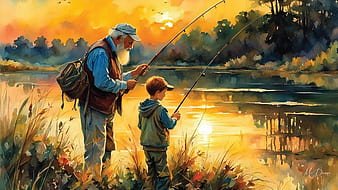
I don’t know exactly where that image came from. A movie maybe. A book. But it got in somewhere and never left.
Because what it’s really a picture of isn’t fly fishing.
It’s what it feels like to be fathered.
Let me tell you about the men who gave me pieces of it.
Big Daddy and Papa
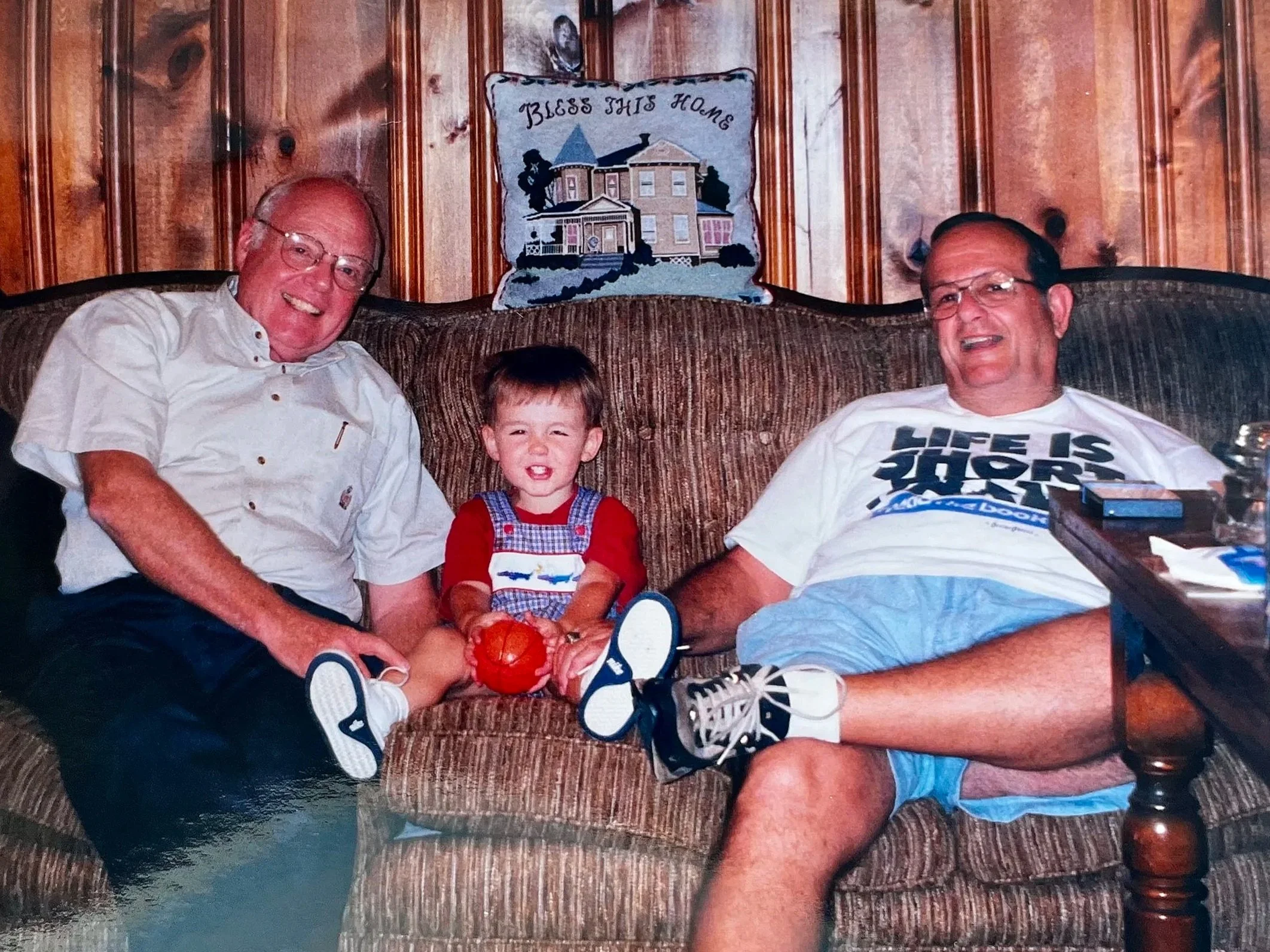
I had two grandfathers. Both were good men who genuinely loved Jesus, and both gave me something real. Even now I wish I could have gotten more.
My dad’s dad, Big Daddy, was a preacher. As a little boy he would take me with him to small country Baptist revival meetings and invite me to sit on the pew with him while he preached. Not out in the congregation. With him. That felt like being chosen.
He took me to baseball games and football games. He took me out for barbecue. And when my grandmother wanted me eating healthy, he’d sneak me out for a Sonic run or slip me an extra dessert when she wasn’t looking. There was something in him that just wanted to give. Wanted to take me places. Wanted me along.
I miss his presence.
My mom’s dad, Papa, was a different kind of man. Gentler. He was a retired OBGYN who delivered babies for decades, largely self-taught with his hands, and he had a heart for discipling men, something I’d later find in myself too. Growing up, I wanted to be a doctor like him. More than that, I just wanted to be like him.
I miss his presence too.
But I want to be honest: even with all my idealized memories, they were both imperfect. Neither was the most emotionally intelligent. Both had anger that surfaced sometimes. And both of them, at different points, shared stories with me about wounds from their own fathers, men who were physically absent during the 30s and 40s, out looking for work, doing what they had to do. My grandfathers had wounds too. And still they gave me everything they could.
I love them so deeply. And I would give almost anything to bottle up their smell. Their presence. The specific weight of being near them.
I think about Papa especially when I’m trying to build something. Because by the time I was old enough to want to learn what he knew, how to work with his hands, how to fix things, how to make something from nothing, he was already gone.
The Pizza Island

Last year my wife handed me a blueprint and said, “Just find the oldest man in Home Depot and tell him you need help.”
So I did.
I walked through those sliding doors feeling like I was five years old. Like I’d wandered away from my mom in a grocery store and suddenly I’m just standing there, completely at the mercy of whoever would stop. You know that feeling when the mechanic starts asking questions and you just nod like you know exactly what he’s talking about? That was me. In the lumber aisle. Holding a pizza island blueprint. Feeling like an imposter.
I was twenty-seven years old and I had absolutely no idea what I was doing.
My dad hadn’t been able to teach me many handyman skills because Big Daddy hadn’t taught him either. So other than the few things I remembered Papa showing me, I was starting from zero, in public, with strangers.
But the kind men in that store helped me. Willingly. Patiently. And something in me felt genuinely seen by that, even though it was just a stranger in an orange vest explaining what kind of screws I needed.
The project took months. Multiple trips back. More mistakes than I’d like to admit. But I finished it.
When I stepped back and looked at what I’d built, I felt proud. For someone else it might just be a nice wood project. For me it felt like I’d walked through fire. So much self-doubt. So much solitude.
And then almost immediately, I felt something else.
Grief.
Because I did it alone.
And there’s a version of that moment I’ve always wanted, where someone who loved me was standing right next to me. Where Papa was there. Where someone said, “I knew you could do it.”
Friends and family told me how impressed they were, and I’m grateful for that. But I had still done the project by myself, when what I’d really wanted was for someone to have shown me and done it alongside me.
The pizza island was one version of this longing. The river was another.
The River
That image of fly fishing had been in my head for years before I ever actually did it.
I’d romanticized it completely: the cold current, the quiet, the slow art of reading the water. And somewhere underneath all of that was the real thing I was after, being taught something by someone who wanted to teach me. Being invited to stand somewhere beautiful by someone who wanted me there.
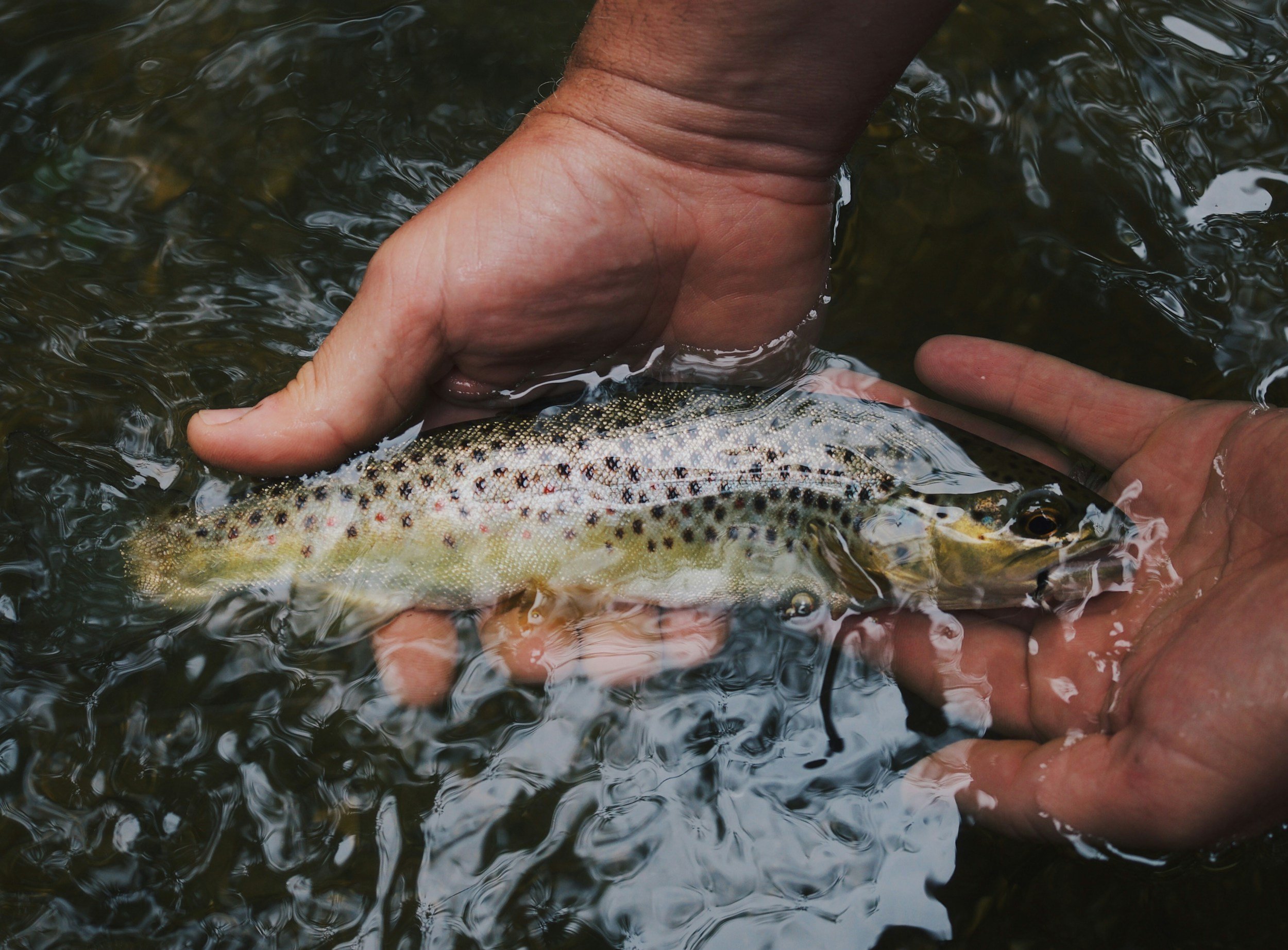
When I finally went, my boss lent me a rod. A friend offered to take me. And I was genuinely grateful for both. Standing in that river with the current around my boots, trying to figure out how to cast without tangling everything, I felt loved. I felt like someone had cracked something open.
And yet.
There was still a gap I couldn’t quite close. Not because my friend did anything wrong. He didn’t. He was generous and patient and good.
But in my mind there was another version of this story. One where I’m not just accompanied but apprenticed. Where the person on the river with me has been waiting to take me there for years. Where I’m being let into something, not just helped with something.
I wanted to be invited in. And what I got was kindness from good people who couldn’t quite carry the full weight of what I was reaching for.
Nobody can. And I’m starting to think that’s part of the point.
Because the gap I feel with earthly fathers and father figures and the gap I feel with God are almost identical. The same distance. The same quiet ache of wondering if He really sees me. The same assumption that I’m probably on my own. I didn’t make that connection for a long time. But once I saw it, I couldn’t unsee it.
So I started trying to describe what I was actually looking for.
The Ghost I’ve Been Chasing
I’ve been on what I can only describe as a ghost hunt. My own version of Captain Ahab searching for Moby Dick.
I have this raw, insatiable desire for deeper fathering. This feels out of place most times I have this conversation, and I even feel guilty for bringing it up. Because compared to many guys I know, I am actually quite blessed with the father figures I’ve had in my own life, including my own dad and other men along the way. It seems to even admit I still thirst is to feel like I’m slapping them all in the face.
And yet I still thirst. I still have this little boy inside of me begging me for more, and I can’t tell him “No, you’re NOT thirsty.”
What type of father am I really chasing? I’ve tried to search for the ghost in multi-generational small groups, one-off lunches, and coffees with older men, etc. But nothing ever stuck. Either the relationships weren’t what I had in mind. There was something they were lacking, or maybe it was good for a season, like a college mentor you only talk to every once in a while, now, and you have a physical proximity problem as well.
Sometimes I’ve thought: “God, I’d give you all the money I have if you could just resurrect my Big Daddy and Papa.” Maybe if they were here again, then maybe I’ll stop desiring this so much! I’m tired of this pain! But as I described earlier, I am also aware of their imperfections, and I’m afraid that if I were even able to bring them back, then even they would not be enough to fill this chasm within me.
For a long time, finding this white whale was probably the number one priority I looked for in finding a wife. Sometimes I honestly felt like I wanted to go on a date more with a girl’s dad than even them, because that’s almost what I wanted more! And if I struck the jackpot right and got the perfect father-in-law, then this painful longing might go away! Some of that is a story for another time.
But part of this pain has become obvious in the sense that I’ve had to start admitting that I’m chasing a human father figure that doesn’t fully exist in real life. This vision of what this father is like and how he makes me feel is largely a composite of various men and traits, both real and fictional, that I look up to in their fragmentation.
I’ll try to give more color to this in a second, but a good example of a father figure, both real and fictional to me, would be Charles Ingalls from Little House on the Prairie. A man who built the house his family lived in with his own hands. He was genuinely present. He knew the hearts of each of his family members and made time for them. Amid the hardships of homesteading, he stood like a rock, taking the blows of life for his family. And he was never too tired to play his fiddle at night as his family drifted to sleep. He was strong. He was tender. And he was there.
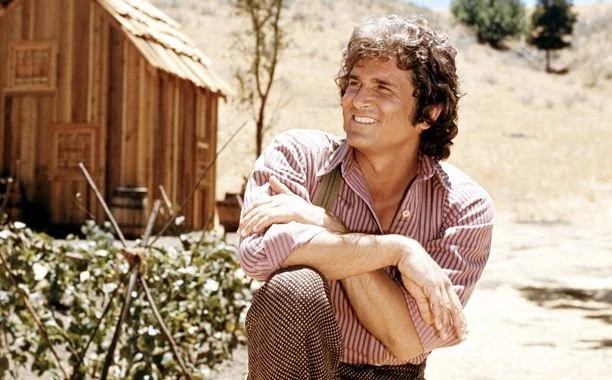
In my own version of this man, when I’m young, we go fishing or work on something together, then sit at the diner where he orders me milk while he drinks his coffee, and we talk about life. One day, when I’m older, maybe we'll share a cigar by the fire and get into the deep things. The whole arc of it is this: you are wanted, you are known, you are challenged, and you are never abandoned. From boyhood to manhood, he’s there.
I’ve tried to name the specific qualities of this ghost, because I think a lot of us desire themes of this man and have never had words for it.
Invitation
“Come away with me. Get away from the Mom and the school bullies and the noise. Come be with me. Let me invite you into something bigger.”
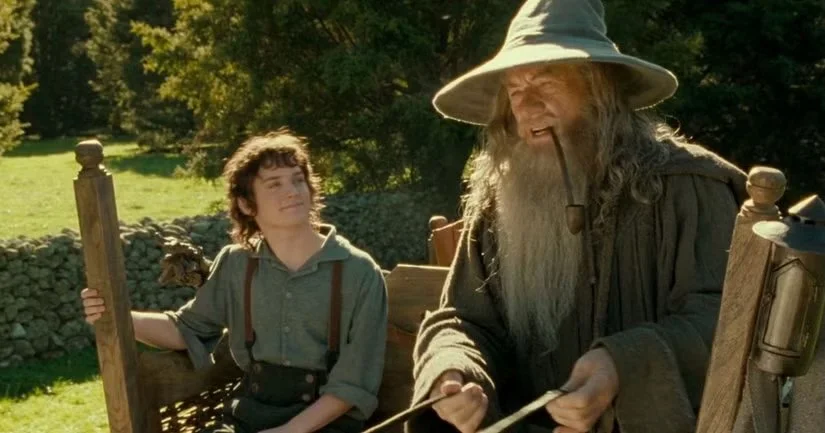
This is Gandalf showing up at Frodo and Bilbo’s door. It’s not a summons. It’s an invitation into an adventure the hobbit never could have found alone. It’s what Big Daddy was doing every time he said “come sit up here with me.”
The invitation says: you are wanted here. Come.
Blessing and Belonging
“You are deeply loved. Everything I have is yours. There is nothing you need to do to earn your place here.”
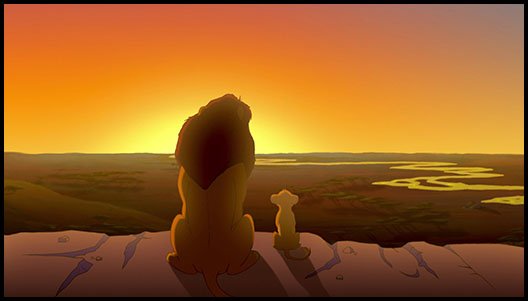
This is Mufasa on Pride Rock with Simba, showing him the kingdom. It isn’t performance-based. The son doesn’t have to do anything to deserve the horizon. It’s already his.
Blessing says: you belong. You don’t have to earn this.
Challenge
“I’ll take you beyond what you think you’re capable of. I’ll catch you when you jump from the high dive. But I won’t let you go.”
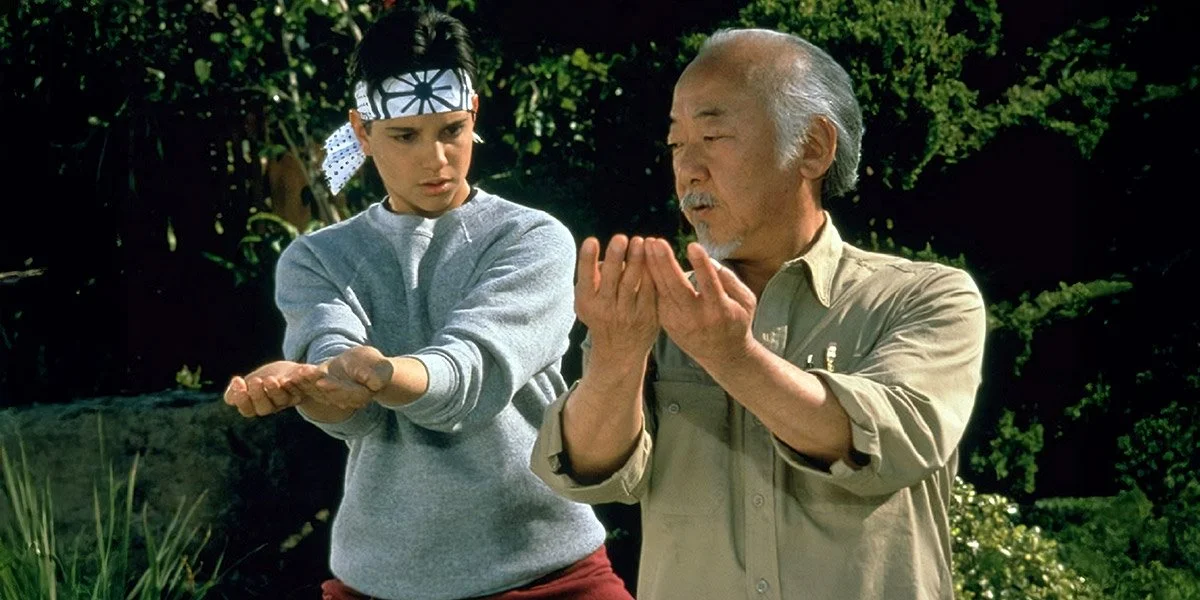
This is Mr. Miyagi and wax on, wax off. Daniel has no idea what he’s being taught. He thinks he’s doing chores, and Miyagi lets him think that because the lesson only works if Daniel trusts the process before he understands it. That’s not just teaching karate. That’s a man saying: I see something in you that you can’t see yet. Trust me. Keep going.
Challenge says: I believe in what’s in you. And I’m not going anywhere.
Presence
“You can ask me anything. You don’t have to perform here. I’m not going anywhere.”
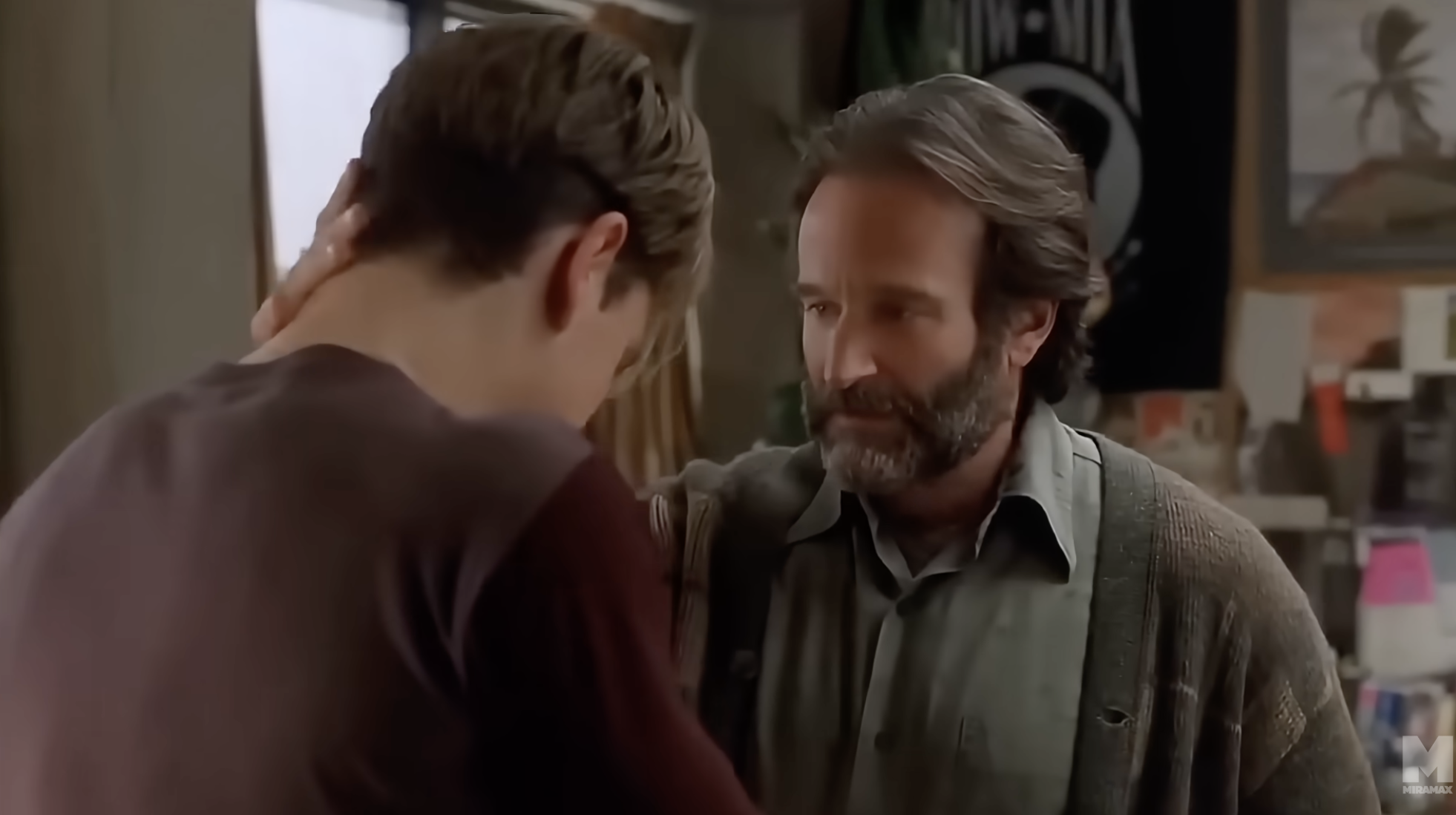
This is Sean Maguire in Good Will Hunting. Will is the most defended, most armored young man in the room, brilliant and wounded, pushing away everyone who gets close. And Sean just stays. He doesn’t flinch. He doesn’t leave. He sits across from Will week after week until he can finally say the thing Will has never been able to receive:
“It’s not your fault.”
The reason that scene breaks people is because Sean doesn’t say it once and move on. He stays with it. He keeps saying it until Will finally lets it in. Until the armor cracks. Until the boy underneath the defense gets to be held.
That’s presence. Staying when it would be easier to leave. Not flinching at the wound.
The Wound of Absence
I want to be nuanced here. There are a lot of decent dads out there, men who showed up, who tried, who loved in the ways they knew how.
But there’s a specific kind of father that many men and women grew up with and have never quite named. Physically present. Emotionally, somewhere else entirely.
You probably recognize some of these.
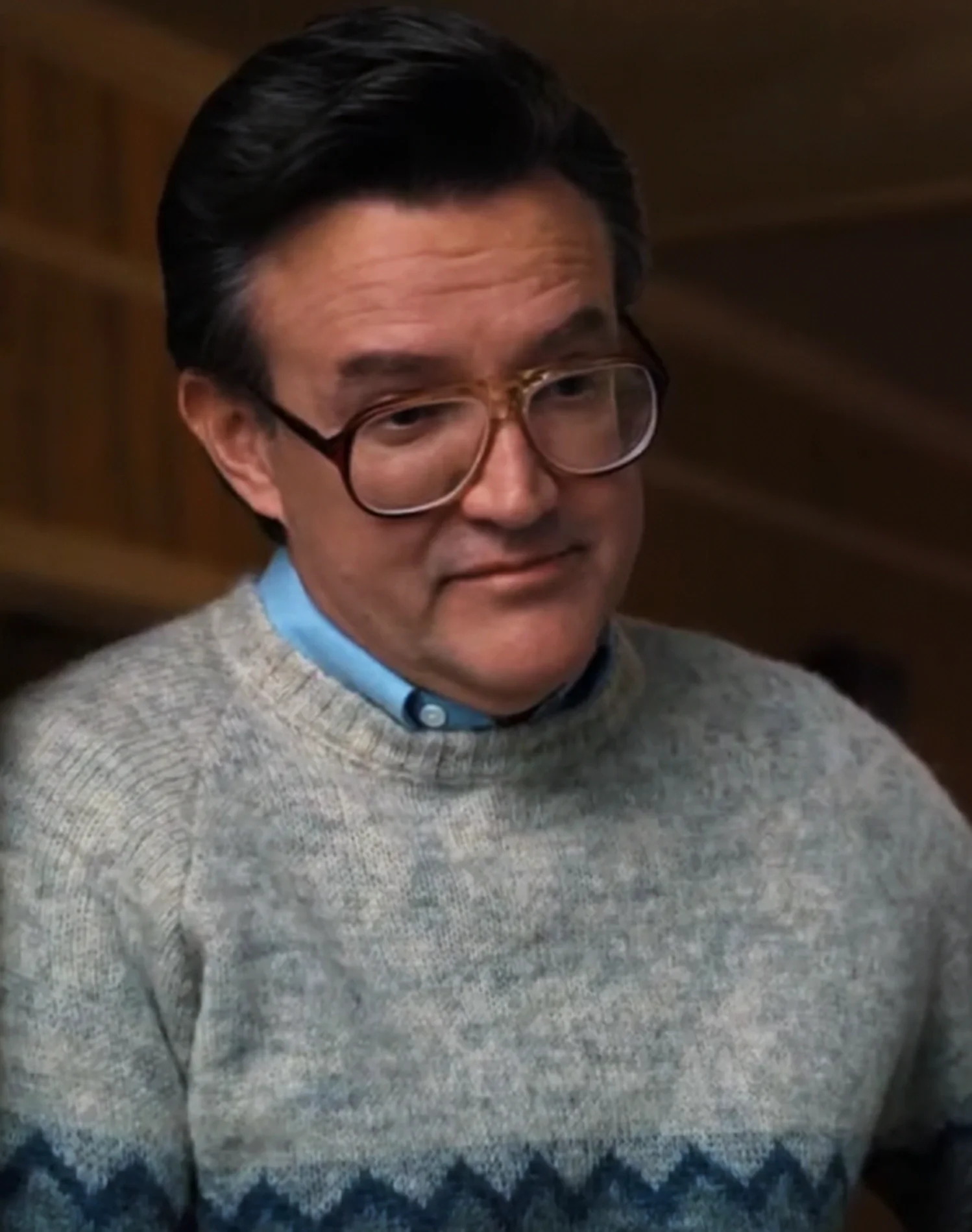
Ted Wheeler in Stranger Things never looks up from his chair and misses his kids’ entire childhood.
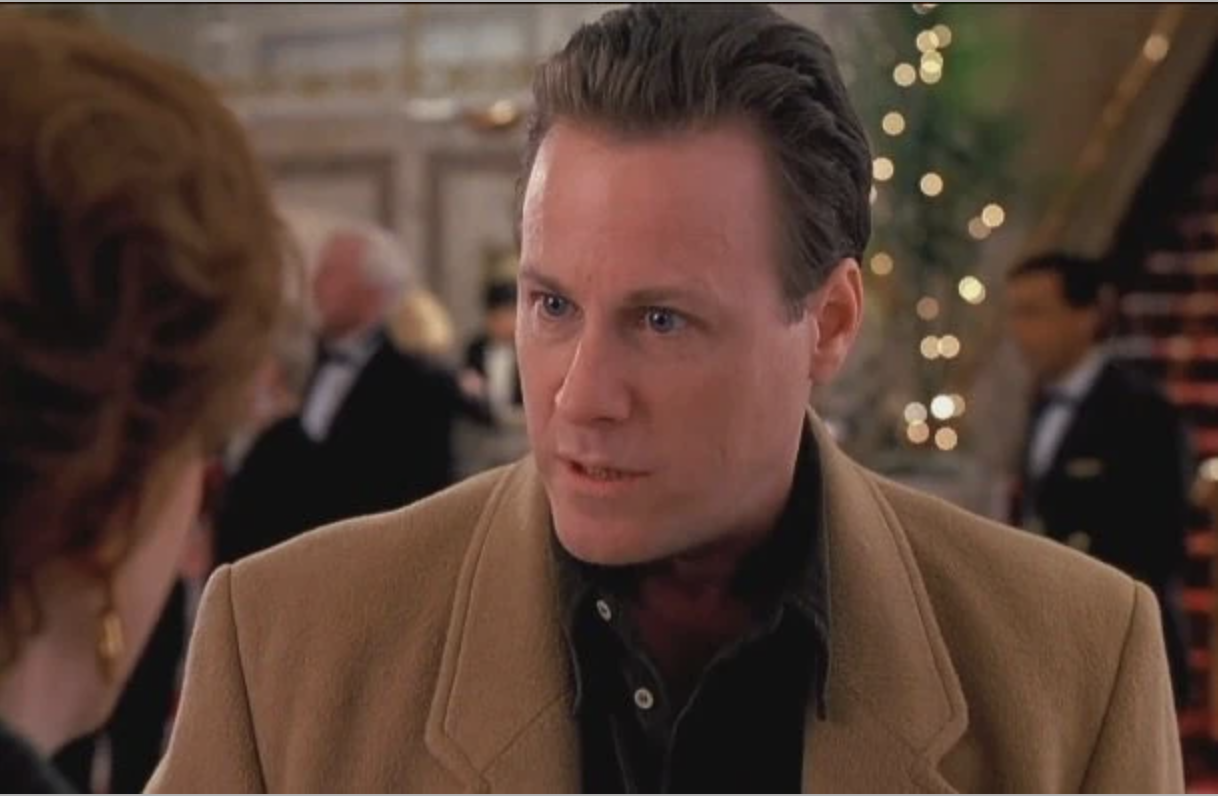
Mr. McCallister in Home Alone is too busy to realize he lost his own 8-year-old kid.
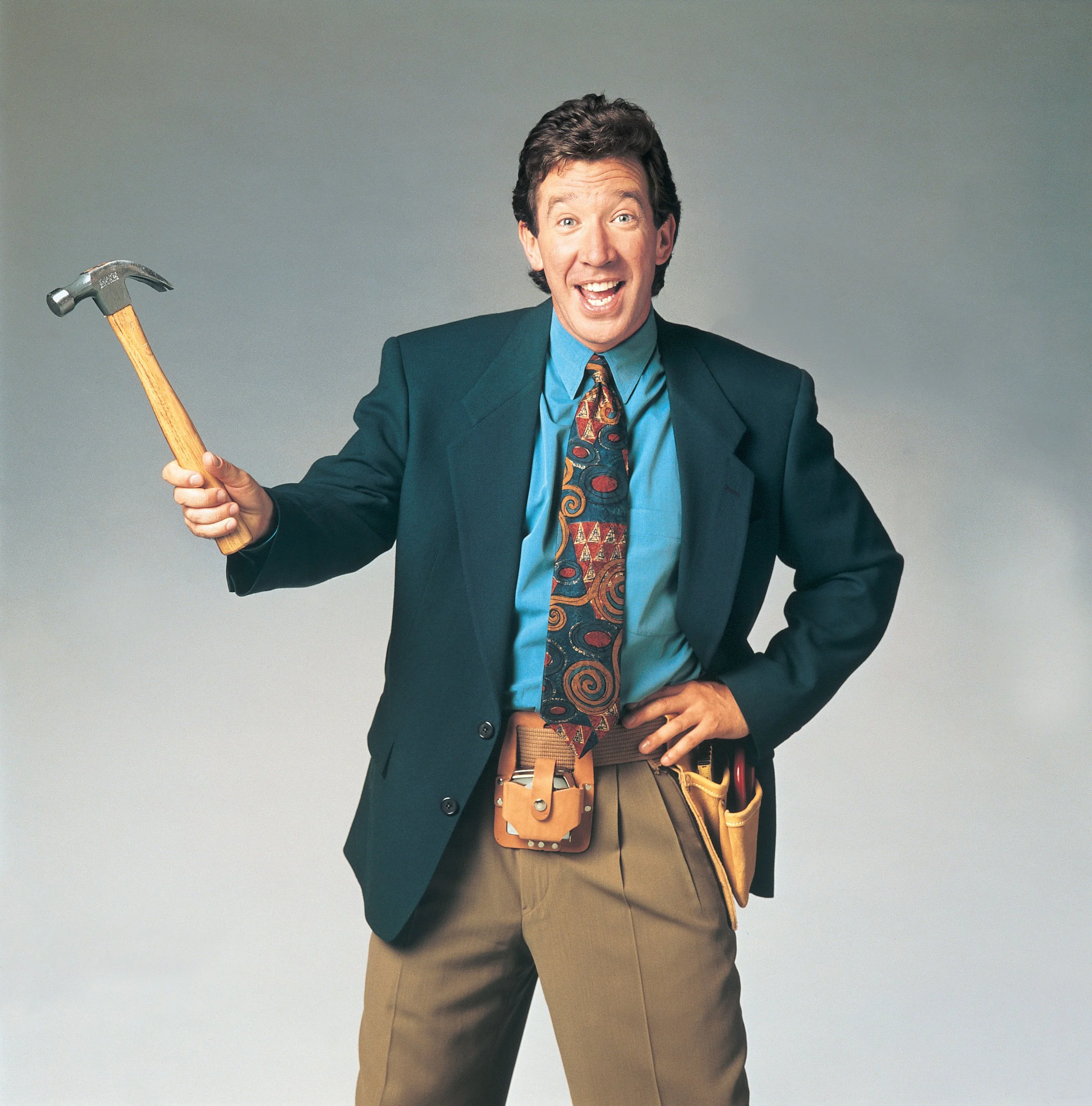
Tim Allen in Home Improvement meets every serious moment with a punchline.
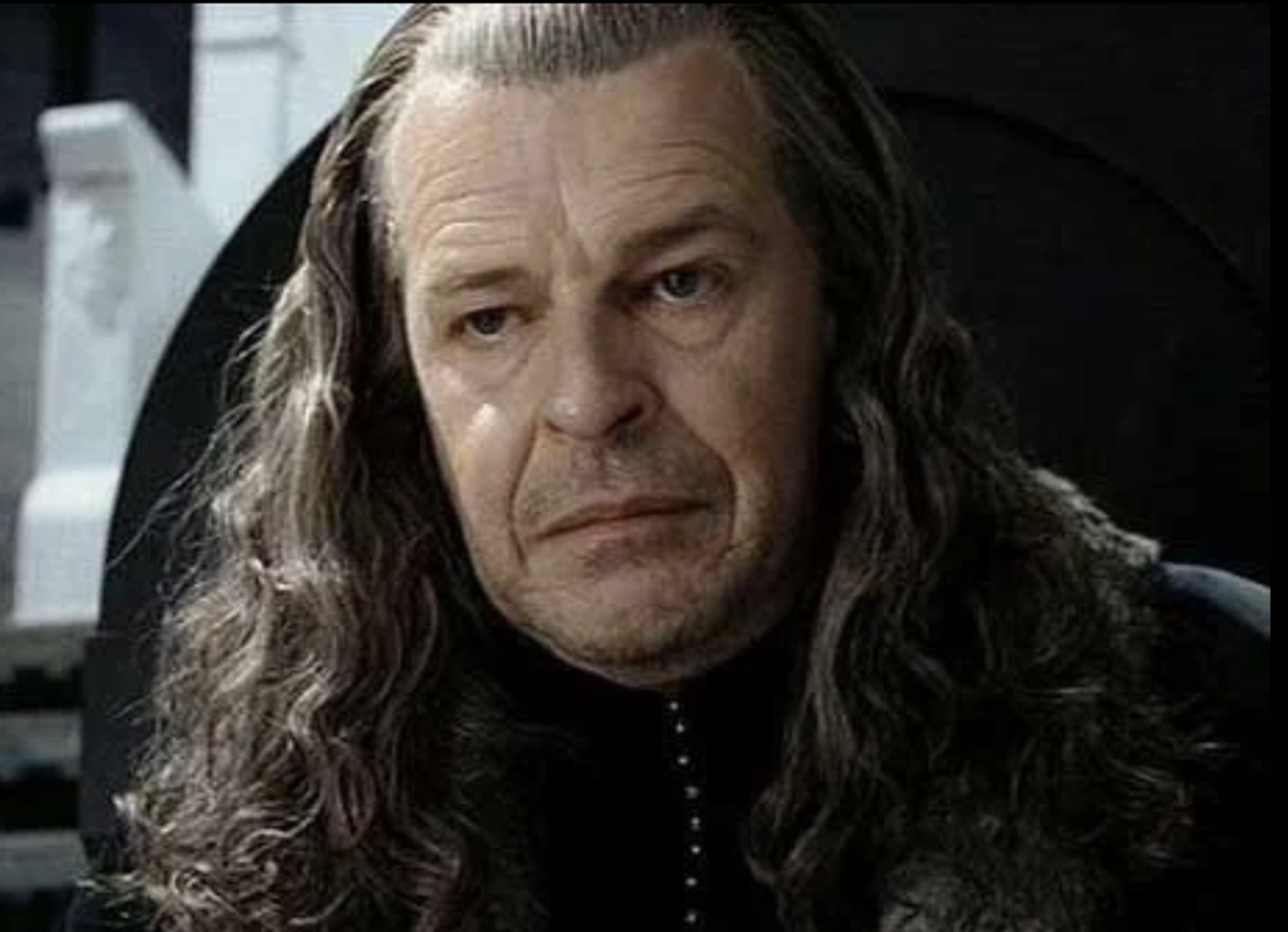
Denethor in Lord of the Rings is so blinded by grief that he destroys his remaining son who only wants to please him.
Each one is technically present. None of them are really there.
The wound in all of these isn’t violence. It’s absence. And the slow quiet ache of not quite being seen can be one of the most damaging things a person carries.
The Vow I Made
Somewhere along the way I made a vow.
I don’t know exactly when. But at some point I decided: whether or not I ever find this father figure, whether or not anyone ever pours this into me, I will become him. Hell or high water. I will become the man I’ve been searching for, so that the children who come after me don’t have to search the same way.
There’s something real and right in that vow. I still mean it.
But I’ll be honest about what it has also done.
It has built a house of cards.
Because if I am the one who must become the perfect father (the invitation, the blessing, the challenge, the presence, all of it), then my heart breaks at the mere thought of getting it wrong. I can already feel it: the future moment where my kid looks at me and I realize I missed something. I wasn’t present enough. I didn’t notice. I failed.
If you’ve read my post The Bed That Broke Me, you know this territory. My wife made one gentle request, and something in me completely collapsed. My perfectionism was shattered. The version of myself I’m always trying to outrun showed up anyway.
“You didn’t notice. You weren’t enough. You failed.”
I can already feel that same spiral waiting for me in fatherhood. The harder I try to embody the perfect archetype, the more fragile the whole thing becomes. Perfectionism is a house of cards. All it takes is one slip.
The vow to become the father I feel like I don’t have yet is beautiful. But it can’t hold the weight I’m putting on it.
Because underneath the vow is an older assumption. One I didn’t even know I was carrying.
We Believe We Are Fatherless
John Eldredge wrote something in Fathered by God that I keep coming back to:
“You are the son of a kind, strong, and engaged Father, a Father wise enough to guide you in the Way, generous enough to provide for your journey, offering to walk with you every step. This is perhaps the hardest thing for us to believe, really believe, down deep in our hearts, so that it changes us forever, changes the way we approach each day.
I believe this is the core issue of our shared dilemma. We just don’t believe it. Our core assumptions about the world boil down to this: We are on our own to make life work. We are not watched over. We are not cared for. When we are hit with a problem, we have to figure it out ourselves, or just take the hit. If anything good is going to come our way, we’re the ones who are going to have to arrange for it. Many of us have called upon God as Father, but, frankly, he doesn’t seem to have heard. We’re not sure why. Maybe we didn’t do it right. Maybe he’s about more important matters. Whatever the reason, our experience of this world has framed our approach to life. We believe we are fatherless.”
We believe we are fatherless.
That landed on me like a stone.
Because that’s what the ghost hunt has really been about. Not just missing my grandfathers. Not just the lumber aisle and the river and the pizza island. It’s a deep core assumption that I am fundamentally on my own. That no one is watching. That if anything good is coming my way, I’m the one who has to go arrange for it.

What I believed about earthly fathers quietly became what I believed about God. Almost without me noticing.
If I experienced a father being distracted, God must be distracted. If they were conditional, God must be conditional. If I had to try really hard to get their attention, get time with them on the calendar, and follow up with me, I must have to earn God’s attention too. If my white whale father doesn’t show up, then neither is God.
To be clear, I’m not inferring or directing this at any father figure in particular; these are just feelings that have arisen in my heart out of some deeply held beliefs.
Even when it comes to fathering my own future kids, if I believe I have to manufacture the perfect father entirely out of my own striving, then I’m already operating from that assumption. That God is not in this with me. That the Father is absent. That I’m on my own.
That’s the lie underneath all of it.
The Ache Is a Signal
This longing is not a wound to be ashamed of. It’s a signal pointing somewhere.
When Jesus wanted to describe who God is, He didn’t reach for a definition. He told a story. A good father who sees his son from a long way off and runs. Who gathers up his robe and absorbs the shame of public humiliation. Who restores before the apology is even finished.
Not a distant deity waiting to be appeased. A Father already moving toward His son.
Jesus wasn’t softening God. He was revealing Him. And I believe that. Theologically, genuinely, I do.
But here’s the part that’s harder to admit: My experience hasn’t always caught up to my faith.
There is still grief. Still that moment after the pizza oven was finished, tools on the ground, standing there alone, when I wanted someone over my shoulder to say “I’m proud of you” and the air was just quiet.
That silence doesn’t automatically dissolve just because I can quote good theology.
I think it means longing doesn’t disappear the moment it’s explained. I think it means the journey from believing God is a Father to actually living like I am fathered is longer and harder than I expected.
And I suspect I’m not the only one who believes God runs toward His children and still sometimes feels like they’re standing alone waiting in the front yard for him to finally come home.
Every Person Carries a Father Wound
I don’t think this is just my story.
I think every person carries some version of a father wound.
Some are loud: abuse, rage, betrayal. Some are quiet: distraction, emotional distance, the silence that says nothing but communicates everything.
Some fathers wound by assault. Some wound by absence.
And even the good ones, the ones who tried, the ones who loved the best they knew how, still leave something unfinished. Because no human father can fully carry the weight of what a child’s heart is built to receive.
That’s the part we don’t always say out loud.
The ache isn’t proof that your dad failed completely. It’s proof that no earthly father was ever meant to be ultimate.
And here’s something that has unsettled me:
Even Jesus knew what it felt like to experience the silence of the Father.
On the cross, in the darkest moment of human history, He cried out: “My God, my God, why have You forsaken me?”
I’m not claiming a fracture in the Trinity or that the Father was truly rejecting Jesus. I’m not rewriting theology.
But I am saying this: the Son of God entered into the human experience of felt abandonment. The silence. The darkness. The moment where heaven seemed closed.
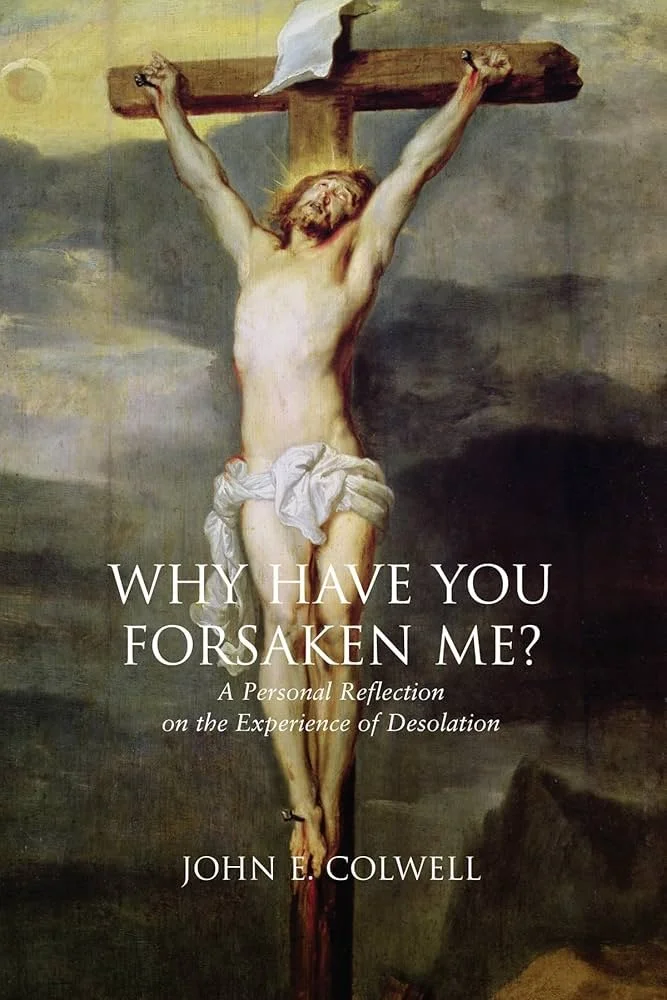
Why Have You Forsaken Me by John Colwell
If even Jesus walked through that valley, then maybe the father wound is not evidence that we are uniquely broken.
Maybe it’s part of what it means to be human east of Eden.
Maybe the wound is inevitable.
The question isn’t whether we have one.
The question is what the wound is forming in us.
Because our wounds don’t just hurt. They speak. They deliver messages. They shape vows.
Some of us decided we would become powerful enough never to need anyone again. Some of us decided we would become perfect so no one could ever leave.
I made a vow too. And that vow has shaped me more than I realized.
But if even Christ suffered the silence of the Father, and if that silence was not the end of the story, then maybe the wound is not the end of ours either.
Maybe fathering, discipleship, and even suffering itself are all bound up in what we do with that wound.
So Why Does Any of This Matter?
That’s a fair question. Why name the wound? Why not just move on, be grateful for what you had, and get on with life?
Because I believe you can’t see God clearly while you’re looking at Him through the lens of your unexamined father wound.
This is the thing I keep coming back to. My experience of earthly fathering and my experience of God as Father are not two separate things. They are almost identical. Whatever I absorbed about fathers, whether they show up or disappear, whether love is conditional or free, whether I have to earn attention or it’s just given, I projected all of that onto God without ever realizing I was doing it. And it has shaped many core parts of my relationship with Him.
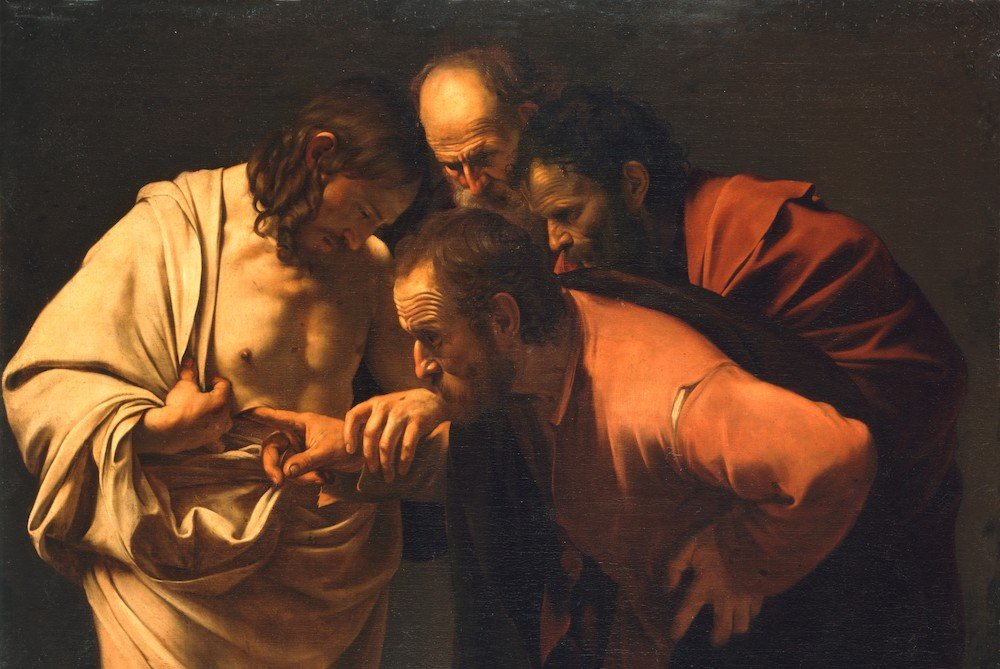
The Incredulity of Saint Thomas by Caravaggio, 1603
If your father was distant, you probably experience God as distant. If love in your home was conditional, you probably still feel like you have to earn God’s approval. And that’s true even if you’ve read every grace-filled book ever written, even when you’re in church, even when you’re trying your hardest to believe otherwise.
I do believe that many Christian men’s shallow relationship with God is intrinsically tied to intimacy and relational wounds from father figures in their past.
The wound doesn’t just hurt. It teaches. And what it teaches about God is almost always wrong.
So naming the wound isn’t just therapy. It’s deep spiritual work. It’s how we start to see where our image of God got distorted, where we’ve been praying to a God our wounds invented instead of the one who is actually running toward us.
And forgiving the men who couldn’t give us what we needed isn’t only for their sake. It’s how we stop holding them to a standard they were never meant to meet, and start opening our hands to receive what only God can actually give.
Not because the loss wasn’t real or didn’t matter. It was both.
But because until we grieve it honestly and release it, we’ll keep searching for it in every relationship, every mentor, every church, every podcast, every book. And we’ll keep coming up just short. And we’ll keep quietly assuming that God is no different.
“What is the wound you’re carrying telling you that you believe about God? And is it actually true?”
There's more I want to say. But this is already long enough, and honestly, I'm still in the middle of it. God keeps reopening this area of my heart in ways I don't fully expect or understand, and I'm learning to follow that slowly rather than rush to conclusions.
So there’ll be at least a Part 2 coming.
Until then, I'll leave you with this:
"See what great love the Father has lavished on us, that we should be called children of God! And that is what we are!" — 1 John 3:1
"A Father to the fatherless, a defender of widows, is God in his holy dwelling. God sets the lonely in families, he leads forth the prisoners with singing." — Psalm 68:5-6
You are not fatherless. Even when it feels that way.

Learning to Become Who We Already Are In Him,
John Will
If this resonated with you, I’d love to hear about it and even have a conversation!
