An Invitation to Life in the Midst of War
Read Part 1 first if you haven’t: Union: The Door Is Open. It explains why the door to union is open, and this piece is about learning to walk through it.
I know it sounds like I’m long-winded but I’m really trying not to but FYI this might take 40 minutes to read.
That’s a nice thought…now what?
You’ve now heard that the door is open, that a connection back to God is possible.
Jesus died, and you died with Him. The curtain tore from the top, and the way back to the Father is standing wide open. If you’re in Christ, you lack nothing that keeps you from union with God.
And if you’re honest, you might be thinking: that’s nice, but what’s supposed to happen now, and why don’t I feel it?
After all, Jesus promised, “I have come that they may have life and have it to the full” (John 10:10). Was He telling the truth? Where is the life He promised?
These questions deserve real answers.
In Part 1, I hoped to make the case that union with God rests entirely on the work of Jesus. It’s secure and available because Jesus made it available, and we didn’t make it happen on our own.
This is our foundation, and it should free us from feeling like we’re starting from scratch. You don’t make union with God happen on your own. It’s objectively true because your spirit has been made alive with Jesus. It’s one with Him right now!
So again, why don’t we feel it? Why does it feel elusive and hard? What is this union with God anyway, and how would I know I’m getting it?
What is this union thing, anyway?
Let’s ask a more basic question and sit with it for a second.
Union with Jesus. Being in Christ.
When you hear those words, what is happening inside you?
You may have heard them in sermons all your life and never slowed down enough to think about them. Here’s your chance.
What do you think those words mean?
What do you think and feel when you hear them?
Notice the first thing that comes to your heart.
Maybe it’s a general ache. Maybe a quick “Yes, I want that.” Maybe you feel suspicious, because you’ve seen these words abused or used to control. Or maybe you feel absolutely nothing, and the fact that you feel nothing bothers you.
Next question.
If union with Jesus were an actual, real thing, what would you most want to experience if you had it?
Would you want real relief from all your striving?
To be truly known and truly loved?
Authentic joy and peace?
To feel His presence and stop feeling alone in your head?
Whatever you named is a true desire of your heart, and it’s worth getting honest about, because I’ve seen many ways we try to pursue this idea of union with Jesus.
A working definition
Before I describe them, here’s my own working definition of the experience of union with Jesus.
The experience of union with Jesus is becoming aware that His life is in you and you are in Him, while your soul learns, by the Spirit, to live from that life now.
Let me break it down a little bit.
Becoming aware
In Genesis 3 the serpent promised that Adam and Eve’s eyes would be opened, and they were: “they realized they were naked” (3:7). The first time man’s eyes were opened, they were opened to shame and distance from God.
Paul prays for a different kind of opening in Ephesians 1:17-19, “that the eyes of your heart may be enlightened in order that you may know the hope to which he has called you, the riches of his glorious inheritance... and his incomparably great power for us who believe.”
This is a new kind of awareness: a heart awakened to God and to life itself. It grows over time, usually in small moments before large ones.
Becoming aware is often a process. A blind man is brought to Jesus, who touches his eyes and asks, “Do you see anything?” The man looks up: “I see people; they look like trees walking around.” Jesus touches his eyes again, “and he saw everything clearly” (Mark 8:23-25). Jesus could have healed him in one touch.
Mark puts this, the only two-stage healing in his Gospel, right after Jesus asks the disciples, “Do you still not see or understand?” (8:17), and right before Peter says “You are the Messiah” and then argues with Jesus about the cross (8:29-32).
Peter saw who Jesus was, and he saw blurry.
Some people have a Damascus road, a flash of light that changes everything (Acts 9). Most of us get something slower and quieter, and often it comes through trial.
Job, after losing nearly everything, said, “My ears had heard of you but now my eyes have seen you” (Job 42:5).
Even Paul wrote later, “Now we see only a reflection as in a mirror; then we shall see face to face” (1 Corinthians 13:12). Awareness grows, and it doesn’t move in a straight line.
His life is in you and you are in Him.
Jesus says it directly in John 14:19-21:
“Because I live, you also will live. On that day you will realize that I am in my Father, and you are in me, and I am in you.”
He goes on to say that the one who loves Him and keeps His commands will be loved by the Father, and “I too will love them and show myself to them.”
This mutual indwelling is a mystery, and Jesus treats it as the source of everything else, for love and obedience flow out of it. “Apart from me you can do nothing,” He says (John 15:5). And look at the promise at the end of John 14:21: to the person who loves Him, He commits to make this truth real. The fact is your union is settled, and Jesus is the one committed to showing you that experience.
Your soul learns, by the Spirit, to live from that life now.
Your soul tends to go its own way (1 Corinthians 2:14, 3:1-3), which is why it needs a teacher. John says the anointing you received from Him remains in you and teaches you to “remain in him” (1 John 2:27). To remain in Him is to stay in what He’s already made available, and the Spirit teaches your soul to do that.
Now and not yet
This union with God is now and not yet. That’s because much of this discussion centers on your soul, which sits between your spirit and your body.
Your spirit is already alive and already one with Him (1 Corinthians 6:17). Your body is still subject to death, and it waits in hope to be made alive (Romans 8:10-11, 8:23-25). Your soul lives in the middle. It’s the part of you being saved (1 Peter 1:9), learning to lean on what’s already true in your spirit while the body waits.
That’s why the experience of union comes in stages, and some of it hasn’t arrived.
The Ditches
This may not be an all-encompassing definition, and of course it can’t capture the whole essence of what we’re talking about. But I believe it describes a specific road that I see many Christians not using as their framework, and there are some “ditches” that I see many fall into when we talk about this union with God.
The chase
The first I call “The chase.” This belief system says that if this union and communion with God is real, then my awareness of God is just around the corner, and the right song, the right room, the right prayer, the right lifestyle will deliver it. You’ll hear a powerful sermon or worship set one Sunday and leave saying, “Oh God was here today!”
By Wednesday you’ve totally forgotten what the sermon was even about, and the next Sunday maybe there’s a guest speaker and the music isn’t quite as good and it feels flat.
Or maybe you feel “flat.”
What is your conclusion? Because I feel far away from God, He must be far from me.
So you try to get back to that high.
Start a new devotional, pick out a new journal, sign up for a conference. Whatever it takes to get out of this dryness. The dry feelings you have get treated as evidence that communion with God is gone, and because you lack the “right” feelings consistently, you lack consistent confidence too.
These beautiful moments that you keep trying to find seem to come farther apart, and it can be very easy to become nothing more than a spiritual tornado chaser.
Using this lens, here’s a simple test: if the spiritual high feelings never come again, will you still remain with Jesus?
The box
The second I call “The box.” This belief system says that as long as we believe the right things, that’s all that matters. All this talk of “experience” and “knowing God” is for heaven and shouldn’t be expected right now.
It all comes down to being “right.”
Having the right doctrine, going to the right type of church, making sure you tithe the right amount, making sure you’ve prayed the right prayer, performed the right sacraments, and sung the right types of songs. (You probably sing “unforeseen kiss” instead of “sloppy wet kiss” in the How He Loves song. I’m partially kidding :)
You have made it possible to recite memorized verses and not be moved in your heart.
You have made prayer a to-do list on your calendar, and quiet time a checkbox.
If you have been “consistent,” you feel good about yourself. If you have been “slipping,” you don’t feel confident, and you tell the people in your small group that you “need to get your prayer life back together” and “be more consistent.”
You may feel secure in your right doctrine, but you tend to not feel confident that you are close to God, and maybe you’re told that that’s not the thing to worry about anyway.
Essentially, instead of being run by your heart as you’re told those in “the chase” are, you have come to believe you must rip your heart out to follow God in this life.
Using the same lens, here’s a simple test: if the satisfaction of doing it right never came again, if no one noticed your consistency and you never felt like a good Christian again, would you still remain with Jesus?

What the ditches share
What I find so ironic and honestly amusing is that people in each ditch look down on the other and yet struggle with the same things.
Those in “the chase” look down on those in “the box” for lacking emotion and relational intimacy.
Those in “the box” look down on those in “the chase” because they see their chasing after sensation as “running after experiences” that is destined for disillusionment and doctrinal decay.
Each has a point, but each rarely seems able to pluck the log out of its own eye, or to see that both are struggling with the same problem.
Neither has surrendered. I don’t mean a “surrender your life to Jesus” prayer you said 30 years ago at youth camp. I’m talking about a daily laying down of the will that wants to manage life on its own terms.
Those in “the chase” typically avoid surrender by using emotional highs and spiritual intensity as the measure of their value and purpose. They want to feel close to God, and the next conference or worship set promises it.
Those in “the box” typically avoid surrender by using consistent discipline and right doctrine as the measure of their value and purpose. They want to feel right, secure, and approved, and a clean spiritual checklist promises it.
Both are after a feeling they can produce on their own terms.
Neither has to trust Jesus with anything to get it.
Neither requires faith.
Neither requires grace or mercy.
And that is why it may feel like it works for a while and then stops working.
Both ditches miss union itself
As you can probably see, and have experienced if you’ve been around enough Christians, we all can fall into these types of ditches. We see feelings as the fruit of God’s presence, or we see the disciplines and traditions that way. Both have drifted from union itself. We’ve gotten so caught up in squabbles about disciplines and emotions that we’ve missed what union was about in the first place.
A framework of awareness
That is why I believe recovering a framework of growing in awareness of the presence of Jesus around us, in us, and through us, and us in Him, is the bedrock of union with God.
Seasons will come and go. Feelings and fruit may look different. Sometimes simple prayers work miracles. Sometimes prayers become hard. Some seasons are full. Some seasons may feel “dry.”
Some of it truly is a mystery of how the wind of the Spirit moves, for no one knows where it is going (John 3:8).
There is a reason the Ancient Celtic Christians called the Holy Spirit “An Geadh-Glas,” the Wild Goose, because the movements of God are often like a wild goose: wild, untamed, mysterious, and yet enchanting.
But no matter what we may be feeling or experiencing, we can always grow in our awareness and knowledge of Him.
The Chain
Becoming aware of His life in you happens in different areas that I believe are connected. Here’s the order I’ve watched them go in.
Communication → Knowledge → Trust → Surrender → Life

Communication
Communication starts before words. It starts with attention: turning your soul toward Him and staying there long enough to hear. Communication runs both ways. You talk to Jesus, and you listen to Him. He says, “My sheep listen to my voice; I know them, and they follow me” (John 10:27). Truthfully, this is one where most of us are still stuck. We say “I’ll pray for you” but forget by the time we leave small group. The level of communication that we have reflects the level of importance and intimacy of the relationship.
We sometimes are waiting for a miraculous spiritual awakening but have we started with consistently talking with God? And not only talking, have we learned to listen? Have we learned to listen to His Word, listen to the still small voice of the Spirit that He speaks to our hearts and through His body?
Knowledge
We can’t know someone if we don’t talk to them. But to know someone is also different from knowing about them. You can know a lot about Jesus and still not know Him. You could know His names, lay out the timeline of His life, and explain the doctrine of the atonement, and still not know Him. Knowing a person comes from time together and from what you see over that time. The personal knowledge of God comes from experiencing what God is like and seeing His character and personality (Yes, God does have a personality). Being told facts about what God is like becomes so much more real when you’re experiencing Him for yourself.
Why is it that many Christians can describe God accurately but can’t say what He’s like when He’s with them? God already knows you better than you know yourself and yet He wants to invite you into knowing Him more than you could ever imagine.
Trust
Trust is believing in the character you’ve come to know: that God’s faithfulness and goodness are able to sustain and hold you. Even when you may have circumstances that seem to argue against His character, you learn to hold fast to what you know: “Those who know your name trust in you, for you, LORD, have never forsaken those who seek you” (Psalm 9:10). Many Christians are comfortable with God being good in general but struggle to believe He’s good to them in a hard circumstance. We may trust God with eternity but struggle to trust Him in our fears and anxieties.
Surrender
Surrender is acting on that trust by putting Him in charge: your plans, your reputation, your right to be understood, everything you’re afraid of losing. Both ditches avoid it, and we’ll come back to it.
Reading the links in order
But now look at the order of these links.
You can’t fully surrender to someone you don’t trust. You can’t trust someone you don’t know. You can’t know someone you don’t talk and listen to. Reading the link forward is a path and reading it backwards can read like a diagnosis. But what does it all lead to?
What the Chain leads to
Communicating with God, Knowing God, Trusting God, Surrendering to God, what are these all supposed to lead to?
Life with God.
This brings us closer to the gap we’ve been circling: why union with God is so hard to find.
In Part 1, I defined eternal life as God’s own life, the life with no beginning or end, and Jesus said it’s to know Him (John 17:3). So when we’re using this idea of life, it means His life, lived in you and through you. It’s the Jesus Life, the Christ-life.
The problem is that though every believer has access to the Jesus life, not every believer is living the Jesus life. There are several reasons, and we’re about to get into them.
A “good Christian” can believe the right things, serve in church, tithe, lead a Bible study, give to the poor, and still feel a lack of life.
What are we missing that seems to be this gap?
To see what that gap looks like, let’s look at a story from Luke 24: 2 disciples who were with Jesus on the biggest day in human history and totally missed Him.
What Keeps Us from Recognizing Him?
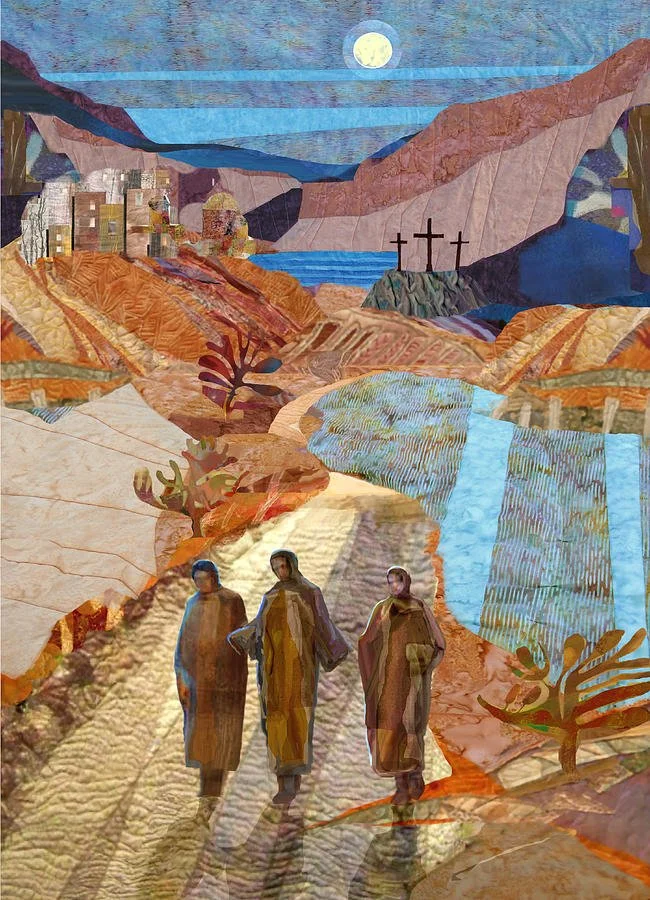
Two disciples are walking from Jerusalem to Emmaus on the day Jesus rose. The risen Jesus Himself comes alongside them, “but they were kept from recognizing him” (Luke 24:16). He asks what they are discussing so intently as they walk. They stop, their faces downcast (24:17).
One of them, Cleopas, asks if He is the only visitor in Jerusalem who hasn’t heard what happened there this week. “What things?” Jesus asks (24:18-19). They tell Him about Jesus of Nazareth, a prophet powerful in word and deed, whom the chief priests and rulers handed over to be crucified. “But we had hoped that he was the one who was going to redeem Israel” (24:21).
Then Jesus tells them, “How foolish you are, and how slow to believe all that the prophets have spoken! Did not the Messiah have to suffer these things and then enter his glory?” (24:25-26).
For the whole walk, Jesus explains what the Scriptures say about Himself, beginning with Moses and all the Prophets (24:27).
They’re hearing the glory of the Gospel from God Himself and yet they still don’t recognize Him.
Then they reach the village, and Jesus continues on as if He were going farther (24:28). They urge Him strongly: “Stay with us” (24:29). The Greek verb is menō, the same word John uses for abide and remain in John 15.
So Jesus “obliges”, and comes inside with them. At the table He takes bread, gives thanks, and breaks it, “and their eyes were opened and they recognized him” (24:31).
And then Jesus disappears in His glorified body.
Looking back, they say, “Were not our hearts burning within us while he talked with us on the road?” (24:32).
What a wild story and one honestly I’m always amused by when I read the Gospels. This is not the type of heroic reveal of God you would expect if this were a fantasy novel. Jesus, fresh off rising from the dead after going into Hell and back emerges and just walks along with some disciples who literally don’t recognize Him. The humor and playfulness of Jesus are on full display in this scene.
But these disciples, man! What’s the deal? Talk about hard-headed! The life of God is right in front of them and yet they can’t seem to see it. Sound familiar? We all can see ourselves in these two followers of Jesus.
Why they couldn’t see Him
But why couldn’t they recognize Him? What is it that keeps them from recognizing the one they had walked with intimately for years.
Unfortunately, Luke doesn’t say what it was. And there are many different explanations. It could be their severe grief and disappointment that has left no room in their hearts for a cross or a resurrection. Was it Jesus Himself who kept them from seeing? Or something else?
Clearly Jesus wants people to know Him. Matthew 16:13-20 makes it very clear that Jesus wants to know who the disciples think He is and wants them to know the truth about who He is.
They ask Him to stay
But while Scripture leaves the exact cause open, it does name the turn of the story.
They ask Him to stay.
I don’t know why breaking bread is the moment their eyes open, and I don’t think any single theological take accounts for everything in this scene.
But here’s where I think this story can give us a picture of what we’re experiencing today. Jesus is with these disciples the whole time on the road. But what changes is their recognition of who He is, and it comes after they ask Him to stay. There is a burning in their hearts that is real even without knowing it is Him.
It seems something is working against their awareness. Something is working against ours too.
Look at the road again. They talk with Jesus the whole way (communication). He explains what the Scriptures say about Himself, beginning with Moses (knowledge). He confronts them with how slow they are to believe (trust). Then they urge Him to stay and make room for Him at their table (surrender), and their eyes are opened (life). I don’t want to over-read the details, but the pattern is there.
A love story in the midst of war
Why isn’t this easy? If I didn’t know any better, it feels like there’s some sort of war going on that’s trying to prevent our awareness.
If you didn’t detect my sarcasm, I’ll say it plainly.
My friends, the very reason our awareness seems to be fleeting is precisely because we’re in a war.
We must take hold of where we are in the story: We are in the midst of a great spiritual war.
John Eldredge says it this way: “We live in a love story in the midst of war.”
Though God has every desire and intent on giving you life and living His life in you, you have much coming against your heart.
You have enemies, ancient enemies, familiar enemies, subtle enemies, that are all absolutely committed to keeping you from the life Jesus intended for you.
Some through assault and some through compromise and everywhere in between. Every person will have a different experience but everyone will have one whether they realize it or not.
Have you seriously given consideration to the fact that you are being attacked?
The fact that there is opposition shows us that something here is being fought over. I believe this war is over the human heart’s experience of life in God.
So who are these enemies? And what are they going after?
The unholy trinity
Scripture names three forces working against your experience of union: the world, the devil, and the flesh. Paul puts all three in one passage in Ephesians 2:2-3, describing how we used to live: following “the ways of this world and of the ruler of the kingdom of the air” and “gratifying the cravings of our flesh.” Let’s break each down briefly.
The world. The Greek word is kosmos, and the New Testament uses it at least 3 ways. While it’s used to describe creation (Acts 17:24) and the people God loves (John 3:16), it’s primary use is to mean the system of values, appetites, and pressures that runs independent from God. (1 John 2:15-17, John 15:18-19). James says friendship with it is hostility toward God (James 4:4) and Jesus tells us to expect trouble from the world (John 16:33).
The devil. Satan is a Hebrew word meaning adversary or accuser. Diabolos, the Greek word behind “devil,” means slanderer. Scripture gives him roles: tempter (Matthew 4:3), father of lies (John 8:44), deceiver and accuser of the people of God (Revelation 12:9-10). Peter says to stay alert, because “your enemy the devil prowls around like a roaring lion” (1 Peter 5:8).
The flesh. The Greek word is sarx, and it has a few meanings including the body (“the Word became flesh,” John 1:14). But particularly in Paul’s letters it often means a way of living that runs on your own resources apart from God (Galatians 5:16-17, Romans 8:5-8).
The enemies and the Chain
Now going back to the Chain, I believe that each enemy aims to go after different links in that Chain leading to life.
The world goes after communication
Communication → Knowledge → Trust → Surrender → Life
The world’s main weapon is your attention.
If the world wanted to attack meaningful communication with God, it would start with meaningful attention to God. Even the most scatter-brained Christian can say a prayer, but staying present to the One we’re praying to is much harder. A prayer we aren’t present and listening patiently for is one-sided, and we have very little chance of hearing a response.
Psalm 5:3 holds both halves:
“In the morning, LORD, you hear my voice; in the morning I lay my requests before you and wait expectantly.”
Most of us know the “lay my requests before you” half well. The “wait expectantly” half is far less familiar.
Isaiah 28:23 says it this way: “Listen and hear my voice; pay attention and hear what I say.”
If God wants to communicate with us, we have to be able to listen. And it doesn’t take a social scientist to convince any of us that there is much vying for our attention. But what if it’s more than just “busyness?” What if there’s more to this? How is all this distraction into oblivion affecting our hearts?
John Mark Comer says, “Our time is our life, and our attention is the doorway to our hearts.”
A world of distraction

Think about your little idle moments in a day: waiting in line, lying in bed, walking to the car. If we even take the time to be still, we start to drift into regrets about the past or worries about the future. If we can even get to that point. Before we even let our mind drift, we have become programmed to reach for a screen to preempt those thoughts.
Another meme. Another YouTube video. Another Netflix binge. Another news article. Another sports debate. Another true crime podcast. Whatever it takes just to keep us from having to sit with any aches or pauses in our day.
When was the last time someone said they were bored? I find it funny that in doctors’ offices we have “waiting rooms” but no one is really waiting. They’re just moving from one distraction to the next. Heads down, thumbs moving up and down until the nurse calls. Every spare moment of our existence needs to be filled. Constant stimulation. Constant attention and distraction and humor and entertainment.
Is any of that harmful? Follow the Chain back to Life and ask. Have we gotten what we wanted out of the world’s view of life? Is the designer home and dream vacation spots and everything else that is being fed to our souls actually satisfying? Not just not satisfying, all the data and studies have consistently shown that all of our social networking has created the most lonely, depressed, anxious generations in the history of humanity!
Now that’s what I’d call nefarious. We are existing in systems that are not just wanting our attention, they are forming us. They form hearts that depend on distraction. We have gotten to the point already where you don’t even need to see another human to get your food or supplies. We can sit in our bed and scroll our thumbs for literally anything. And its replacement of God is also in full swing.
Where we take our questions
Nothing shows it faster than where we take our questions.
Where do we go when we need an answer to a difficult question?
Where do we go when we lack wisdom?
Do we prefer answers to be quick and easy or slow and steady?
Do we take silence as a bad thing?
Where do we go when we need comfort?
Almost all of us have rapidly become accustomed to asking ChatGPT, Claude, Grok, and all the other chatbots as our go-to source. It has our attention.
Where does your mind go in the void? Where is your attention? Does your mind drift toward the presence of Jesus or toward the phantom buzzing in your pocket?
And is it any wonder we keep struggling to hear from God? We have totally lost the ability to have attention at all, and especially for a God that we think isn’t fast enough or loud enough or entertaining enough or satisfying enough to our impulses, as our modern tastes have taught us to require. We must have it all and we must have it now!
An assault on communion
Friends, we must start seeing our busyness and distraction as not just a “fact of modern life” but a direct assault on our communion with God. I’m not saying that to be dramatic or legalistic, I’m deadly serious.
If we cannot even be present and aware with God, how do we even talk with Him? How would we expect to see fruit in our life if our lives feel more like those seeds among thorns that are choked by the “worries and wealth and pleasures of life” (Luke 8:14)? The seed in that parable was a good seed but it grew up among thorns, and the thorns choked it (Luke 8:7).
And if this sounds dramatic, then let John the Beloved say it more strongly: “Do not love the world or anything in the world. If anyone loves the world, love for the Father is not in them.” (1 John 2:15).
We must not love this world because it is rocking us to a slow, distracted spiritual death.
We live in the world, and how we handle technology and entertainment deserves its own discussion, which I don’t have space for here.
But be aware that the world is not your friend (James 4:4). Be aware that the world is committed to getting you formed in such a way that you do not need others or God. Be aware of how your soul has become wired into creation and how your attention is being directed.
The remedy
What is the remedy?
It’s simple and yet exceedingly hard: turn toward Jesus.
Psalm 37:7 says, “Be still before the Lord and wait patiently for him; do not fret when people succeed in their ways, when they carry out their wicked schemes.”
It’s not an overnight process and it’s a work of grace and not works. But there is discipline and fortitude required. We must be vigilant and aware of the effects of the world on our souls. We must develop answers from the ways of Jesus to combat the ways of the World. We must answer busyness with slowness, distraction with attention, noise with quiet, speed with patience. We must learn to be in an upside-down kingdom and, by the Spirit, follow the ways of Jesus which are slower than everything around us.
Luke says Jesus “often withdrew to lonely places and prayed” (Luke 5:16), and He did it while the crowds were growing (Luke 5:15). He retreated to quiet places as His ministry grew, as part of His intentional awareness and presence with the Father.
If that was Jesus, how much more do we in a world permeated with excess and noise?
Jesus said to take heart for He has overcome the world (John 16:33).
And He has. Now and in a more full way soon.
But one of the ways we participate in that is by resisting the world’s pull towards distraction and stilling our hearts and sitting and talking and communicating with our good Father.
The Father wants to give good things to those who ask.
“If you then, though you are evil, know how to give good gifts to your children, how much more will your Father in heaven give the Holy Spirit to those who ask him!”
Luke 11:13
We resist the world by slowing down and quieting the noise enough to hear the Father’s voice, and that listening is where our awareness of union grows.
Satan goes after knowledge and trust
Communication → Knowledge → Trust → Surrender → Life

Satan goes after the two links that sit between hearing from God and handing Him your life: what you know of Him, and whether you’ll trust Him.
Knowledge
His first recorded move in Scripture is a question about God’s character. “Did God really say, ‘You must not eat from any tree in the garden’?” (Genesis 3:1). Look at what he did with God’s words. God had said, “You are free to eat from any tree in the garden,” and named one exception (2:16-17).
From the very first moment, the serpent takes the goodness of God and aims to twist it in Eve’s ears. He keeps going: “For God knows that when you eat from it your eyes will be opened, and you will be like God, knowing good and evil” (3:5). Satan’s aim is an all-out assault on the character of God, done subtly: “God’s not who He says He is. You can’t trust Him. Take control for yourself.”
He used the same move on Jesus. The Father had just said, “This is my Son, whom I love; with him I am well pleased” (Matthew 3:17). Satan’s first words in the wilderness were “If you are the Son of God...” (4:3). “If you are...” is the seed of “I don’t believe it.” Both times he went after what the Father said and what the Father is like.
That’s the pattern. He distorts the Father’s heart. He paints God as distant, as a rule-keeper, as someone permanently disappointed in you. Think about the picture of God you carry on your worst days. Do you imagine Him as distant? Annoyed? Keeping score? Our pictures often come from a broken world, but they also come from an enemy who is happy to keep these images in our minds.
The lie is often subtle. It sounds true, and it speaks to our insecurities, fears, and doubts. Scripture shows him prompting thoughts: Satan “incited David” (1 Chronicles 21:1), and “the devil had already prompted Judas” (John 13:2).
Satan also rarely invents his material. He will find a wound that’s already there and whisper agreements into it. “This is just who you are. You’ll always be like this. No one can help you, not even God, not with this.”
John Eldredge says it this way in Waking the Dead: “The story of your life is the story of the long and brutal assault on your heart by the one who knows what you could be and fears it.”
This is the attack on knowledge. He goes after what you’ve come to know of God and whispers, “Do you even know Him?”
The remedy for this link is truth against the lie. We can’t recognize a lie without knowing the truth first.
Jesus shows it in the wilderness. Every answer He gave Satan began with “It is written” (Matthew 4:4-10). Jesus knew the Father and knew what the Father had said, and He answered the Enemy from that.
Trust
Knowing the truth about the Father doesn’t necessarily make you trust Him. Satan quotes Scripture too (Matthew 4:6), and James says even the demons believe that God is one, and shudder (James 2:19).
So in addition to lying, Satan’s other main tactic is accusing. He is “the accuser of our brothers and sisters, who accuses them before our God day and night” (Revelation 12:10).
One of the biggest areas of trust that Satan attacks is this: Do you trust that God accepts you? Are you truly His beloved?
Do you have any moment from your past that you truly regret?
A moment you wish you could have back?
A relationship you wish you could fix?
Do you struggle to feel forgiven for it?
Many people’s general sense of being rejected or behind comes back to this: they struggle to believe they are completely forgiven, accepted, and beloved by Him.
Telling the two voices apart
How can we trust that God would love us this way when Satan accuses us before God? How do we tell the voices of acceptance and accusation apart?
You can tell the two voices apart by what they do with the same failure.
When the Holy Spirit convicts, He names what you have done and points you back toward God.
When Satan accuses, he names you by what you have done, and points you away from God.
You’re too far away. You’re too disqualified. You’ve blown it too many times.
Think of the last time you failed and didn’t pray about it for days. What would you have said? When we are afraid to talk to God, it often means accusation is hanging over our hearts and we are struggling to trust His love and forgiveness.
Sometimes there isn’t a specific lie at all. There’s a fog, a numbness, a heaviness that makes Scripture feel far away. When it comes with the feeling that God is far away and you’re disqualified, it may be accusation, and we can learn to recognize it. In my own experience, the resistance often gets heavier right when I’m about to break through.
Trust is a choice
The remedy for this link is a choice, and it still has to be made. Trust is often chosen before the feelings catch up. We can trust that we are loved and accepted before we feel it.
Two prayers show what that looks like. A father whose son is tormented says to Jesus, “I do believe; help me overcome my unbelief!” (Mark 9:24). And when many disciples walked away from a hard teaching, Peter answered, “Lord, to whom shall we go? You have the words of eternal life” (John 6:68). The father of the tormented son and Peter had unanswered questions, and both stayed close to Jesus.
Trust is not opposed to our unanswered questions and unsettled emotions.
Trust keeps holding on to what you’ve come to know about Him and what He’s said.

Jesus answers the accuser
Satan accuses us before the Father day and night, and Jesus answers him there.
“Who will bring any charge against those whom God has chosen? It is God who justifies. Who then is the one who condemns? No one. Christ Jesus who died, more than that, who was raised to life, is at the right hand of God and is also interceding for us” (Romans 8:33-34)
John says it plainly: “we have an advocate with the Father, Jesus Christ, the Righteous One” (1 John 2:1).
This is part of what we come to know about Him. We have come to know that the Father’s verdict on us was settled at the cross, and Jesus is still speaking for us. Trust is choosing to live from that verdict on the days the accusation is loud and our feelings are all out of whack.
We trust that we are united with Jesus and there is no condemnation for us (Romans 8:1). We trust that we don’t face the accuser alone, because we are in Him and His life is in us.
Colossians 2:15 says Jesus disarmed the powers and authorities and triumphed over them by the cross, so we can follow James: “Submit yourselves, then, to God. Resist the devil, and he will flee from you” (4:7).
By trusting and submitting to God, you can resist!
When the accusation comes, turn back to Him. Remember what you know of Him, trust what He’s said, and hold on.
The flesh goes after surrender
Communication → Knowledge → Trust → Surrender → Life

Now we turn to the final enemy. This is the one I want to camp out on, because it’s closest to home. I also want to make some specific caveats about how I’ve experienced teaching on the flesh.
Your body is not bad. God made it and called it good (Genesis 1:31), and Paul says your body is a temple of the Holy Spirit (1 Corinthians 6:19). Your body is temporary, and it suffers under the weight of aging, sickness, and death, but it is not intrinsically bad. The Greeks and Gnostics taught that the body was a prison to be escaped, and a version of that idea is making a comeback with the rise of transhumanism (another story for another time).
I want to be clear that your body itself is not the problem. We are distinguishing your body from your flesh. When we teach that the body is the problem, people end up in an endless internal battle that leads to despair. Your body houses your flesh and your spirit but we’re talking here about the flesh specifically.
The flesh inside you is not who you are. Like the World and Satan, the flesh is an enemy that wars against God. Your flesh is inside you, and it is not you. Paul shows this in Romans 7:17: “So now it is no longer I who do it, but sin that dwells within me.”
But aren’t sin and the flesh the things I do? Yes and no. In Romans 5-8, Paul mostly writes about sin as a noun (the Greek word is hamartia), and he personifies it. Sin reigns (5:21; 6:12), dwells in him (7:17, 20), and deceives and kills (7:11). So Paul is talking about sin and the flesh as more than the bad things we do, and he separates that indwelling sin from who he is. The flesh and the Spirit are in conflict (Galatians 5:17), and the flesh is not who you are in Christ.
What the flesh is
With those caveats in place, here is what I mean by the flesh.
The flesh is the residue of Adam. It’s the habits and beliefs you learned to live by before Christ, and they still pull at you.
Every message you received about your worth, and every attempt to get love or safety through your own effort, got stored in your soul, that is, in your mind, will, and emotions.
At your new birth you received a new spirit, and the old patterns are still in your soul. Paul’s word for the whole way of living on your own resources, independent from God, is sarx, or flesh.
The flesh is the pull, and the self-life is the pattern you build when you follow it.
The Enemy tells you God can’t be trusted. The World tells you something else will satisfy. The flesh says you’ll handle it yourself.
Why this order?
There are a couple of reasons I talked about the first 2 enemies in that order.
First, the World and the Enemy are external, and in one sense we can observe their schemes more easily while the flesh feels more internal. Paul, writing about forgiveness in 2 Corinthians 2, says we should forgive “in order that Satan might not outwit us. For we are not unaware of his schemes” (2:11).
Paul could say he was not unaware. However, as we’ve discussed, much of the Church is falling in love with the World and is unaware of the schemes of the Enemy.
Second, seeing that we have enemies can bring some relief. Our hearts are being warred over, so we can take off some of the shame we carry: not everything we struggle with is our fault. We still have responsibilities and a will. But the Enemy especially wants you to believe this: you are alone, everything you struggle with is just you, and it’s all confirmation that God isn’t close, if He exists at all.
Road kill and wagyu steak
But back to the flesh. There are many types of flesh, just like meat in a deli.
Some flesh is obvious. Anger, lust, addiction, selfishness. This could look like snapping at your kids, scrolling porn at 1 a.m., lying about something small, or gossiping about a co-worker at the water-cooler.
We might call this type of flesh “Road-Kill” flesh.
It’s obvious flesh that is devoid of dependence on God. It’s ugly flesh that others see, and we certainly want to hide it away.
Then there’s a subtler kind, and it’s much more dangerous because it can look appetizing.
This type of flesh reads the Bible faithfully, serves in ministry, and does its best to “keep life together.” It could look like serving on 3 teams because saying no would disappoint people. It could look like knowing the right answer in every small group and never saying what’s really going on in your marriage.
This is what we might call “Wagyu Steak” flesh.
This flesh looks nicer and more appetizing than Road-Kill flesh. It is still flesh.

Some other types of flesh are a combination of the two, like self-hatred and pride. This could look like replaying a failure for days and calling it repentance, deflecting compliments, telling God you’re sorry over and over because you feel like excessive sorrow will move the needle, or refusing help from anyone because you don’t feel like you deserve it, which also keeps you in control.
This is all flesh too, because it’s all a manifestation of the self-life instead of the Christ-life.
What the Flesh Actually Looks Like
The flesh refuses to be vulnerable.
The flesh self-protects.
The flesh never wants to be exposed or interfered with.
The flesh uses performance as a substitute for being with God.
The flesh self-medicates with anything that will comfort.
The flesh never wants to hand anything over.
That last one is the one we’ll focus on: surrender.
The flesh’s entire project in your life is to keep you from doing the one thing that would bring you life: surrender.
The flesh can deceive you with endless ways of keeping control. Just let me try this new technique. Let me do better. Let me try harder. Let me protect. Let me hide. Let me keep my life the way I want it. Let me have it my way.
The flesh has taught us that surrender is something we said once, with no expectation of actually giving God total control.
The flesh will do almost anything other than surrender.
It will stand on a stage and give sermons, sing songs, tithe, hold the door, be disciplined, be a nice person, and do all the “right things.” It will do anything except surrender to God and let Him have control.
The flesh is comfortable with spiritual-looking things and opposes the actual moves of the Spirit, because the Spirit always says, “If you want life, you must let me have control.”
It’s the one thing we hold back
In Mark 10, a man tells Jesus he has kept the commandments since he was a boy. “Jesus looked at him and loved him. ‘One thing you lack,’ he said. ‘Go, sell everything you have and give to the poor, and you will have treasure in heaven. Then come, follow me.’” (Mark 10:21).
Surrender is the one thing that often keeps us from fully following Jesus.
Most of us have a version of that one thing. It could be money, but just as often it’s a relationship, a reputation, a plan for the future, or the right to be right.
Why is surrender so hard?
Why is surrender so hard, and why does the flesh fight it so hard?
Independence is what the flesh runs on, and surrender attacks the flesh’s life source.
Jesus put it plainly: “whoever wants to save their life will lose it, but whoever loses their life for me will save it” (Luke 9:24).
The flesh has built patterns of protection that have kept you safe for your entire life. The flesh is deceptive. It can pray, read, learn, and even believe in God, and still hold control.
Surrender is the final link, and you can’t pretend it if it’s real.
Surrender costs everything you’ve held as yours. Even Jesus, who had no sin and no learned patterns of self-reliance, felt the weight of it: “not my will, but yours be done” (Luke 22:42).
Learning to surrender
The trust fall

You’ve seen a trust fall. You stand with your back to the group, cross your arms, close your eyes, and fall backward.
Here’s what happens when you don’t fully trust the people behind you. Your foot moves. Almost involuntarily, your body shifts weight and puts one foot back to catch yourself. You look like you’re surrendering but your foot moving backward is your insurance policy.
Most of us do this with God. We agree with the theology of surrender and sing “I Surrender All” with our eyes closed. Underneath, the flesh moves the foot back. There’s one room in the house we keep locked, one outcome we keep managing, one area where we’ve decided, I can’t fully give this to God.
The trust fall is scary. Are they really going to catch us? If we really planted our feet and fell, would God catch us? Maybe we tried it once, and it felt like God stepped aside, the way a classmate might have in gym class.
My friend, Mark McKeehan at Grace Fellowship International, said it this way about the trust fall example: “God didn’t actually let you fall to the floor. But he did let you fall farther than you wanted to go.”
If we wait for the ground to be visible before we commit to the fall, we never will. God may let us fall farther than we want to go. Our stomachs might drop, and some seasons will be hard. He will catch you, and you can trust Him: “though he may stumble, he will not fall, for the LORD upholds him with his hand” (Psalm 37:24).
You have to surrender to taste the fruit.
Surrender is also where we become fully vulnerable with God and see our real selves.
Through daily surrender, we find that God meets us there and loves us in our vulnerability.
We don’t have to be strong. We get to admit our deep need for healing, love, acceptance, and dependence. We can’t do it all, and it’s a relief to be told that. He can. He holds our stuff, and He wants the real us, which comes through surrender without management or performance.
Total commitment
Paul gives the clearest instruction in Romans 12:1-2: “...offer your bodies as a living sacrifice, holy and pleasing to God... Do not conform to the pattern of this world, but be transformed by the renewing of your mind.”
My friends at Grace Fellowship International, founded by Dr. Charles Solomon, teach a practice called Total Commitment, built on Romans 12:1-2. You go through it slowly and bring each item before the Lord.
Start with specifically surrendering everything you’ve said is yours to keep. This can include:
My mind, will, and emotions
My body
My future plans, hopes, and dreams
My home
My marriage
My mate
My children
My geographical location
My recreation and entertainment
My career
My past successes and failures
My habits
My finances
My problems
My time
My integrity and character
My attitudes
My business conduct and relationships
My Christian walk
My response to authority
Then start specifically surrendering your rights, and this is where it gets uncomfortable:
My right to possessions
My right to a good reputation
My right to have acceptance
My right to be successful
My right to have pleasant circumstances
My right to presume on the will of God
My right to life itself
My right to beauty or strength
My right to have friendships
My right to be heard
My right to take up offenses
My right to avoid reaping what I sow
My right to be right
My right to see results
My right to a pity party
You may have others to add, and the form leaves blanks for them. Then you sign it with this prayer:
“Dear Lord,
My signature says that I give You permission to do anything You wish to me, with me, in me or through me. I claimed the above items once as mine. Now they all belong to You and are under Your control. You can do with them anything You please. I willingly make this commitment in the Name and authority of the Lord Jesus Christ. Now that I have surrendered ownership of my life to You, You will never give it back to me. Amen.”
List and prayer from “Total Commitment,” Exchanged Life Workshop, Grace Fellowship International (gracefellowshipinternational.com). Used with permission and credit.
Gotta surrender the particulars
Surrender is the move from my to Thy. When you surrender your relationships, the anxiety of holding them together can be exchanged for the peace of knowing God has them. When you surrender your rights, the frustration that life isn’t going your way can be exchanged for patience because, again, God is in control.
It’s important to get specific because each thing that we hand over is a place where the self-life of the flesh gives way and the Christ-life of the Spirit starts to take over.
Something real starts to take effect when we stop surrendering in general and surrender the particulars.
Pay attention to the items you resist most. Bring those to God and ask Him what has such a foothold. What lie is the flesh telling you?
The areas where your grip is tightest are the areas where God most wants to meet you.
God has given you total access to Himself. Does He have total access to you?
Walking by the Spirit
In one phrase, what does this life look like?
It’s called “Walking by the Spirit.”
Paul says:
“So I say, walk by the Spirit, and you will not gratify the desires of the flesh” Galatians 5:16
To walk by the Spirit is to stop running on self-management and live from the Christ-life in you. It’s learning to live like Jesus, who depended on the Father moment by moment (John 5:19). It’s our soul learning to stop fighting what’s true in our spirit and agree with it.
Death to the self-life is the path to life. Jesus says in John 12:24, “Very truly I tell you, unless a kernel of wheat falls to the ground and dies, it remains only a single seed. But if it dies, it produces many seeds.” For there to be resurrection, there has to be death first.
We must die, in order that we might truly live!
So what now?
This has run long, and it still only scratches the surface.
The experience of union with Jesus is becoming aware that His life is in you and you are in Him, while your soul learns, by the Spirit, to live from that life now.
The World goes after our attention and our communication with God. The Enemy goes after our knowledge and trust. The flesh goes after our surrender. None of them can touch the union itself.
Jesus has already opened the door to union. This is the path in front of us as we follow Him through it by faith.
But where does this all lead? If I had to sum it up in one verse, it’s the invitation straight from our good Shepherd Himself.
“Come to me, all you who are weary and burdened, and I will give you rest. Take my yoke upon you and learn from me, for I am gentle and humble in heart, and you will find rest for your souls. For my yoke is easy and my burden is light.”
Matthew 11:28-30 (NIV)
Rest for your souls
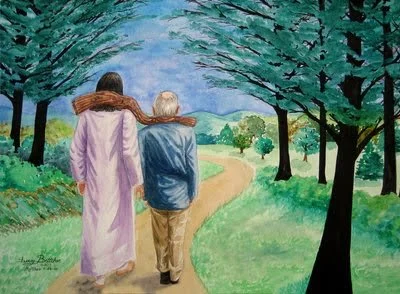
Do you yearn for rest in your soul? Come with your weary burdens and take on the easy and light yoke of Jesus. The rest you’re looking for comes through surrender. Open your hands and put your full weight on the One who can carry you.
Jesus offers each of us a yoke that joins us to Him, so we walk together at one pace. Everything we’ve discussed is learning to walk yoked to Him, and that’s where life as it was meant to be lived is found.
St. Maximus the Confessor famously said, “Christianity is an entirely new way of being human.”
The yoke of Jesus is learning to live as a completely different human, the way you were designed to live with God from the beginning.
You were made for this life with God. It has been made available. You have enemies that assault your heart, but the experience of union is a work of grace. It’s by grace that Jesus has made this life available, and it’s by grace that His Spirit will sustain you: “being confident of this, that he who began a good work in you will carry it on to completion until the day of Christ Jesus” (Philippians 1:6).
Press on, my friends. Take hold of the life that has been made available to you. Keep your eyes fixed on Him alone.
Walk with Jesus yoked to Him, and I think you’ll find it’s the life you were made for, because once you have been crucified with Christ, it is no longer you who will live, but Christ, the hope of glory, lives in you!