
Union: The Door is Open
You can't walk through a door you don't know is open

His name was Hudson Taylor.
He was a British missionary in China in the mid 1800s, and his life was falling apart.
What was so wrong with his life? I'll let him speak for himself.
"I prayed, agonised, fasted, strove, made resolutions, read the Word more diligently, sought more time for retirement and meditation—but all was without effect."
How about you? You have your small group, your prayer team, your Bible on the nightstand. You feel like you're doing everything right, and yet you feel like you're missing something.
"Every day, almost every hour, the consciousness of sin oppressed me. I knew that if I could only abide in Christ all would be well, but I could not."
"Instead of growing stronger, I seemed to be getting weaker and to have less power against sin; and no wonder, for faith and even hope were getting very low. I hated myself; I hated my sin; and yet I gained no strength against it."
Do you feel tormented by shame or guilt or addictive sin patterns, and you just feel like you can't quite get it together?
"I began the day with prayer, determined not to take my eye from Him for a moment; but pressure of duties, sometimes very trying, constant interruptions apt to be so wearing, often caused me to forget Him."
Is life so chaotic around you that it feels like you can't seem to get out from underneath the fog?
"Must it be thus to the end—constant conflict and, instead of victory, too often defeat?"
Is this all my life is supposed to be? Constantly trying and failing?
Exhaustion, disillusionment, shame, numbness. This man who'd given his entire life to God still felt like he couldn't find his way into the life he believed he'd been promised.
Does your story feel anything like Hudson Taylor's?
The first theme of the Father's Heart we're going to talk about is Union, Communion, Abiding in Christ, because I believe it to be one of the most critical aspects of our life with God that I see to be missing, whether it be literally or experientially.
So we'll start with this basic question. Alright. You ready? What is the purpose of the Christian life?
Now sit and think on that for a moment. What is going on inside your mind when I ask that question? What does your mind drift to? Is there a verse you're trying to remember, or a catechism you memorized, or what someone once described it as?
Certainly I would expect to hear a wide variety of answers to this question. And here are a nonexhaustive few that I would expect some to say. The Christian life is about:
Glorifying God and enjoying him forever
Loving God and loving others
Overcoming sin and becoming a better moral person
Sharing the gospel to the ends of the earth
I'm sure you would have your own answer. But what I'm asking is not simply an intellectual exercise. I'm not asking you for the "right answer" per se, or what you think "should" be the right answer. What have you come to conclude about what the purpose of the Christian life is all about?
Your answer no doubt is heavily based upon your story, such as what your parents taught you, your church experience, your own highs and lows of life. All of these are profound, meaningful inputs to your answer, but ultimately the answer is yours.
What is the Christian life all about?
Next question. Do you feel like you're experiencing that life?
While there are certainly some who would answer with a confident "Yes!", they certainly seem few and far between. Most of the Christians I see who answer yes are those with some sort of religious platform: pastors, authors, influencers, thinkers. I'm not against any of those, but clearly the temptation of anyone with a platform is to project an "I have it together" Christian life, which, while it may look nice on the outside, is easy for it to be nothing more than a whitewashed tomb. I can think of a group of people that Jesus had strong words for there.
Our world, and even Christian spaces, are filled with fakery and illusion. But dig past the smoke screens and Instagram reels and look at those people's lives. If you were to ask that celebrity pastor's neighbor, or his mailman, or the homeless man he passes every week how they think he's living his Christian life, what would they say?
I say this to myself as well. If my answer is yes, what would those around me, especially those who have nothing to gain from me, what would they say?
Now for most others who would answer with a "sometimes, or most of the time, no," my point is this: it seems that for a vast majority, hardly anyone seems to be experiencing what they consider to be the heart of the Christian life.
What are we missing that our sermons and songs and tithe can't seem to fix? Where is life to be found, and what's the point of it anyway?
That is the question that we are asking, and to answer it we're going to be looking at the life of Jesus to see if he can give us insight and access to what the Father's heart is.
Everything Starts With What You Believe About the Father
The reason I keep circling both of these questions together, what is the Christian life, and what is the Father actually like, is that I don't think you can separate them.
Your view of the Father and your view of the Christian life are always going to be entangled.
If your view of the Father is about duty, about keeping your life together for him, then of course your view of the Christian life will reflect that. If you view God as existing, but disconnected from your actual day, you'll almost certainly experience your own Christian life as disconnected too.
A.W. Tozer put it plainly in The Knowledge of the Holy: "What comes into our minds when we think about God is the most important thing about us."
Before we can recover what the Christian life is actually about, and why so many of us don't seem to be experiencing it, we have to talk about what the Father is actually like. And the only honest way to do that is to look at the life of Jesus.
Because Jesus couldn't have said it more plain than in John 14:9 at the Last Supper: "If you have seen me, you have seen the Father."
Too often we read Jesus's life in an overly religious way. It's easy to explain away everything he did with, well, of course, he's God, he can just float above whatever the rest of us are stuck in.
But that's not what Scripture actually says he came to do.
Scripture says Jesus came to manifest the Father's name (John 17:6) and he told his disciples to follow him, to be his disciples, to make him their rabbi. A rabbi's whole aim wasn't information transfer like our modern Ted-talk sermons sound. It was for his disciples to know him, to become like him, and to live as he lived. So Jesus, God in the flesh, lived his life as a man (Phil 2:5-7) to actually show us how we relate to the Father.
How you relate to God is downstream of what you believe about him, his heart toward you, what he's actually made available to you. Your deepest core beliefs about God are what shape what you think the purpose and meaning of your life is.
If your whole picture of the Christian life is tithe, go to church, read your Bible, be a good person, don't do anything too bad, if it's built entirely on activity, then unfortunately, my friend, you have been sold a lie on what the Christian life is. Jesus says in Matthew 7 that people who prophesied and did miracles in his name, real religious work, still weren't guaranteed entrance into the kingdom. "Then I will tell them plainly, 'I never knew you. Away from me, you evildoers!'" (Matthew 7:23, NIV)
Knowing Eternal Life
So what is eternal life? Most of us would answer that it's what happens when we die, when we go to heaven instead of hell if we pray and ask Jesus to come into our heart. But that's not what Jesus says it is. He defines it himself: "Now this is eternal life: that they know you, the only true God, and Jesus Christ, whom you have sent." (John 17:3)
What does eternity mean? It means it has no beginning and no end. So eternal life is life that has always existed. So eternal life is an everlasting life that is possessed by one who has no beginning or end who of course is God himself. So eternal life is God's own life. And eternal life, Jesus says, is to know that life.
The Greek word for "know," ginosko, and its Hebrew counterpart, yada, used over nine hundred times in the Hebrew Bible, never mean acquiring facts or intellect the way we think about know in Western culture.
The word "to know" is always experiential, ongoing, and deeply personal. Here are some of the uses in the Old Testament.
Psalm 139:1-2: You have searched me, Lord, and you "yada" (know) me. You know when I sit and when I rise; you perceive my thoughts from afar.
Hosea 2:19-20: I will betroth you to me forever; I will betroth you in righteousness and justice, in love and compassion. I will betroth you in faithfulness, and you will "yada" know the Lord.
Genesis 4:1: Adam “yada’d” knew Eve his wife; and she conceived, and born Cain, and said, I have gotten a man from the Lord. (And of course here, the word “to know” is now being used of the most intimate human union to mirror God’s union).
Do you hear the personal intimacy that's being described?
This type of knowledge that is eternal life is exactly what Jesus is defining. The eternal life that Jesus is proclaiming is much closer to the way you know a spouse than the way you know a trivia question.
This was always God's heart, even if it was clouded under the old covenant. God tells Moses, "I will do the very thing you have asked, because I am pleased with you and I KNOW you by name." (Exodus 33:17) In Psalm 46:10, "He says, 'Be still, and KNOW that I am God; I will be exalted among the nations, I will be exalted in the earth.'"
The invitation to know God is not an invitation to learn facts. It is an invitation to experiencing him and to walk with him.
Jesus describes it another way: "I am the good shepherd; I KNOW my sheep and my sheep KNOW me." (John 10:14) We know who the Good Shepherd is because He first knows us. We get to know him in an ongoing personal close relationship.
Knowing God relationally has always been the point.
Behind the Veil
But before Jesus arrived on the scene, how did most people experience God?
Let's go to Mount Sinai where God gave Moses the Ten Commandments. God tells Moses, "Put limits for the people around the mountain and tell them, 'Be careful that you do not approach the mountain or touch the foot of it. Anyone who touches the mountain is to be put to death.'" (Exodus 19:12, NIV) If you went up the mountain to approach God, that was a death sentence. Only Moses got to go up that mountain.
The nearness of God had a price tag, and the price would cost you your life.
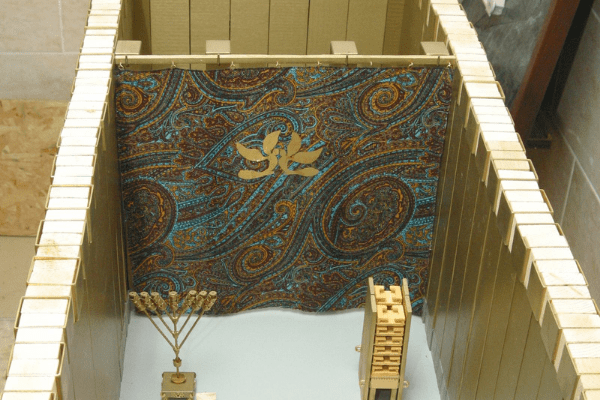
Let's go forward a few centuries and the mountain has been replaced by the tabernacle and eventually the Temple, which was the dwelling place of God. Inside the innermost part of the Temple was a curtain, and behind it was the Holy of Holies, which housed the very presence of Yahweh.
"But only the high priest entered the inner room, and that only once a year, and never without blood, which he offered for himself and for the sins the people had committed in ignorance." (Hebrews 9:7)
Tradition says that they tied a rope to the High Priest's ankle before he went in, so if something went wrong in there, the others could drag his body back out without anyone else having to risk following him. This was what access to the intimate presence of God looked like for most people. God was close but behind a wall, and that wall could kill you.
If you were a casual Jew, this is how a relationship with God may have looked, day to day. You brought your sacrifice to a priest to administer to God on your behalf to remove your sin, and then you went on with your life.
Now was this the true nature of God the Father? That's another discussion for another time. But no, I don't think so. God the Father is the same yesterday, today, and forever. His heart didn't change the day Jesus was born. What changed was the way he chose to operate with mankind. The old covenant simply didn't provide for a personal, indwelling relationship with everybody. This wasn't because his heart didn't want it but because the conditions of relationship with him hadn't been satisfied yet.
So when Jesus arrives on the scene and starts talking about God as an "Abba" or "Papa" or "Father," this is totally radical, because most have never understood God as someone you can have true relationship and intimacy with.
Jesus goes on to talk about the dynamics of his relationship with the Father and how that guides how he lives his life. Here's just a few examples.
"I am in the Father, and the Father is in me." (John 14:10)
"The Son can do nothing by himself; he can do only what he sees his Father doing, because whatever the Father does the Son also does." (John 5:19)
"My Father's house has many rooms." (John 14:2)
"I have revealed you to those whom you gave me out of the world." (John 17:6)
...that they may be "one as we are one." (John 17:22)
If you read about the disciples, for those three years of Jesus's earthly ministry, none of them seem to understand what he's talking about when he says these things. What does this even have to do with how Jesus was living his life? And does my life not look like that?
Aches Are Written Into Us
Here's why those questions matter for you right now.
Think about what a commercial is actually selling.
It's never just the truck. It's the experience of being the kind of man who has that truck.
It's never just the meal. It's the invitation into a whole lifestyle.
It's never just the phone. It's the luxury of being a person who is always tapped into what's current.
Every ad is built on tapping into an ache already inside you, a sense that you're lacking something, that someone else has it, that if you could just get it too, you'd finally be all right. If you showed that same ad to an animal, it would mean nothing. Animals don't experience envy. There's a disruption in us specifically, a soul-level restlessness that doesn't show up anywhere else in creation.
Where does that restlessness come from? Augustine said, "Thou hast made us for Thyself, O Lord, and our heart is restless until it rests in Thee."
But what does that look like?
I think it starts even earlier than we usually assume, before you ever had language for it at all.
I'm going to use a very specific example, using a person who's very special to me, that I technically haven't met face to face yet.
My daughter, Selah, is currently 32 weeks inside the womb of her mom, my wife, Anna.

Right now, there is no separation between Selah and Anna, between baby and mom, because not only is Selah inside of Anna, but they are also connected through the umbilical cord. Everything that Selah needs, life, oxygen, food, it all comes through one connection. This connection is so strong that Selah doesn't even realize that she's a separate person from Mom.
And, God willing, very soon, birth is going to happen.
And while for us as parents, this will be the most wonderful day, for Selah, it's going to be a little more traumatic.
She has existed in perfect conditions with perfect connection to all her needs being met, and all of a sudden it's all ruptured. She'll experience being cold for the first time. She will probably feel, in a sense, alone, and cut off from her life source for the first time in her little existence. And even then, it will take months for her to still realize that she and Mom are not the same person.
But when that day arrives, and she does realize it, waves of chaos and separation anxiety will likely emerge. She will discover that she has a will, and now life really isn't how it used to be, even though she cannot even say a word.
Selah, just like you, and me, and every human being who has ever lived, has experienced this, not just in birth but even throughout our lives. There is some ache that seems to have been written into us. Some kind of need for connection that we were made for, and then somehow got separated from. Every person was made with a desire to be connected to something.
There's a Hebrew word for this, dabaq, to cleave, to cling, to stick fast. It's the word Genesis uses for marriage: "That is why a man leaves his father and mother and is united to his wife, and they become one flesh." (Genesis 2:24)
Moses takes that exact same word, later, and uses it for Israel's relationship to God: "Fear the Lord your God and serve him. Hold fast to him and take your oaths in his name." (Deuteronomy 10:20)
Paul does something similar in 1 Corinthians 6:17. "But whoever is united with the Lord is one with him in spirit." (1 Corinthians 6:17, NIV) The word for united there, kollao, means to glue, to weld together.
Throughout the Bible, the picture of connection is spoken of with this union-type language, and marriage is used as the best human example of it: two becoming one.
Jesus Living Out Union
So how did Jesus experience this union we're starting to talk about?
You see it in the smallest details of how he actually lived, not just what he said. "Very early in the morning, while it was still dark, Jesus got up, left the house and went off to a solitary place, where he prayed." (Mark 1:35)
Jesus wasn't going away just to recover, but it was how he started every day: being connected to his Father. Even as the crowds and his reputation grow, asking for more signs and wonders, Jesus's orientation is never toward the crowd but toward his Papa: "But Jesus often withdrew to lonely places and prayed." (Luke 5:16)
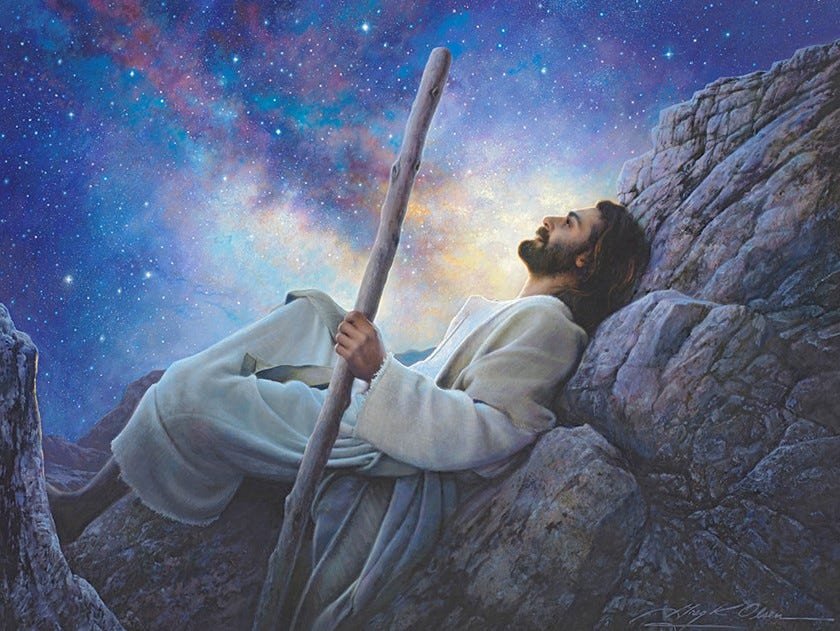
At Lazarus's tomb, before he ever called out for Lazarus to come out of the grave, he says, "Father, I thank you that you have heard me. I knew that you always hear me." (John 11:41-42) Jesus lives with a complete assurance of the Father's presence with him and in him, constantly.
Even in the middle of arguments with religious leaders trying to trap him, the reply is "He who sent me is with me; he has not left me alone, for I always do what pleases him." (John 8:29)
So before dawn, in the middle of success, at a graveside, in the middle of conflict, and then finally in a garden the night before he died, "Going a little farther, he fell with his face to the ground and prayed, 'My Father, if it is possible, may this cup be taken from me. Yet not as I will, but as you will.'" (Matthew 26:39)
Jesus has the same posture in every single situation: experiencing union with the Father.
And then he gives us a very specific invitation as to how we follow him that should now sound a little familiar.
Abide in me, as I also abide in you. The Greek word for abide is meno, which means to remain, stay, continue, or dwell. Make your dwelling place, your home where you experience life, inside of Jesus, and let Jesus make his dwelling place with the Father inside of you.
I am the vine; you are the branches. If you remain in me and I in you, you will bear much fruit. Jesus calls himself the vine and us the branches. A branch never has to try hard to bear fruit. It doesn't have to grit its teeth to produce a blossom. All a branch does is stay attached, and the vine will do what vines do: grow and bear fruit.
Apart from me you can do nothing. Jesus doesn't say that apart from him you'll struggle more. He says apart from him we can do nothing. All of our efforts to produce life apart from connection to Jesus are as fruitless as a branch trying to bear fruit apart from being connected to the vine.
The Garden Was the Design
What we tend to experience in life is that "apart from me" life with Jesus and its effects are numerous.
Everything you observe and experience and think, that's not how it should be. This is what sin is. This is why relationships fail, why we get hurt, and why the world is broken. We are seeing what it looks like when anyone and anything operates in a reality that is disconnected from the fullness of union with God.
Another word used to describe this is the word "shalom." At its core, it is a word that means wholeness, completeness, soundness. It is the description of what things are supposed to be when they are complete, running as they have been designed to.
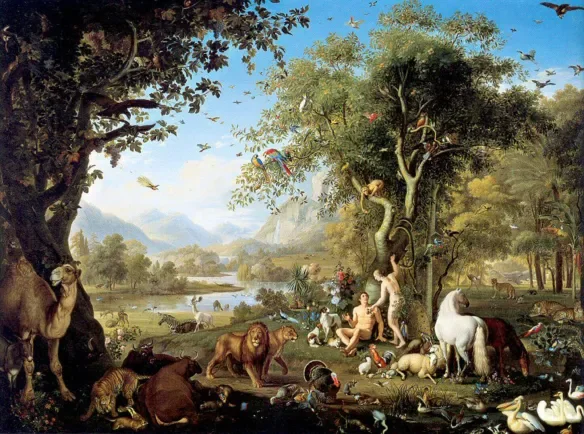
There was a time on earth that did experience shalom. Picture being like Adam in the garden. No wants, no needs, and the utter intimacy with Father God, walking every morning in the cool of the day (Genesis 3:8), and an intimacy and wholeness of human relationship with his wife, Eve, where though they "were both naked... they felt no shame" (Genesis 2:25). Everything was as it should be, as it was meant to be.
Then, just like every baby experiences, there was a rupture. Adam wasn't the first to rupture himself from loving union with God, for a cosmic rebellion had already occurred with Satan and a third of the heavenly angels who had already been kicked out of heaven (Revelation 12:3-9), and now were in the garden offering Adam his own chance to be in control, and by consequence, to leave his union with God. Satan says to Adam, "For God knows that when you eat from it your eyes will be opened, and you will be like God, knowing good and evil." (Genesis 3:5)
He is asking: do you want life independent from God? Do you want to be your own God? Adam takes the bait, and the relationship with God and humanity fractures.
That chasm runs through the whole rest of the story. Israel, called to be set apart, still demands a king instead of God ruling them. "And the Lord told him: 'Listen to all that the people are saying to you; it is not you they have rejected, but they have rejected me as their king.'" (1 Samuel 8:7) Israel rejected God as their king, and they suffered dearly.
How many examples does it take to make the point? Israel is overtaken by the Philistines, Egyptians, Assyrians, Babylonians, Persians, Greeks, and finally the Romans. The life that Israel insisted that they wanted, to be their own rulers, continues to bring them nothing but hardship and exile.
Even up to the time of Jesus, no one has truly learned the lesson. Though Israel has been conquered by Rome, all that most people want is a Messiah to be yet another ruler, another way that they can be "free" again.
Does the story of Israel trying over and over again to find freedom in all the wrong places resonate with your story at all?
But what if the problem wasn't about who was in charge of the political government? What if Israel's problem was much deeper than anyone was willing to look at and understand?
The Teacher Without the Answer
Enter the conversation that Jesus has with the most learned man in Israel in John 3: Nicodemus.
Nicodemus is not a nobody. He's a teacher of Israel, the kind of man who today would be a world-renowned seminary professor. If anyone was supposed to already understand God and have the answers to life, it was him.
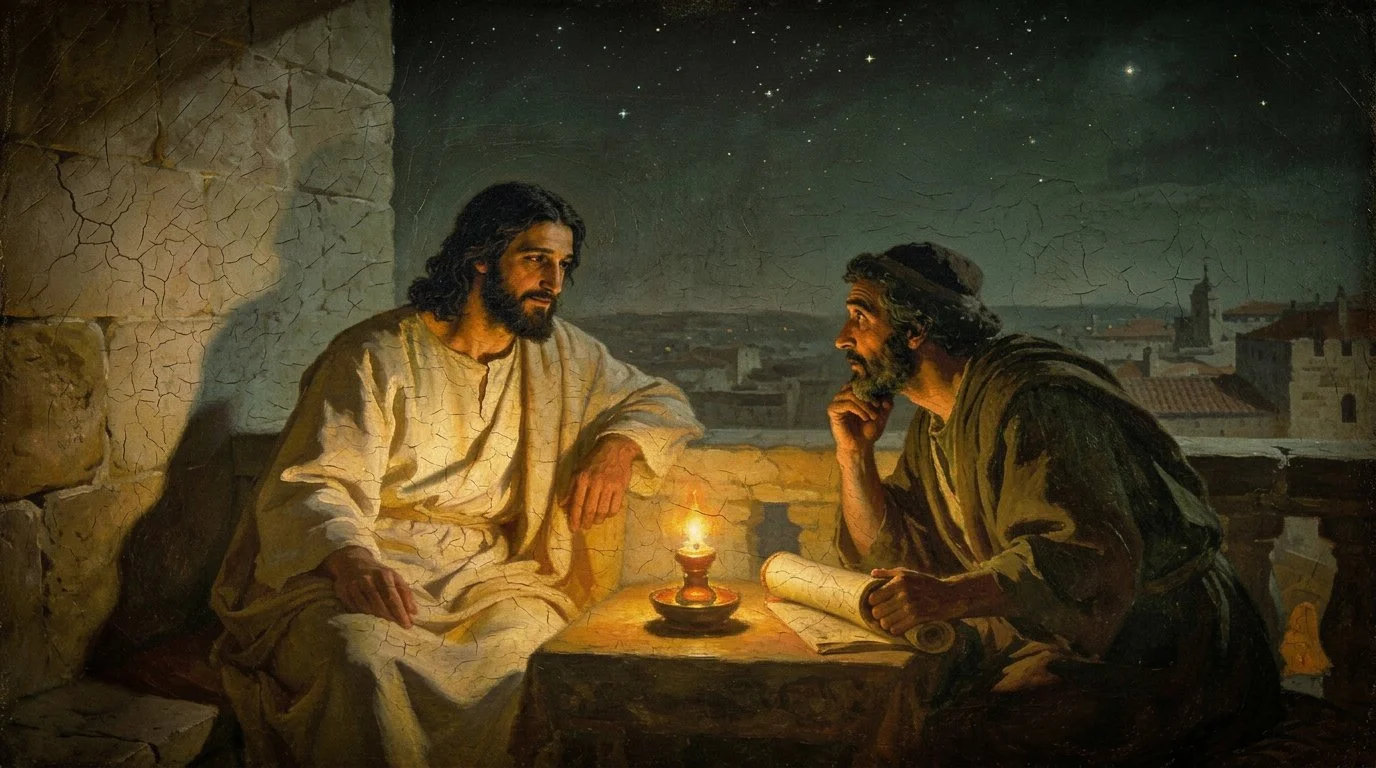
He's curious about Jesus and asks the questions that many are asking. How are you doing these miracles, how are you living the way you're living, if God isn't with you? And why don't you seem to be as concerned with Israel obtaining its independence from Rome as everyone else seems to be?
Jesus tells him plainly: "Very truly I tell you, no one can see the kingdom of God unless they are born again." (John 3:3) Nicodemus, confused, asks how a grown man can somehow re-enter his mother's womb. Jesus clarifies: "Very truly I tell you, no one can enter the kingdom of God unless they are born of water and the Spirit. Flesh gives birth to flesh, but the Spirit gives birth to spirit." (John 3:5-6)
What does that actually mean?
First, Jesus makes a huge paradigm shift: your life circumstances that you think are the problem are not actually your biggest problem. So often, we are all just like Nicodemus and Israel.
We are so distracted and overwhelmed by life circumstances, and we think if everything could just get tweaked a little, then life will finally be okay.
If only I could get that job.
If only this family member would behave better.
If only my kids would call me more.
If only my sports team would win a championship.
If only.
And then we're frustrated with God and everyone else, because we think the problem at hand is so obvious. Why can't everyone else seem to get with my program?
The problem Jesus is talking about is actually much deeper, though it may be unseen to the physical eye. The problem for Nicodemus and for everyone born from Adam is exactly that: the problem is that we are born in Adam.
Now let me explain that phrase for a second. Romans 5 and 6 use this phrase, "in Adam," and use it to describe a line of humanity. Everyone born from Adam experiences everything Adam experienced, and apart from outside intervention, is doomed to keep repeating it.
Let me use an example. Think about your grandfather. What would have happened if your grandfather had died before your father was born? Obviously, if your grandfather had died, your father would not have existed, and therefore you would not have existed, right?
So when Adam was told by God that if he ate from the tree of knowledge of good and evil, "on the day that you eat from it you will certainly die."

So what died in Adam the day that he ate from the tree? Certainly his body did not die, as he kept on living for another 900 years. His soul did not die, as he still possessed a mind, a will, and the emotional capacity of his personality.
So what died? It was his spirit, his innermost part, that was intertwined with God, and was now dead. It no longer possessed the ability to know God in the most intimate sense.
So when the Bible talks about you being in Adam, that is what it is referring to. When Adam died, everyone else who came from him also had already died in a spiritual sense. And because we were in him, it is essentially the same as if we were the ones who sinned in the garden.
The same as if your grandfather had died prematurely, it would be the equivalent of you dying with him, since your seed was "in him." That is the central problem of the human race that you and I experience. The problem is that everyone is born in Adam, and that is the outflow of everything we see that is wrong and not as it should be.
Everything that is in Adam, everything that is life apart from union with God, is the source of every heartache, every rupture, every disappointment.
What is one to do?
Jesus tells Nicodemus plainly: to see the kingdom of God, to experience the life of God in its fullness, you must be born again.
But how? Nicodemus is exasperated. "How can someone be born when they are old?" Nicodemus asked. "Surely they cannot enter a second time into their mother's womb to be born!" (John 3:4) And he was right. There is nothing that someone can do on their own to be born again. There is nothing they can do to fix a problem that is more than skin deep. No matter how hard you and I try on our own, we cannot fix this problem.
So what's the actual good news?
You can be born again, in the Spirit. The deepest part of you, the part that has been dead to God, running its own life, unable to experience the fullness of life, can be resurrected. It can be born again in the Spirit.
Whispers in Your Body
God has always been whispering this to us, even before we had ears to hear it.
Did you know that an umbilical cord is not just one strand? It's three.
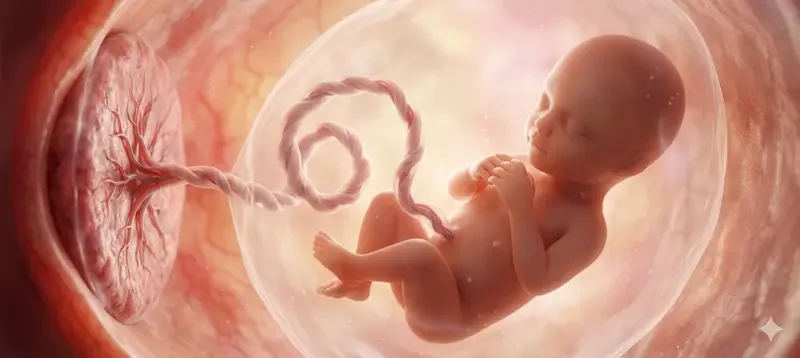
I don't really believe in coincidences, and I certainly don't think this is one. Could it be that from the very beginning of your physical development, God was saying to you, "You were made to be connected to the Trinity"? You were made to be joined to the Father, the Son, and the Spirit.
When I learned that fact, it made this verse come alive for me a little more: "Though one may be overpowered, two can defend themselves. A cord of three strands is not quickly broken." (Ecclesiastes 4:12)
Though we have experienced brokenness and disruption in our connection to God through sin, God has made every intention of plugging us back into himself.
Now let's talk about how God actually made that possible.
Life in Jesus' Body
There is only one person who can solve this problem for you and me.
Jesus Christ is distinctly different from every other religious leader, guru, healer, and sage who came before him or has come since. Because he is fully God and fully man.
He is born from a woman, Mary. To be born from a woman makes you human. Just like every human who has existed, Jesus experienced humanity from the womb. He also experienced the rupture of leaving that womb, feeling cold, wet, and hungry. He lived in a small backwoods town under heavy taxation and extreme poverty. He experienced hunger, tiredness, thirst, everything that is common to humanity. He has a body and soul that experience life in its broken state.
But he has one key difference: he is born of a virgin. Mary had never known a man sexually to conceive Jesus. Jesus has no earthly father.
What is so special about that? Other than the fact that it is an utterly miraculous event that has never happened and will never happen again, it is significant because it means this, very simply: he is the first human who is not "in Adam." Because every other person had an earthly father born in Adam, Jesus is "conceived by the Holy Spirit" (Matthew 1:20), which means God the Father is his Father. He does not have the blood of Adam running through his veins, He has heavenly blood! He possesses an unbroken connection to the Father, never once severed the way ours was.
So Jesus has arrived on the scene as God but also as a real human man. So why has he come? He describes his mission several places, but this is probably my favorite reason he gives: "The thief comes only to steal and kill and destroy; I have come that they may have life, and have it to the full." (John 10:10)
Though Satan attempted to steal the life that Adam and the human race that bears God's image once had, Jesus has now come to give it back.
How will Jesus give us this life? This ability to know God once again?
Jesus himself becomes the mechanism. The gate. He becomes the door you walk through, out of death and away from God, into him, into life with God.
He says he is the way: "I am the way and the truth and the life. No one comes to the Father except through me." (John 14:6)
And he says he is the gate: "I am the gate; whoever enters through me will be saved. They will come in and go out, and find pasture." (John 10:9)
Jesus's body is the way. It is the opening the Father is calling everyone to.
And that is exactly what had to happen, literally. Jesus had to be run through. He was not only pierced by a spear in his side, but he was beaten and whipped beyond recognition, had a crown of thorns jammed into his skull, and died an excruciating death, impaled on a beam of wood with spikes driven through his arms and ankles.
God the Father was placing on him all the effects of life apart from him that Adam and Adam's race had caused and experienced. As a literal sacrifice and final payment, "God made him who had no sin to be sin for us, so that in him we might become the righteousness of God." (2 Corinthians 5:21)
Everything that was wrong, and is still wrong, with ourselves and our world, all the chaos, all the death, all the brokenness, he carried on his actual body and gave up his body to satisfy the debt.
And as he breathes his final breaths, he cries out one word, “tetelestai”, which translates to the three most beautiful words ever said: "IT. IS. FINISHED." (John 19:30).
And it truly was finished. Jesus's death fully satisfied and fulfilled the problem. There is nothing that can be added or subtracted from it. "The death he died, he died to sin once for all; but the life he lives, he lives to God." (Romans 6:10)
His death is the death to sin, to everything that is wrong, to everything that is not shalom.
And at the exact moment he died, "the curtain of the temple was torn in two from top to bottom." (Matthew 27:51, NIV) The temple curtain that had separated ordinary men from God was torn from its very top, meaning no man had done anything to tear it on their own.

The access, the ability to dwell with God, to know him intimately, had been restored by the God-man on the other side of the curtain.
So how do we enter into this born-again life, and how does it affect us now? Because while this is the foundation, many people seem to have heard this news and yet few seem to feel like it's made a bit of difference in their lives.
One reason, among many, I believe, is that many have not heard the full story.
What I just described, the life, death, and resurrection of Jesus, is the absolute bedrock. But there is more to this story that I believe makes it even more unbelievable.
You ready?
When Jesus died, you died too.
Go back to the example of your grandfather. Your experience is completely tied to his. And in Adam, your life was completely severed from the life of God because your grandfather, Adam, died.
But God the Father did something much more grand and spectacular than offering us forgiveness for our sins. Because therein lies the problem. We still ache. We still sin. We still bleed. This is at the heart of what many people have not heard, because they see the life, death, and resurrection of Jesus as a nice idea with no real bearing on their life, other than maybe thinking they should be better to please God.
Heavens, no. There is so much more that happened. Because forgiveness alone is skin-deep. It's like that person who says "I'm sorry, I'm sorry" over and over when they hurt you but continues to do the same thing. They may have some sorrow, and you may forgive them, but that forgiveness and apology hasn't gone beneath the surface to the deeper reasons that motivate their continued behavior.
This isn't to diminish the total, complete forgiveness of God, but it seems that most of us need something deeper, since all we seem to constantly say is "I'm sorry, I'm sorry," with no real change in our lives.
So what did God do? He put you inside of Jesus, and crucified you too.
What on earth? Though this may be next to impossible to see and understand with human understanding, it is nonetheless true.
"Our old self was crucified with him so that the body ruled by sin might be done away with, that we should no longer be slaves to sin." (Romans 6:6)
Your spirit, which exists outside time and space, was joined with Jesus, past tense. When Jesus died, he died for all sins, and what died with him was whatever in you had been ruptured from the life of God. That's more than forgiveness. That's the actual mechanism, his body providing the way.
Your old spirit, the one dead to God, unable to experience union with him, it died with him. That happened. Past tense, finished, not something still in progress.
And that's not all. Jesus was raised, and now is seated "at his right hand in the heavenly realms" (Ephesians 1:20). And he has given you his Spirit "as a deposit, guaranteeing what is to come" (2 Corinthians 1:22), the actual proof the connection is real and already secured. What that Spirit means for who you now are, moment to moment, is worth its own piece. For now, the point is simpler: the deposit's been made. The connection's been sealed.
Yes, your soul and body are still part of the "whole creation that has been groaning together in the pains of childbirth" (Romans 8:22), awaiting their full redemption, but the deepest problem has been solved.
The Door Is Open
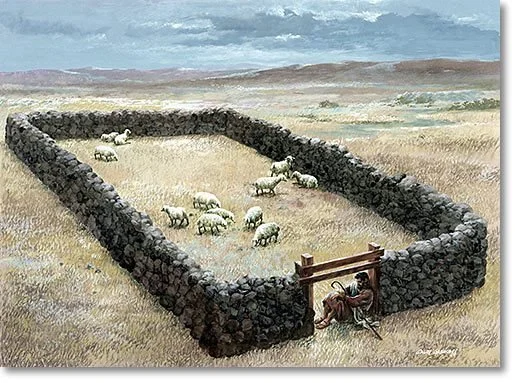
Union with God isn't something you're waiting for on the backdrop of trying better or praying harder or cleaning up your act. The reality of union with God in your spirit is already true of you right now if you are in him, regardless of what you've gone through, because it's totally based on what Jesus has already done for you and in you.
This is what the Christian life is actually about, at its most basic level: it is the way back to the Father, made available by Jesus himself. Your biggest problem was never your circumstances, and it was never your sin management, because underneath both was something deeper.
We'll continue this in the next piece, the battle for union in this life, and what it actually looks like to live in this reality. But it all starts here.
You had no way to actually know God. But God didn't ask you to fix that problem. He made a way, by becoming the way.
Your union with God came back into connection the moment Jesus said, "It is finished."
And it truly is!
