
The Discipleship Deficit
How consumer Christianity is keeping Christians from real formation
We are talking about discipleship more than ever before, and yet we seem to be experiencing it less than ever. We have unprecedented access to sermons, podcasts, books, courses, conferences, and online content. And still, many Christians are not being deeply formed into the likeness of Jesus.
There is a growing awareness that something is wrong. Words like radical discipleship and spiritual formation are everywhere now. In many ways, that’s a good thing. It shows that people are waking up to the fact that information alone is not enough.
But even this language can quickly become another trend—another program, another stream of content, another way of signaling that we are “doing the right thing.” Without realizing it, we can turn even the conversation about formation into a new version of consumer Christianity.
I don’t think this is because people are insincere. Most people I know are genuinely trying. They are hungry. They want their faith to be real. But the systems we’ve inherited are very good at producing consumers and very poor at producing apprentices.
“The student is not above the teacher, but everyone who is fully trained will be like their teacher.”
— Luke 6:40
Restless or Stuck: The Same Problem
One symptom of this shows up as deep restlessness. I’ve watched people I love move from one tradition to another—Presbyterian to Baptist, Baptist to charismatic, charismatic to Anglican, Anglican to Orthodox or Catholic—always searching for the place where they can finally “plug in,” finally feel grounded, finally experience something real. It’s not rebellion. It’s hunger. But it often becomes a form of spiritual trend-hopping, moving from one expression to the next, hoping the next one will finally fill the void.
At the same time, there’s another group that looks very different on the surface but is responding to the same problem. These are people who have stayed put. They’re active in church. They’re deacons, small-group leaders, volunteers. Post-COVID, they look almost exactly the same as they did pre-COVID. They’re doing all the right things, and they feel reasonably good about themselves—but there’s a shallowness there. Not much has changed on the inside.
Both restlessness and shallow stability are responses to the same underlying issue: a lack of deep formation. One group keeps moving because nothing satisfies. The other stays because they’ve learned how to function without transformation.
Church as a Content Factory
Over time, discipleship has been regulated into a predictable pathway: attend church, join a class, get into a small group, serve on a team, give financially. None of these things are bad. Many are good. But they can easily become substitutes for formation.
Small groups often end up being places where we sit in a circle, talk about the sermon, and then go home unchanged. Serving can become more about propping up the institution than being formed into the image of Christ. Church, without meaning to, becomes a content machine—and if that’s the goal, then in many ways it’s succeeding.
But if we ask what the church has existed for over the last 2,000 years, it was never primarily to produce content or manage religious activity. The church is the bride of Christ. Its purpose is to manifest the life of the groom—to embody the life of Jesus in the world. Formation is not a side issue. It is the point.
“Christ loved the church and gave himself up for her to make her holy… and to present her to himself as a radiant church.”
— Ephesians 5:25–27
The Missing Apprenticeship
One of the most glaring problems is that very few Christians have ever actually discipled someone else. And this is not primarily a criticism of individuals. Most people don’t disciple others because they were never discipled themselves.
This creates a circular problem. Leaders are expected to form people, but many leaders have never been formed relationally. Seminary and institutional training can teach people how to run churches, preach sermons, and manage systems—but they cannot replace apprenticeship. Without being discipled, replication breaks down.
This shows up generationally. Many older Christians, though sincere and faithful, don’t have a deep inner walk with Jesus to pass on—or they don’t feel equipped or confident to do so. Younger Christians are hungry for direction but often lack groundedness. In between are young families and communities that become inward-focused, busy building their own stability, but disconnected from a larger story of formation.
Something is missing, and most of us can feel it even if we can’t name it.
“The gospel itself should naturally move people into apprenticeship. It should cause people to become students of Jesus—apprentices as the natural next step.
If the gospel we are preaching leads to any other conclusion, it is simply not the full gospel.”
This shows up generationally. Many older Christians, though sincere and faithful, don’t have a deep inner walk with Jesus to pass on—or they don’t feel equipped or confident to do so. Younger Christians are hungry for direction but often lack groundedness. In between are young families and communities that become inward-focused, busy building their own stability, but disconnected from a larger story of formation.
Something is missing, and most of us can feel it even if we can’t name it.
The Moses Mentality
In place of apprenticeship, we’ve adopted what might be called a “Moses mentality.” Instead of expecting to encounter God ourselves, we wait at the bottom of the mountain for someone else to go up for us.
I heard a pastor once tell his congregation that they “sucked”—not that they were bad, but that they were constantly drawing from him instead of learning to follow Jesus themselves. They were waiting for him to go up the mountain to hear from God because they were afraid to go themselves. That dynamic is deeply broken. It belonged to an old covenant moment that was always meant to point forward to something more.

Dallas Willard remarked that “the fruit we are getting in church is the natural consequence of its basic message…Your system is perfectly designed to yield the result you are getting.”
In the new covenant, we don’t need a Moses to stand between us and God. We are invited into direct communion. When we build our faith around personalities—even good, sincere ones—we risk being formed into the likeness of someone other than Jesus. And when those leaders fail, disappoint us, or simply prove human, faith itself can feel shattered.
Jesus’ Life Feels Unrealistic
Underneath all of this is a quieter, more devastating assumption: most of us do not actually believe that the life of Jesus is realistic.
We admire Jesus. We affirm doctrines about Him. But we don’t expect to live like Him. His life feels inspiring but unattainable—more like Gandhi than a model we could actually imitate. We still assume there is an unbridgeable gap between Jesus and us, between the apostles and us.
So Christianity becomes about getting saved and then doing our best until we die. Heaven becomes the real payoff. Life now becomes survival.
“We call on the new covenant for salvation, but we live the old covenant to get by.”
That produces either shame or defensiveness—or a shallow version of faith that promises ease and comfort but avoids transformation altogether.
Making Jesus Untouchable
In some ways, we’ve made Jesus’ life too spiritual and too religious. I say that reverently.
We too often revere a stained‑glass Jesus rather than experiencing the real, alive, wild, deep, relational Christ.
Jesus did not pretend to be human; He became human. He lived in dependence on the Father. He submitted Himself to obscurity, waiting, suffering, and training. He lived as a human empowered by the Spirit.
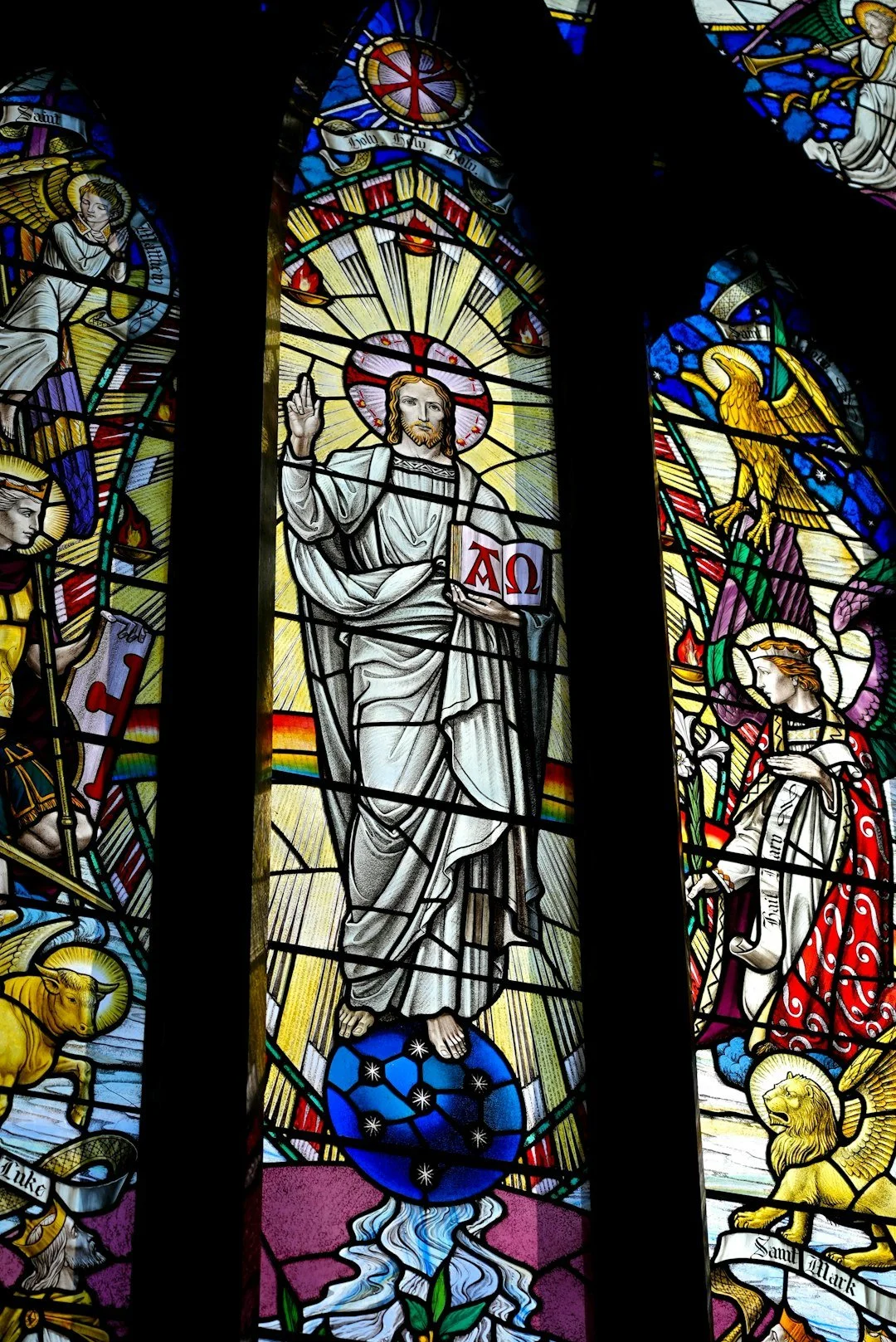
Who, being in very nature God, did not consider equality with God something to be used to his own advantage; rather, he made himself nothing by taking the very nature of a servant, being made in human likeness.”
— Philippians 2:6–7
His life was not symbolic. It was demonstrative. He is the way, the door, the life. Ultimate reality. What we were made for.
Formation Is Not Optional—But It’s Not Performance
When formation becomes optional, it gets delegated to professionals. When it gets delegated, the gospel becomes elitist. And when that happens, we have quietly become the Pharisees by placing barriers around life and wondering why people feel crushed by the weight.
“Woe to you, teachers of the law and Pharisees, you hypocrites! You shut the door of the kingdom of heaven in people’s faces.”
— Matthew 23:13
This is not about doing more things. It’s not about trying harder. Salvation is not earned, and it cannot be unearned. But salvation is not the finish line—it’s the invitation. It’s the deposit on a life of training where God Himself commits to forming us.
Grace forgives us, yes, but it also trains us.
Preparing the Soil of Your Heart
Jesus compared the kingdom to seed falling on different kinds of soil. The issue was never the seed. The issue was the soil of the hearts of those who receive it.
“A farmer went out to sow his seed… Some fell on rocky places, some fell among thorns, and some fell on good soil, producing a crop—thirty, sixty, and even a hundred times what was sown.”
— Matthew 13:3, 8
Yet there is hope. Some hearts are open—good and noble hearts that receive the seed, trust it, and allow it to grow. These are hearts that are willing to be trained, formed, and fathered. These are hearts that can be re-enchanted with the reality of God’s presence…the awe, dependence, and wonder that the Christian life was always meant to cultivate.
Jesus Himself is the seed, and He is also the one who waters. He enters our humanity, right where we are, and forms us.
“I am the vine; you are the branches. If you remain in me and I in you, you will bear much fruit; apart from me you can do nothing.”
— John 15:5
The Masterclass Is Open
Discipleship, at its core, is a deep, intimate, daily relationship with someone you believe is the master of life. It’s wanting to be with them, to know what they know, to respond to life the way they do. It’s learning to become like Jesus as if He were you.
“Jesus’ masterclass of life is open, and He has a spot available for you.”
Remain in me, as I also remain in you. No branch can bear fruit by itself; neither can you bear fruit unless you remain in me.”
— John 15:4
This life is not reserved for the spiritual elite. Whether you’re in a megachurch or no church, a small group or complete isolation, a Western city or a forgotten village—the soul craves union with God. And that life is accessible.
The most powerful prayer we might pray in this moment is simple and vulnerable:
Jesus, I want to be discipled by You.
Father, I want to be fathered by You.
Spirit, empower me to become like Jesus.“Everyone who hears these words of mine and puts them into practice is like a wise man who built his house on the rock.”
— Matthew 7:24
Anything worth doing for Jesus must come from that place. Otherwise, we can spin our wheels endlessly. But when life is formed from communion with Him, it becomes real. And that life—His life—is still available.
Learning to Become Who We Already Are In Him,
John Will
