
The Grief You Haven't Allowed
Learning to Sit With What Hurts
I keep thinking about a story I know well.
A woman sits quietly, tears sliding down her face. She is not dramatic. She is not loud. There is no scene, no grand display, just the steady ache of someone holding far more than her heart was built to carry.
Her name is Hannah. Read her story in 1 Samuel 1.
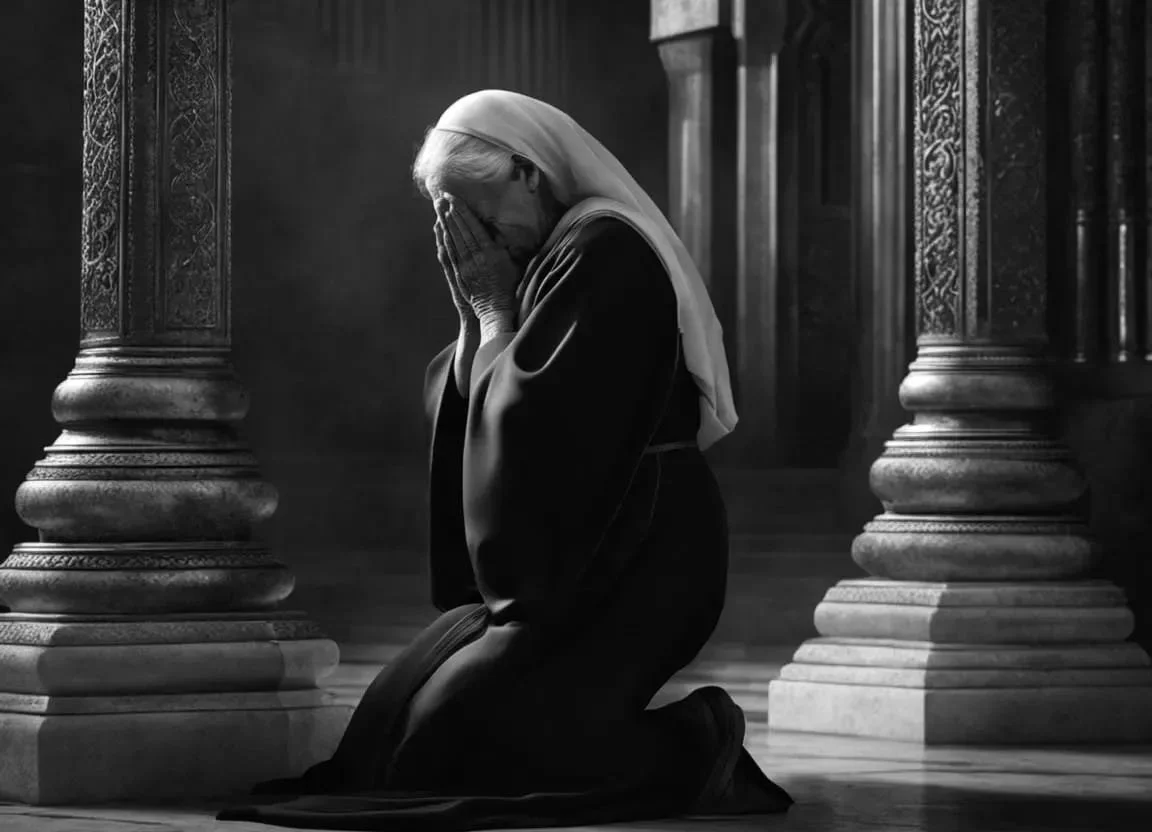
She lived centuries ago, yet her grief feels familiar. She knew longing. She knew disappointment. She knew comparison. She knew what silence from heaven felt like. And most of the time, she carried those things alone.
Recently, I’ve been wrestling with the idea of the ideal self. That part of me that tries to be unbreakable, endlessly capable, unfazed by anything. But the longer I sit with myself, the more I realize there is another layer underneath the polished version. A layer that I had to stop pretending about.
That layer is grief.
My Pain in Silence
I’ve also had to grieve my wife’s miscarriage. I needed to be strong for her, to walk her through the procedure, to hold her up when she felt broken. At the same time, I was wrestling with my own pain and loss. I didn’t fully understand her grief, and I felt mine wasn’t as valid because it wasn’t my body that had carried our child.
I found myself rushing to give spiritual answers, reminding her and even myself that we would see our child again. Those truths are real, but in my haste to offer hope, I sometimes rushed past the rawness of the loss itself. I had to learn that grief is not a problem to be solved or a pain to be smoothed over. It is a space to sit together, honestly and vulnerably, to name what hurts and to mourn what has been lost.
In that experience, I felt the tension of wanting to protect, to fix, to be the strong one, while also realizing that true love and faith often live in the quiet work of sitting with grief, in the moments where there is no perfect answers.
Most of us were never taught how to recognize it.
Maybe grief felt too disruptive.
Maybe it felt too vulnerable or too embarrassing.
Maybe we were told to stay strong, to hide the ache, or to move on long before our hearts were ready.
Some of us grew up in homes where tears were inconvenient, where suffering was met with “toughen up” or “stop crying.”
Some learned early that to be loved or valued, we had to appear capable and joyful.
In other homes, grief was spiritualized too quickly: “Trust God, it will be okay,” or “Everything happens for a reason,” which often taught us to silence the heart rather than witness it.
And yet grief shows up anyway.
Dreams dissolve. Relationships shift. Communities wound us. Churches fail us. Seasons end before we are ready.
We call these things “life,” but our hearts know better. So do our bodies. So does our faith.
The ideal self doesn’t feel any of this. But the real self does. And the real self whispers for permission to mourn, to tell the truth, to let the weight be felt instead of carried in silence.
Grieving is not giving up. It is telling the truth so hope finally has room to grow.
Henri Nouwen once wrote, “Do not hesitate to cry. It is whispering to others that there is pain inside that needs to be shared.”
I think grief whispers that same thing to God. Not to accuse Him, but to draw near. Grief is not the enemy of faith. More often, it is the doorway to a deeper one.
Hannah’s story and mine meet in the quiet spaces of grief. She carried her sorrow deeply and mostly alone, without anyone who could truly sit with her. Those closest to her, like Elkanah and Eli, wanted to help, but they misunderstood her pain or tried to fix it. In my own life, I have done the same—rushing toward answers, toward reassurance, toward hope—before allowing myself to sit with the raw, unfiltered ache. I also experienced this alongside my wife, as we grieved together after our miscarriage. We were both hurting, but in different ways, and I had to learn to simply be present with both of our sorrow.
Grief, in all of these stories, is relational. It does not need solutions. It needs presence. It asks to be seen, to be held, to be witnessed rather than smoothed over. When it is received this way, it becomes a bridge to God, to other people, and even back to our own hearts.
Our Hearts Must Be Heard
Grief is more than sadness. Grief is the soul acknowledging that something precious has been lost, and that it will not return in the way we hoped. It is the heart holding love with nowhere to place it. It is what rises to the surface when we slow down long enough to hear ourselves.
This is where the church often struggles.
“The church loves healing, but not the slow, messy process that leads there. It loves resurrection, but it avoids tombs. It wants transformation, but skips lament. ”
But grief matters because truth matters. And without naming truth, we can’t be whole.
The psalmist once said, “My tears have been my food day and night.” That wasn’t spiritual immaturity. That was honesty finding its voice. Scripture doesn’t correct him. God receives that prayer as it is.
Ecclesiastes says there is a season for everything. A time for joy, yes. And a time to weep. A time to let something die so something new can be born. Grief is that season. It softens the soil of the heart in ways nothing else can.
When Grief is Ignored
When we refuse to grieve, we do not eliminate pain. We relocate it.
It shows up as irritability. Or numbness. Or anxiety. Or constant distraction. Or relentless productivity.
We say, “I should be fine by now,” while everything inside us quietly disagrees.
In church settings, ungrieved grief becomes exhaustion. People serve while breaking. They show up while shutting down. They lead while carrying losses no one has asked about. Churches celebrate growth while burying sorrow under busyness.

Henri Nouwen once wrote that grief becomes a gift only when we allow ourselves to enter it fully. If we deny it, we deny ourselves the fullness of life.
Avoiding grief costs us more than we realize. It disconnects us from ourselves. It distances us from others. It disrupts intimacy with God.
And sometimes it leaves us like Hannah, grieving with no one who knows how to sit with us.
When Grief Is Misunderstood
Scripture gives us two portraits of how grief is often mishandled, even in spiritual spaces: Elkanah and Eli.
Elkanah loved Hannah. There’s no doubt about that. But he wanted her pain to end more than he wanted to walk with her through it. He tried to comfort her by trying to fix her.
“Why are you weeping? Am I not enough for you?”
He meant well, yet he missed her heart completely. Many churches do this too.
Be grateful. Trust God. Choose joy.
These are good words, but they can feel painful when spoken at the wrong time. Sometimes we meet our own sorrow this way by trying to dismiss our pain because we feel guilty for feeling it.

Then there is Eli, the priest. A man who should have understood grief better than anyone. But when he saw Hannah praying in silence, overwhelmed, unable to form words, he thought she was drunk.
Eli represents every spiritual leader who confuses pain with immaturity, every Christian who says things like, “You’re too emotional,” or “You need to be stronger,” or “You should be past this by now.” Even spiritual authority can misunderstand sorrow. And so many people, like Hannah, end up grieving alone inside churches every single week.
The lessons of Elkanah and Eli are not just ancient but have relevance for the Modern Church. Grief can be mishandled in many subtle ways:
We minimize or compare: Someone tells you, “At least you still have your health,” or “Others have it worse.” You nod, but inside you feel invisible. The weight of your loss doesn’t vanish; it only feels smaller because no one sees it fully.
We force positivity or over-spiritualization: You tell a friend about a disappointment, and they say, “God has a plan for this.” You appreciate their faith, but their words push your sorrow aside. You are still aching, but the moment for feeling it has passed without being noticed. Pain is taught to be temporary and inconvenient.
We interrupt or distract: During a quiet confession of pain, someone quickly changes the subject to something lighter, or even hands you a tissue as if to signal, “Time’s up.” You feel brushed aside. Your grief is real, but no one stays with it.
We expect timelines and closure: Months after a loss, a well-meaning coworker asks, “Aren’t you over it yet?” You want to explain, but the question makes your grief feel like failure, as if it should obey a schedule that doesn’t exist.
We assume grief is only an emotion: You feel exhausted, anxious, and disconnected from people you love, but everyone only asks how you’re feeling. No one asks about the sleepless nights, the tension in your body, or the spiritual emptiness you carry. You start to wonder if something is wrong with you.
We avoid: You enter a room and notice people quietly stepping back. They don’t know what to say. Their absence makes the ache louder. You realize that the grief itself is now a barrier to connection, because it feels unwelcome.
We focus on fixes: Friends suggest projects, volunteer work, or busy schedules to help you “move on.” You try to comply, but your heart still aches. You feel guilty for sitting with the grief instead of doing something, yet nothing you do can replace the work your soul needs to do.
All of these approaches share a common thread: they prioritize comfort, productivity, or social expectation over presence and honesty. When grief is met this way, people carry it alone, or bury it under layers of “doing fine.”
The church, like Elkanah and Eli, can unintentionally repeat these patterns. But grief that is seen, honored, and allowed to breathe is formative. It invites God into the pain, cultivates honesty, and plants seeds for spiritual and emotional growth.
Honesty comes before Victory
Grief and faith are not enemies. They are companions.
Faith without grief becomes shallow. Grief without faith becomes despair.
When we allow faith and hope to coexist with truth and grief, we begin to live lives that are honest and deeply rooted.
James writes, “Draw near to God, and he will draw near to you.” This is not a call to perform for God. It is an invitation to confess, to tell the truth of our hearts.
Henri Nouwen wrote that grief asks us to allow the sadness in our hearts to become a prayer. Grief is not what interrupts prayer; it is often the most sincere prayer we ever offer.
Sometimes we avoid grief because we fear despair. But when we grieve, we do not abandon hope. We return to it. We place it in soil God can tend.
Grief clears the ground of our hearts; faith plants the seed.

Fruits of Grief
When we welcome our grief instead of rushing it, we begin to see holy things take root.
Compassion. We learn how to sit quietly with the pain of others because we have learned to sit with our own.
Humility. We stop pretending to be the self-sufficient, ideal versions of ourselves that we show to the world.
Wisdom. Acknowledging our loss reveals what truly matters in life.
Dependence on God. We begin to understand our limits and the depth of our need for His nearness.
Resilience. Not the polished, Instagram-ready kind, but the gritty strength gained from trusting God through life’s storms.
Patience. Much of our impatience comes from the desire to control how and when suffering is addressed.
Desire. Grief allows God to enlarge the heart’s longing for redemption and His work in the world.
These fruits begin to grow when we stop fearing sorrow.
When we learn to grieve, we learn to listen. When we learn to listen, we learn to truly love. And when we learn to love, we can reflect Jesus to others who finally have space to breathe and begin to heal.
God in the Ache

You do not need to fix your grief before God can meet you. You do not need to hide it, downplay it, or hurry it along. You simply need to tell the truth.
Grief is not the absence of hope. It is the soil where hope takes root. It looks barren at first, but hidden life stirs beneath the surface. God tends that soil with patience we rarely understand.
The ideal self cannot grieve. It cannot carry your losses. It cannot hold your sorrow or help your heart heal. But God can. And the honest self—the one that aches, that weeps, that sits in solitude—is the one He meets.
I have seen this in my own life, sitting beside my wife in grief, holding my own pain quietly while witnessing hers. I see it in Hannah, whose sorrow waited for someone to walk with her. Grief asks for presence, not solutions. It asks to be witnessed, to be named, to be held.
Transformation begins not with our victories, but with God’s. It begins in vulnerability, in brokenness, in the very place where something has been lost. It begins exactly where it hurts. It begins where God is already waiting.
