
The List is Life
Schindler's List and the Name That Actually Saves
Place yourself in Poland in the early 1940s.
You have been deemed worthy of death. Not because of anything you've done. Not because of your failures or your record. Because of who you are. Because of who you were born into. You were born a Jew, and in the logic of Nazi ideology, that is enough. You are stuck in a ghetto waiting for your time to come, and there is nothing you can do about it. No amount of good behavior changes your standing. No connections. No money. No credentials. None of it moves the needle.
Your fate is determined entirely by what you are.
How would you feel waking up every morning knowing that?
You have but one hope, one name, and one list that can save you from certain doom.
And his name is Oskar Schindler.
A Ghetto in Kraków
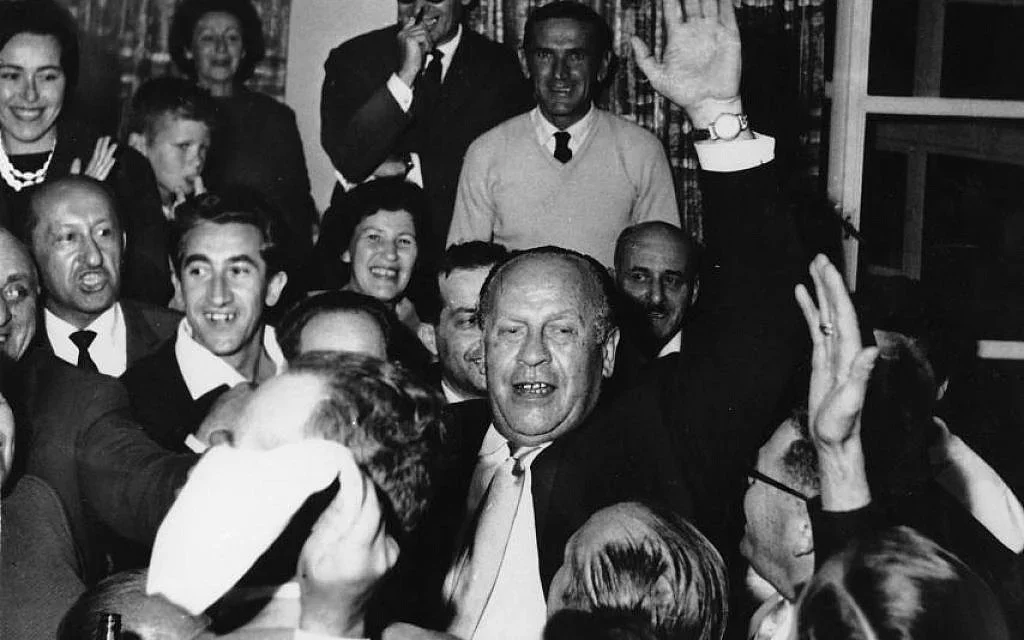
Oskar Schindler was a German member of the Nazi Party who arrived in Kraków at the outbreak of World War II looking to profit from the occupation. He acquired an enamelware factory and used cheap Jewish labor from the Kraków ghetto, a purely business decision at first.
But as the war escalated and the Nazis moved to exterminate the Jews, Schindler started doing something different. He began protecting his workers. He would bribe German officials and vouch that his workers were "essential" to war production which protected them from being deported to concentration camps. When the Nazis moved to empty the Kraków ghetto, he made a deal to relocate his entire workforce to a new factory in his hometown.
He and his accountant Itzhak Stern compiled a list of roughly 1,100 workers. That list became known as Schindler's List. Every worker on that list was transferred and largely survived the war under Schindler's protection.
But the list came with a great cost to Schindler. Each life required a bribe or black market goods eventually costing him his entire personal fortune. By the war's end he was nearly bankrupt and struggled financially for the rest of his life. After the war he ran several failed businesses and died far from wealthy. But he was recognized by Yad Vashem as Righteous Among the Nations and became the only member of the Nazi Party to be honored by being buried in Jerusalem.
All because of that list.
The Man With the List
Stern says it in the Spielberg film: "The list is an absolute good. The list is life. All around its margins lies the gulf."
The list is the boundary between life and death. Everything on it lives. Everything outside it dies. No middle ground.
How did you get on it? You didn't do anything. Oskar Schindler put you on it. You didn't make your case. You didn't demonstrate your worth. You didn't earn your place. The man with the list put your name on it. The list came first.
And once you were inside that factory, what happened on a bad day? What happened on a good day?
It didn't matter. The list didn't change.
Your standing wasn't determined by your behavior inside the factory. It was determined by whose name covered you outside it.
Does this story sound familiar?
Because it's an imperfect story of an imperfect man that mirrors something you may have read before.
1 Corinthians 1:30 says Jesus became for us wisdom, righteousness, holiness, and redemption.
Philippians 3:9 talks about being found in him, not having a righteousness of my own but the righteousness of Jesus that comes by faith.
What are these verses trying to say?
Going back to 1940s Poland might give us a little understanding.
What qualified those 1,100 workers to live wasn't anything they had done. It was whose name covered them.
Schindler spent his entire reputation, his relationships with the regime, his personal fortune to maintain that covering. He didn't protect them by improving their behavior or making them more presentable. He used his own standing, his own name, his own resources. And though he was far from a perfect man, his actions guaranteed the lives of those 1,100 Jews who are known as Schindler's Jews to this day.
Every Human Savior Has Limits
At the end of the film there's a scene that is moving to watch. Schindler stands with the Jewish workers he saved and breaks down. He looks at his car. He could have sold it. Ten more people. He looks at his Nazi pin. Two more people. "I could have done more. I could have done more. I don't know, I could have got more, I don't know, I don't know."
Every human, even a human savior, has limits.
That's the problem with Schindler's list. It had margins. Some people fell outside it. If your name wasn't on it, you were going to die. The list was life, but the list was finite. And the man who made it died feeling like it wasn't enough.
Jesus was not haunted. Because his list has no margins.
Not One Will Be Lost
In John 18, when the soldiers came to arrest him in the garden, Jesus stepped forward. He didn't wait for them to find him. He walked toward them and said, "Who is it you want?"
They said, "Jesus of Nazareth."
He said, "I told you that I am he."
And then Jesus says, "If you are looking for me, then let these men go."
Let them go. Take me instead.
John tells us why he said it. To fulfill what he had already spoken: "I have not lost one of those you gave me."
Before the cross. Before the beating. Before any of the hell he was going to experience, Jesus stood in a garden alone in the dark with soldiers and torches and spears surrounding him and his first move was to make sure that everyone on his list was accounted for.
Let my friends go. I'll take what's coming. Every last one of them walks out of here.
He said it even earlier, in John 6:39. "This is the will of him who sent me, that I shall lose none of all those he has given me, but raise them up at the last day."
Not some. None.
As certain as Jesus was beaten and marred and buried, so certain is it that you will not be lost. As certain as his resurrection, so certain is yours. He didn't just put your name on a list and hope for the best.
He walked toward the soldiers so that sin, death, and the grave would fall on him and not on you.
Schindler died restless, wondering if he'd done enough. Jesus' story ends in resurrection. Death did not get the last word over the Redeemer. And because it didn't end there for him, it doesn't end there for you.
Romans 8:33-34 asks: who will bring any charge against those God has chosen? Think about that. Who comes to destroy those Schindler has chosen? Nobody walks into that factory and starts shooting workers on his list. Who will condemn? It is God who justifies. Christ Jesus who died, who was raised, who sits at the right hand of God, who is right now interceding for you.
Schindler worked the system through bribes and black market deals. He stayed inside the machine and manipulated it from within. Jesus didn't do that. He took the whole system down. He absorbed every penalty, every accusation, every death sentence into himself. He placed everything in and he did not lose a single one.
Jesus’ List is Inclusively Exclusive
Make no mistake: Jesus’ list is open to all, but it is still exclusive.
In Matthew 22, a king throws a banquet and extends the invitation to everyone. The streets are searched. Anyone who comes is welcome. But it's still the king's invitation. No one is allowed to enter the banquet on any terms other than the king's direct invitation.
In John 10, Jesus says plainly, "I am the gate; whoever enters through me will be saved."Jesus himself is the only legitimate way into the pen. Anyone who climbs over the wall he calls a thief and a robber.
And in that same chapter he goes further: "I and the Father are one." The people standing there knew exactly what he meant. They picked up stones to kill him for it. You don't stone someone for claiming to be spiritual. You stone them for claiming to be God.
1 John 5:12 makes it simple: "Whoever has the Son has life; whoever does not have the Son of God does not have life." And Acts 4:12 leaves no room for negotiation: "Salvation is found in no one else, for there is no other name under heaven given to mankind by which we must be saved."
The list is open to anyone who will come. But there is only one list.
The exclusive claim of Jesus cuts both ways. It shuts the door on every other religion. But it also shuts the door on every version of Jesus plus something else.
Things like:
Jesus plus getting baptized or confirmed
Jesus plus being a member of the right church
Jesus plus belonging to the right denomination
Jesus plus being good enough or doing enough good things
Jesus plus saying the right prayer the right way
Jesus plus having a dramatic enough conversion story
Jesus plus speaking in tongues
Jesus plus feeling saved
Jesus plus your quiet time
Jesus plus your tithe
Jesus plus your serving record
Jesus plus knowing enough of the right doctrine
The gate is narrow not because God is stingy but because the gate is a person. And you either come through him or you don't come through at all.
This isn't just a challenge from inside the church. The world around us has its own version of the same resistance. My truth, your truth, every path leading somewhere worth going. But Jesus didn't leave room for that. He didn't say he knew the way or that he could point you toward it. He said:
"I am THE way and THE truth and THE life. No one comes to the Father except through me." (John 14:6)
Jesus was not a teacher pointing toward a path. He was claiming to be the path itself. And not only claiming to know the way to God. He was claiming to be God. In John 8:58 he says, "Before Abraham was born, I am."The people standing there knew exactly what that meant too. This was not a man making a modest spiritual claim.
And in a world that wants to soften or dilute that, it's worth asking: on what authority does he say it?
The answer is the historical resurrection. Not a philosophy or religious sentiment but an actual historical event.
Jesus is not the only person who has ever claimed to be the way to God. Many have made that claim. But he is the only one who proved it. He actually died by flogging, crucifixion, and impalement. And three days later, the tomb was empty. If Jesus stays dead, his claim dies with him. Every other religious teacher, every other person who has ever pointed toward God, stayed dead. But Jesus didn't.
Paul writes in 1 Corinthians 15 that after the resurrection Jesus appeared to Peter, then to the twelve, then to more than 500 people at one time, most of whom were still alive when Paul wrote it. These were not people who had everything to gain by making it up. They had everything to lose. They were beaten, imprisoned, and killed for what they claimed to have seen.
People die for things they believe are true. Nobody dies for something they know is a lie.
Even for the skeptic of the Bible's and Jesus's claims, you must take the evidence seriously and eventually come to a conclusion. If this man really said what he said and did what he did, then he has the authority to say how this goes.
The resurrection wasn’t just a miraculous act of God, it was God the Father putting a rubber stamp on everything the Son, Jesus, said and did.
And Philippians 2 tells us where it all ends.
"God exalted him to the highest place and gave him the name that is above every name, that at the name of Jesus every knee should bow, in heaven and on earth and under the earth, and every tongue acknowledge that Jesus Christ is Lord, to the glory of God the Father."
One day soon, the whole created order will confess what the gospel declares now. Jesus is Lord. He has more than earned the right to say how this goes.
Jesus Changes Who You Are
Schindler could protect his workers from the Nazis. He could shield their standing, preserve their lives, keep the soldiers away from the door. But he couldn't change what they were. They walked out of that factory the same people they walked in as. He could cover them. He couldn't transform them.
But Jesus changes who you are.
Not just your record. Not just your standing. You. At your core. At the deepest level of who you are.
2 Corinthians 5:17 says, "This means that anyone who belongs to Christ has become a new person. The old life is gone; a new life has begun."
There is so much more to that beautiful truth than I have space for here. But sit with this for a moment. Jesus doesn't just wipe your record clean. He doesn't just give you a new start with the same old nature. He changes your lineage. He reaches down into the fundamental core of who you are, into what you were born into, and he makes you into something that didn't exist before. A new creation. Not a cleaned-up version of the old one. Something actually new.
Schindler saved Jews from dying as Jews. Jesus makes you into a son or daughter born of God. Your identity before your heavenly Father is no longer determined by what you were born into the first time. It's determined by who you were born into the second time.
That's where it all starts. Not with behavior. Not with effort. Not with trying to become something. With what he has already made you. With whose name covers you. With the list.
There is so much more to say about what that new nature means, how it changes the way you live, the way you think, the way you relate to God. But it all starts here. It starts with being on the list. It starts with Jesus reaching down first.
And how do you get on it?
You don't put yourself on the list. It's totally by faith.
Romans 8:33 makes it very clear: God is the one who justifies you. You can't justify yourself or you will die.
Same as a Jew standing before a Nazi soldier with his life on the line. You can't make your case. You can't improve your way onto it. You can only say one thing: I am on the list. It's because of the one who put me there. The one who ransomed my life. The one who paid the price. That's all you've got.
But that's all you need.
1 Peter 1:18-19 says you were redeemed not with perishable things like silver or gold, but with the precious blood of Christ, a lamb without blemish or defect. Schindler's money ran out. His influence ran dry. His body gave out. The blood of Jesus does not lose its power. It does not run out. It does not expire.
And because of that blood, there is only one answer you can give.
The Man on the Middle Cross
There's a story Alistair Begg tells about the thief on the cross.
You probably are familiar with this scene from Scripture. Two criminals hanging on either side of Jesus. One mocking him. One turning to him in the final minutes of his life and saying, "Remember me when you come into your kingdom." And Jesus looking at him and saying, "Today you will be with me in paradise” (Luke 23).
Begg imagines what happens when that man shows up at the gates of heaven.
The angel looks him over. "What are you doing here? Were you in a Bible study? Were you baptized? Do you know about church membership? What's your theology on this? What's your position on that?" And the man has nothing. No resume. No record of service. No credentials. He was cussing Jesus out with his friend an hour ago. He has absolutely nothing to offer.
The angel calls the supervisor. "On what basis are you here?"
And the man says: "The man on the middle cross said I could come."
That's it. That's the whole answer. And it's the only answer that works.
Because if your answer to how you get into heaven starts with the word "I," you've already gone wrong. Because I believed. Because I have faith. Because I've done this or tried that or been better than the next person. None of it. The only answer that holds is in the third person. Because he. Because him. Because the man on the middle cross said you could come.
The Only Name that Will Save You
Now go back to that factory in Kraków.
A Nazi soldier has a gun pointed at your face. Sin and death and the grave standing right in front of you. What do you say? What do you have? If it starts with anything you've done, it's not going to be enough. The only thing you can say is: I am on Schindler's list. And it's because of Schindler.
It is the only answer that will save you.
I am in the Lamb’s Book of Life. And it’s all because of Jesus, the Lamb of God!
And the only name that actually holds, the only name that actually saves, is Jesus. Not your good deeds. Not your church membership. Not your sincerity. Not your track record. Jesus. The one who said you could come. The one who walked toward the soldiers in the garden so you could walk away. The one whose blood does not run out and whose list has no margins.
So before you close this, let me ask you something.
If everything were stripped away right now, if your record, your church attendance, your quiet time, your theology, your sincerity were all removed from the table, what would you be resting on?
Because if it's anything other than him, it will not hold.
Schindler's list saved 1,100 people. Jesus' list has no number. No limit. No end. The list is life. And it is open to anyone who will come to him through him alone.
The man on the middle cross is still saying you can come.
If this resonated with you, I’d love to hear about it and even have a conversation!
Learning to Become Who We Already Are In Him,
John Will
